Knowledge
Everything worthknowing about signatures.
Practical, readable pieces on how a signature becomes confident, distinctive and easy to learn.
49 articles
 Creative
Signature tattoos: a loved one's handwriting on your skin
A grandmother's signature from an old postcard, “love you” in your mum's hand, your own name the way you wrote it as a child. Here's where to find the sample, how to digitise it, what to discuss with your tattoo artist, and how to keep it beautiful for years.
 Comparisons
Calligra vs a calligrapher: two ways to a unique signature
A calligrapher designs a signature for you personally, by hand; in Calligra you pick a style, the AI draws your signature in minutes, and teaches you to write it. How do they differ, and who is each for?
 Comparisons
Calligra vs font-based signature generators: what you actually get
A font-based generator types your name in a handwriting-style font; Calligra draws a signature for your name in the style you choose and teaches you to write it. When is each the right choice?
 Style
Easy signature ideas: how to make a simple signature that still looks good
You don't need beautiful handwriting or weeks of practice. Five simple formulas, a five-minute method and a few examples, so you end up with a signature that's easy to write and still looks polished.
 Comparisons
Calligra vs Star Signature: two ways to a new signature
An app that designs for your name and teaches you to write it, or a creator you order a custom design from: how you get the design, how long it takes, how you learn it, and who each one suits.
 Comparisons
Best signature generator and design apps in 2026: which one is for what?
Font-based generators, draw-your-signature e-sign tools, phone apps, design apps and human-designed signatures: what each one really does, and when to choose which.
Law & officialHow do experts detect a forged signature?
Natural variation, line quality, tremor, pen lifts, pressure and proportions: how a forensic document examiner works, why comparison samples matter, and what they can conclude at the end.
 Law & official
Before you sign anything: a contract checklist
Details, amounts, deadlines, blank fields, page numbers, attachments and copies: a practical checklist you can work through calmly before signing a tenancy, employment or service contract.
 Law & official
Signing your ID card and passport: what to know
How your signature gets onto your documents, how to prepare before you sign a tiny pad or box, what to do if it goes wrong, and what happens if your signature changes later.
 Tools
How to sign a PDF on your phone: iPhone and Android, step by step
The contract has arrived by email and there's no computer around? With your phone's built-in tools or Adobe Acrobat Reader you can sign it in a few minutes. Step by step for iPhone and Android, with tips for a neat finger-drawn signature.
 Practice
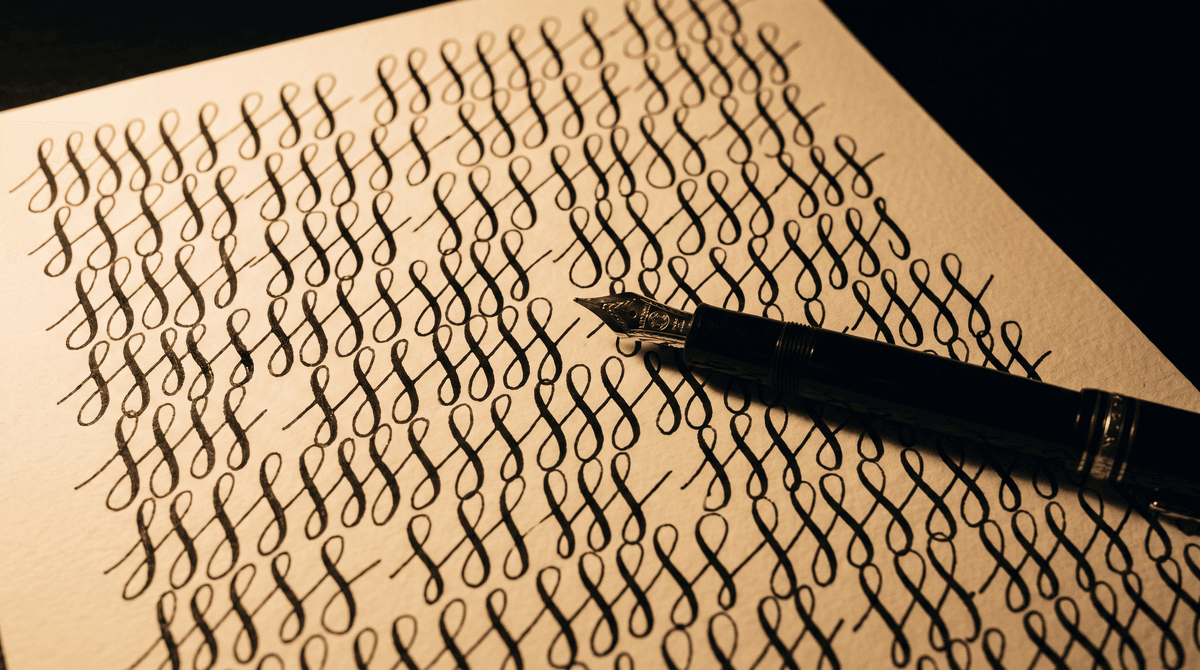
Signature practice sheet: how to make one and use it well
No download needed: a sheet of A4, a ruler and a pencil will do. Guide lines, real-life box sizes, a sheet laid out row by row and a seven-day routine that makes the sheet do the work for you.
CulturesNon-Latin name: sign in Latin letters or your own script?
Grew up writing your name in Cyrillic, Chinese, Japanese, Korean or Arabic, and now you're signing papers in a Latin-script country? When each script works better, whether you can use both, and how to design a Latin-letter signature when it isn't the script you learned to write in.
 Style
Style lessons from famous signatures (no graphology)
John Hancock, Elizabeth I, Napoleon, Lincoln, Shakespeare: what the proportions, capitals and flourishes of history's best-known signatures can teach you, without character readings and without copying.
 Style
Accents in your signature: é, ö, č, ł and the rest
An accent can be a stray dot, or one of the nicest details in your signature. When to add it, what shape to give it, how it survives haste and screens, and what to do with Czech, Slovak, Polish, Romanian, Turkish or French letters.
 Basics
Does a signature have to be your name?
Full name, an initial, a monogram, a line or a doodle: what's generally accepted, what's risky, and how to find a middle ground that's quick to write but clearly yours.
BasicsWhat counts as a signature? A plain explanation
A signature isn't a font or a nice hand. It's a personal mark you use to commit to something. Here's what makes a mark a signature, what can count as one, and where the limits lie.
 Basics
The anatomy of a signature: the parts and what they do
Entry stroke, capital, body, ascenders and descenders, connections, ending: a glossary of every part of a signature, each defined in one sentence and walked through on a worked example.
 Basics
Cursive vs print signature: pros, cons, and which one suits you
Plenty of people print rather than write joined-up these days, and wonder whether they can sign that way. They can. Here's what cursive does better, what print does better, the semi-cursive middle ground, and how to turn a printed name into a real signature.
 For teens
Your first official signature: ID, bank account and exams at 16–18
Somewhere between 16 and 18 your signature suddenly gets serious: it goes on an ID, at a bank, on exam papers and contracts. Here's where it's recorded first, why it pays to decide in advance, and how to prepare.
 For teens
Signature ideas for long names: what to shorten and what to keep
If your name barely fits on one line, your signature can easily turn slow and cramped. Here's the order to shorten things in, what to always keep, and six long names worked through from start to finish.
 For teens
Signature ideas for short names: making 3–4 letters look like a real signature
Amy, Ben, Leo, Eva, Max: a short name is quick to sign, but the signature can easily look thin. Seven proven techniques and lots of worked examples for giving a few letters weight and character.
 For teens
Autograph vs signature: what's the difference, and which should you practise?
A signature identifies you; an autograph is a keepsake. Here's how the two differ, which one to practise first, and how to design an autograph that looks great without giving away your official signature.
Law & officialSigning as a witness: what it means and what to watch for
A friend's power of attorney, a car sale, a will or a wedding: being asked to witness a signature is common. Here's what your signature confirms, what it doesn't, what to write next to it, and when it's better to say no.
 Creative
Wedding invitations and thank-you cards: how to sign them as a couple
Who signs, in what order, with your old name or your new one, first names or full names? Here are the wordings that work, how to make two signatures look right side by side, and how to keep the fiftieth card as neat as the first.
 Name change
Taking back your maiden name: a new signature after divorce
If you return to your birth name after a divorce, your signature changes too. There are two ways to go: bring back your old form, or design a completely new one. Here are both, calmly, step by step.
 Name change
Which name do you sign at your wedding? Register, prenup and witnesses
Several signatures await you around the wedding: when you give notice, on a prenuptial agreement, at the ceremony and perhaps in church. Here's which name goes where, why it's usually still your current one, and how to prepare so your hand is calm at the big moment.
 Name change
The Hungarian “-né” married name and your signature: what to write if you became Kovácsné
Kovács Jánosné, Kovács Jánosné Nagy Éva or Kovácsné Nagy Éva: “-né” names are longer, have a different rhythm and end with an accent. Here's what to put in your signature, what you can shorten, and how to make it one quick, consistent movement.
 Name change
 after marriage: the complete checklist, in order
ID documents, bank, employer, healthcare, utilities, subscriptions and online accounts: what to update, in what order and with which papers when you take a new name after marriage. Your signature is on the list too, and we show where it fits.
 Practical
A new signature after marriage: how to sign your new name
A new name, the same hand. Here's what to keep from your old signature, what to change, when you still sign your old name, and how to have the new form in your hand by the time your new documents arrive.
StyleSigning a double-barrelled or hyphenated surname: how to keep it beautiful and quick
Two surnames, a hyphen, two capitals, and a signature box that hasn't got any longer. Here are the four solutions that work, and what to watch out for when the double name comes from marriage.
 Style
Signature styles up close: what makes a signature elegant, modern or precise?
Eight styles, all drawn with the same name. Here's which strokes make a signature elegant, dynamic or precise, and where each one holds up in everyday life.
 Basics
Can you have more than one signature? Official, everyday and autograph
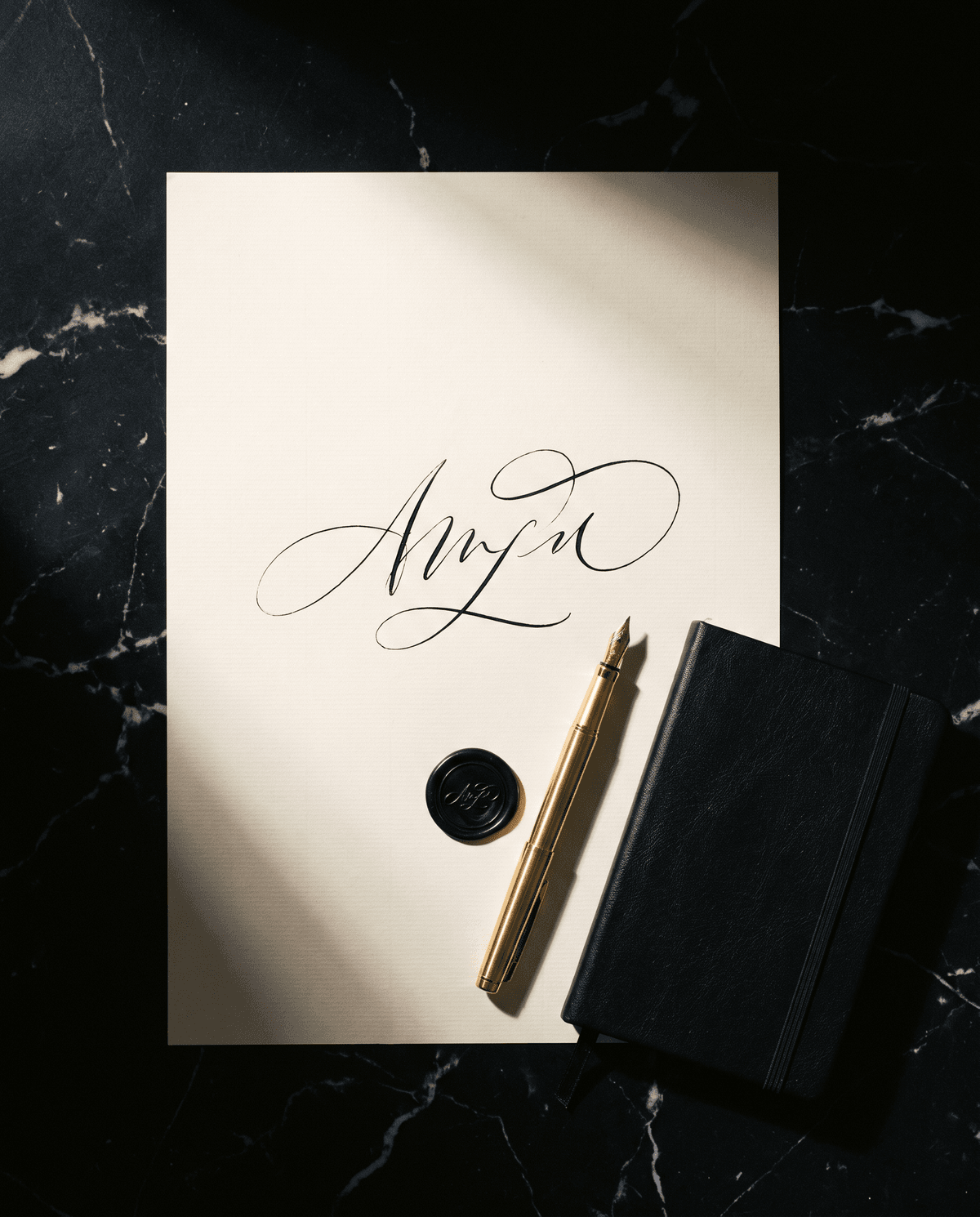
One for the bank, one for signing for parcels, and a showier one in case someone ever asks for your autograph. Here's when several signatures are a good idea, when they cause trouble, and how to keep them in order.
 Style
Middle names and nicknames: what goes into your signature?
Emily Rose, whom everyone calls Rosie. James Edward, who has gone by Ned since he was a baby. If you carry more than one name, your signature makes you choose: both, just one, an initial or the nickname. Here's when each one works.
 Practical
A handwritten signature in your email: how to add it in Gmail, Outlook and on your phone
Transparent image, the right size, the right version: a step-by-step guide to putting your handwritten signature at the bottom of your emails, and making it look good in dark mode and on phones too.
 Basics
How to create your own signature: step by step, with ideas
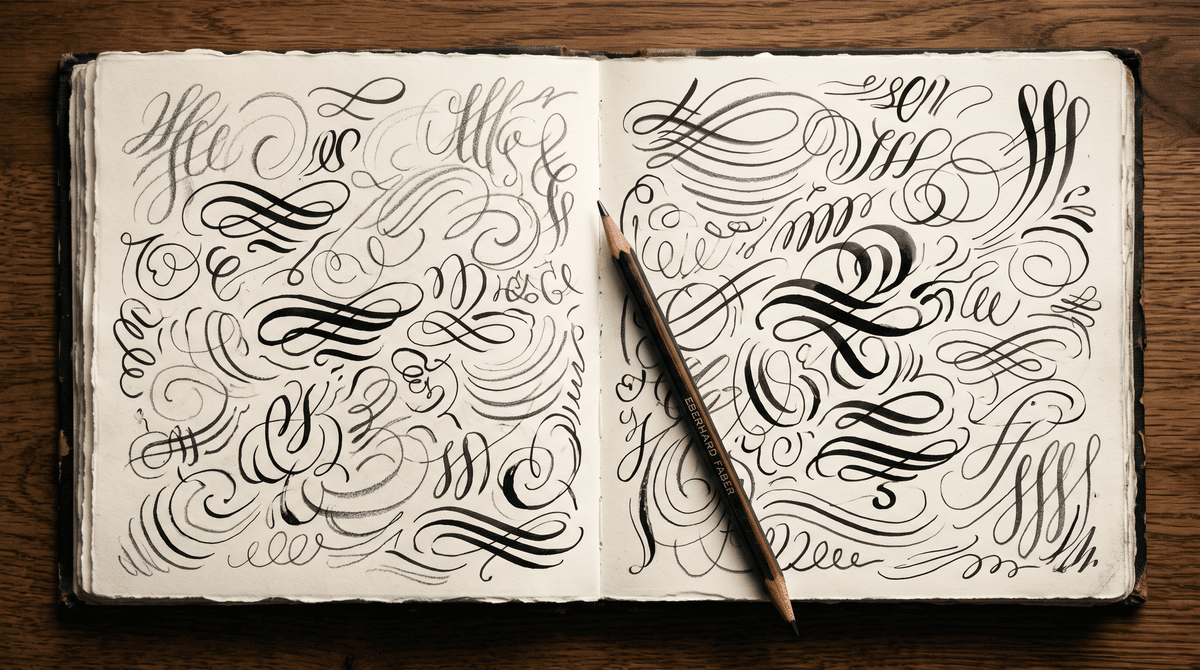
From a blank page to a signature you can write without thinking: how much of your name to use, the capital and the ending, ten style ideas, simple tests and a one-week plan.
 Practice
Signing in tiny spaces: cards, forms, cheques
The narrow strip on the back of a card, a tiny box on a form, a table cell: suddenly your usual signature doesn't fit. Here's how to scale it down while keeping it the same signature.
 Practical
Protecting your signature online: what not to post, and what to do if something looks wrong
A picture of your new signature, a photo of a signed contract, a signature PNG in a shared folder: they seem like small things, but they're worth a thought. Practical tips on sharing, storing, and what to do if you suspect misuse.
 Practical
Initials, monograms, short signatures: when is the short form enough?
In the corner of a page, on internal paperwork, in a cramped box, a quick short mark comes in handy. Here's where it's usually accepted, where your full signature is more likely expected, and how to keep the short form unmistakably yours.
 Practical
Signing PDFs and e-documents: what to watch for
Print, sign and scan? Paste in an image? Or are they asking for an e-signature? Here are your options, how to make a clean signature image, and how to keep your digital signature safe.
 Practice
Signing left-handed: grip, slant and paper
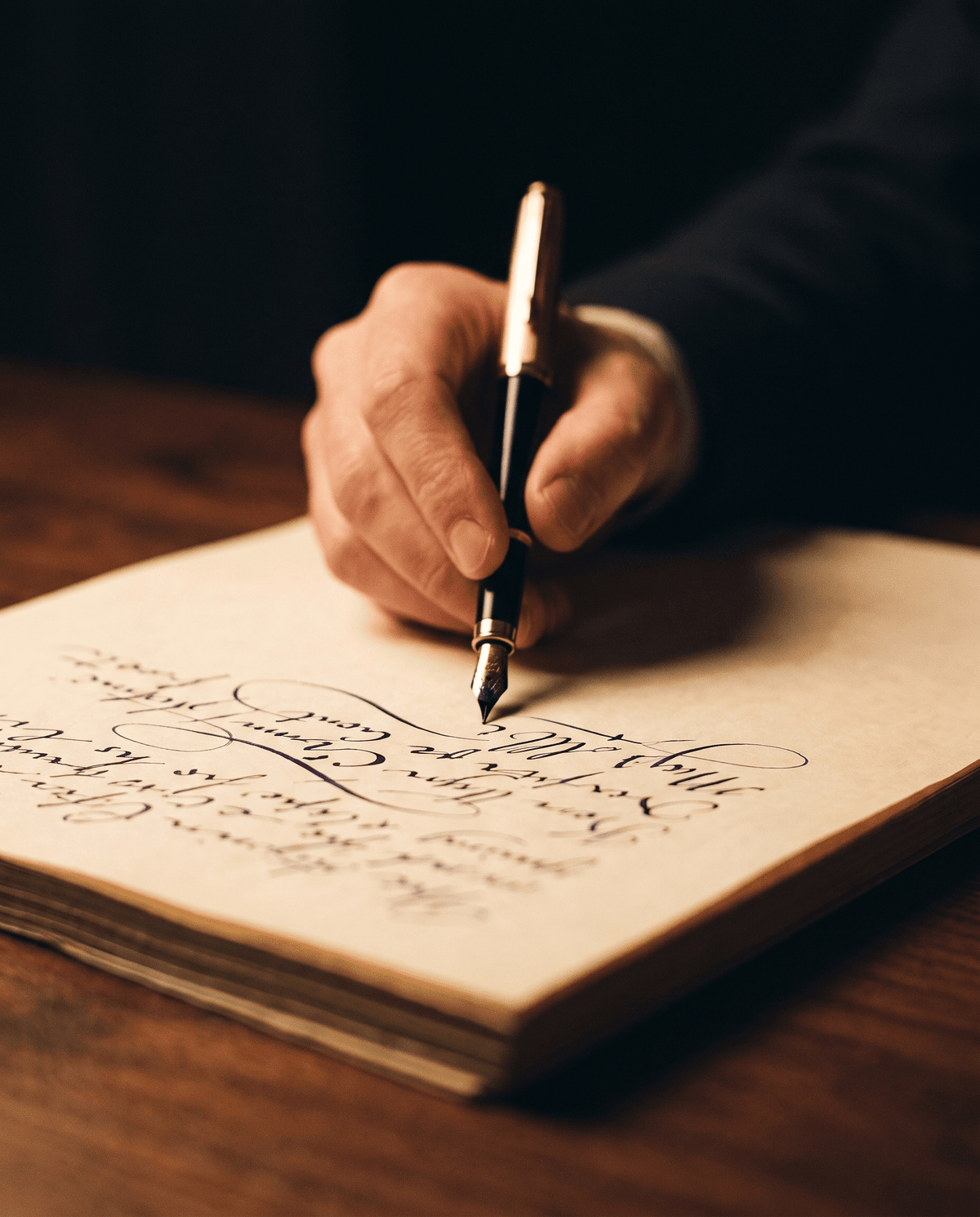
Writing with your left hand isn't a disadvantage; it just calls for a different technique. From grip and paper angle to slant and smudge-free pens, here's everything you need for a calm, good-looking signature.
 Basics
What does a signature reveal? Graphology myths and facts
A big capital, a long underline, a rightward slant: many people believe these reveal our character. Here's an honest look at what a signature can and can't tell you.
 Practical
Signing on screens: tablets, phones, terminals
At the door with a courier, at the bank, at a café counter: more and more often we sign on glass with a finger or stylus. Here's how to keep your signature recognisable and good-looking there too.
 Style
Underline, loop or tail? Finishing your signature
The last stroke sets the tone of a signature. Here are the most common finishes, what each one says, and how to pick the one that fits your name and the places you sign.
 Style
Designing the capital: the face of your signature
The first letter carries the character, the rhythm and most of the recognisability. Proportion, entry strokes, loops, connections and simplification, step by step.
 Tools
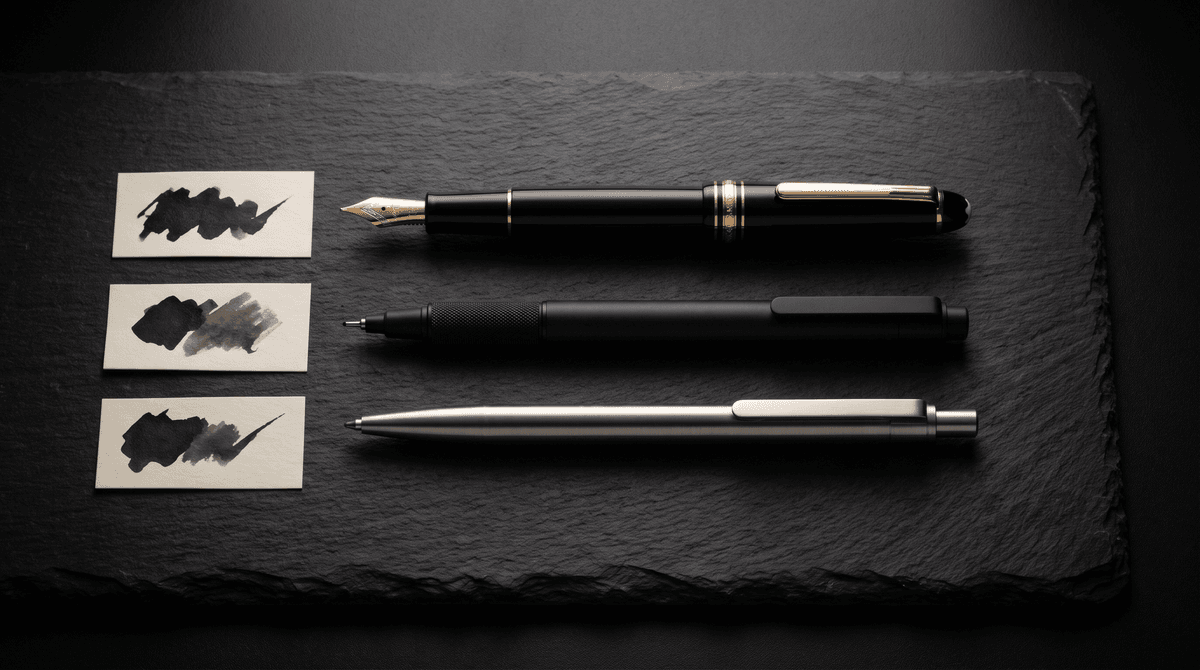
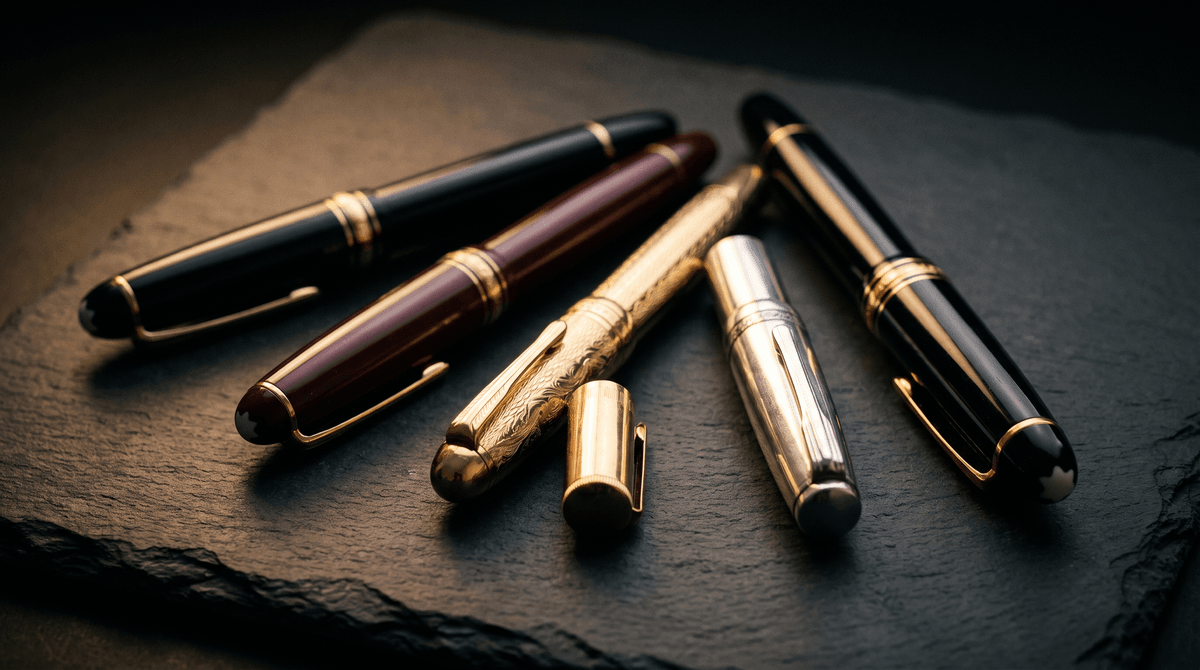
Pens, ink and paper for a beautiful signature
The same movement looks ceremonial with a fountain pen, crisp with a fineliner and casual with a ballpoint. Here's what each tool does well and how to get the best out of it.
 Practical
Changing your signature: when, where and how
You can adopt a new signature at any time, but how you roll it out matters. Here's where your signature is on file, what to ask, and how to get through the awkward first weeks.
 Practice
How to learn your new signature, step by step
Warm up, learn the stroke order, trace, then build speed: a 7-day and a 21-day plan for making a new signature truly yours.
 Basics
How legible should your signature be?
Not every letter needs to be readable, but pure chaos isn't the answer either. Here's how to find the balance between legibility and personality.
 Basics
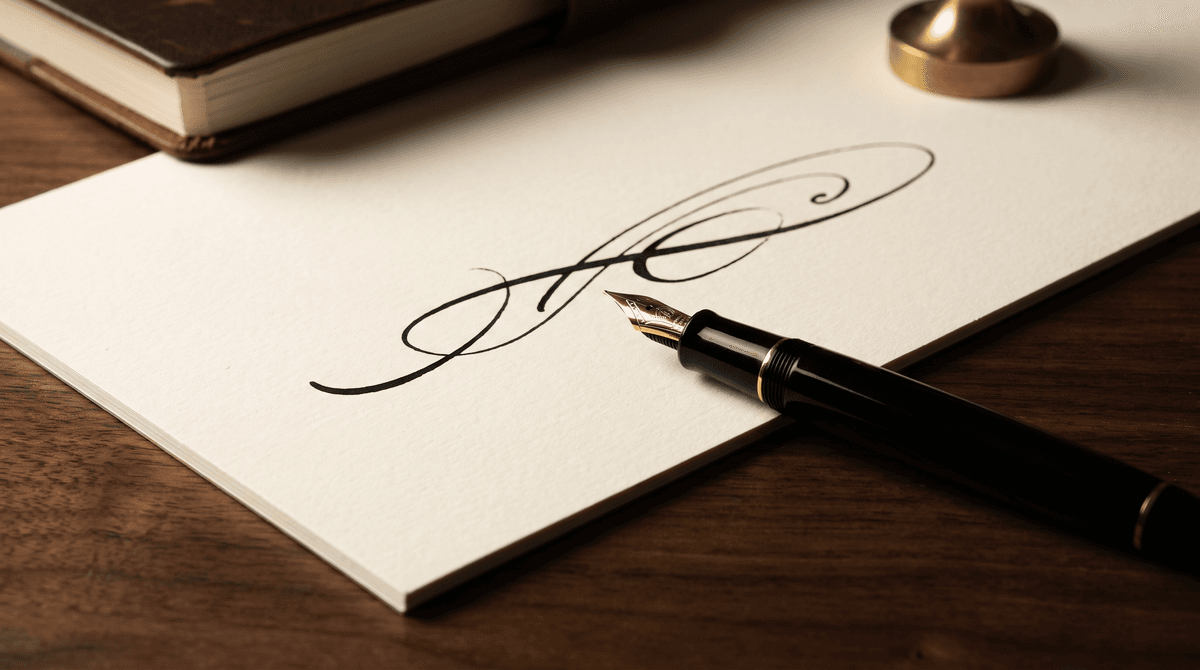
What makes a signature look professional?
It isn't the number of flourishes. Flow, a strong capital, a consistent slant, good proportions and a clean finish make a signature confident and repeatable.
Style quiz
What signature suits you?
Eight questions about where and how you sign, then your own name in the style that suits you, drawn by Calligra's signature engine. Free, no sign-up.
Try it with your own name