Knowledge › Basics
Basics
What counts as a signature? A plain explanation
A signature isn't a font or a nice hand. It's a personal mark you use to commit to something. Here's what makes a mark a signature, what can count as one, and where the limits lie.
A signature is a personal mark, usually a distinctive handwritten form of your name, that shows a document comes from you or that you know and accept what it says. That's the core of it, and almost everything else follows from that sentence. Still, plenty of people aren't sure: do initials count, or an unreadable wave, a line drawn with a finger on a phone, or a name typed at the end of an email? This guide walks through it in plain language, without legal jargon: what turns a mark into a signature, the forms it can take, and what to keep in mind when you use or design your own.
In one sentence: what is a signature?
A signature does two jobs. The first is identification: it shows who made the mark. The second is intent: it shows that person stands behind what's above it, whether that's a contract, a school consent form or a parcel delivery. A mark that carries both counts as a signature in the everyday sense.
A signature is a mark that says: this was me, and I stand by it.
Notice what's missing from that definition: beauty, legibility and your full name. They're all useful, but they aren't what makes something a signature. A tidy, readable signature is easier to recognise, but a scribbled, distinctive mark can do the job too, as long as you write it the same way each time.
What makes a mark a signature? Three things
Put simply, three things need to be true for a mark to be treated as a signature. The details vary by country and situation, but these three ideas turn up almost everywhere.
- It's linked to you. You made the mark, or someone you specifically authorised did. If someone else writes your name without your knowledge, it isn't your signature, however similar it looks.
- It shows intent. You know what you're signing and mean to commit to it. Your name doodled in a notebook margin isn't a signature; the same name at the bottom of a contract is.
- It's attached to the document. The mark sits where the commitment is: at the end of the document, in the box provided, or on the screen where the system asks for it. The same mark on a blank page proves nothing.
What can count as a signature in practice?
Signatures come in far more forms than most people think. All of the following turn up in everyday life. Which one a particular place accepts depends on the situation, but each can do the two jobs a signature does.
- Your full name in cursive. The classic form: “Sophie Turner”, in joined letters. The easiest to recognise, which makes it a good first signature.
- A shortened name. An initial and a surname, or a readable start that flows into a wave. Most adult signatures look like this.
- Initials. Two letters, often linked. You're often asked to initial each page or a correction this way, but initials aren't accepted everywhere in place of a full signature. Our guide to short forms covers this.
- An unreadable but consistent mark. Many signatures on official papers can't be read letter by letter. In most places that's fine, as long as the mark is distinctive and always the same.
- An “X” or another simple mark. Traditionally, people who can't write may sign with a mark, often with witnesses present. It's rare now, but it shows that the heart of a signature is intent, not lettering.
- A signature drawn on a screen. With a finger or stylus on a terminal or tablet. It's a digital image of your handwritten signature.
- An electronic signature. A broader idea: a click, a typed name or a certificate-based digital signature. More on this below.
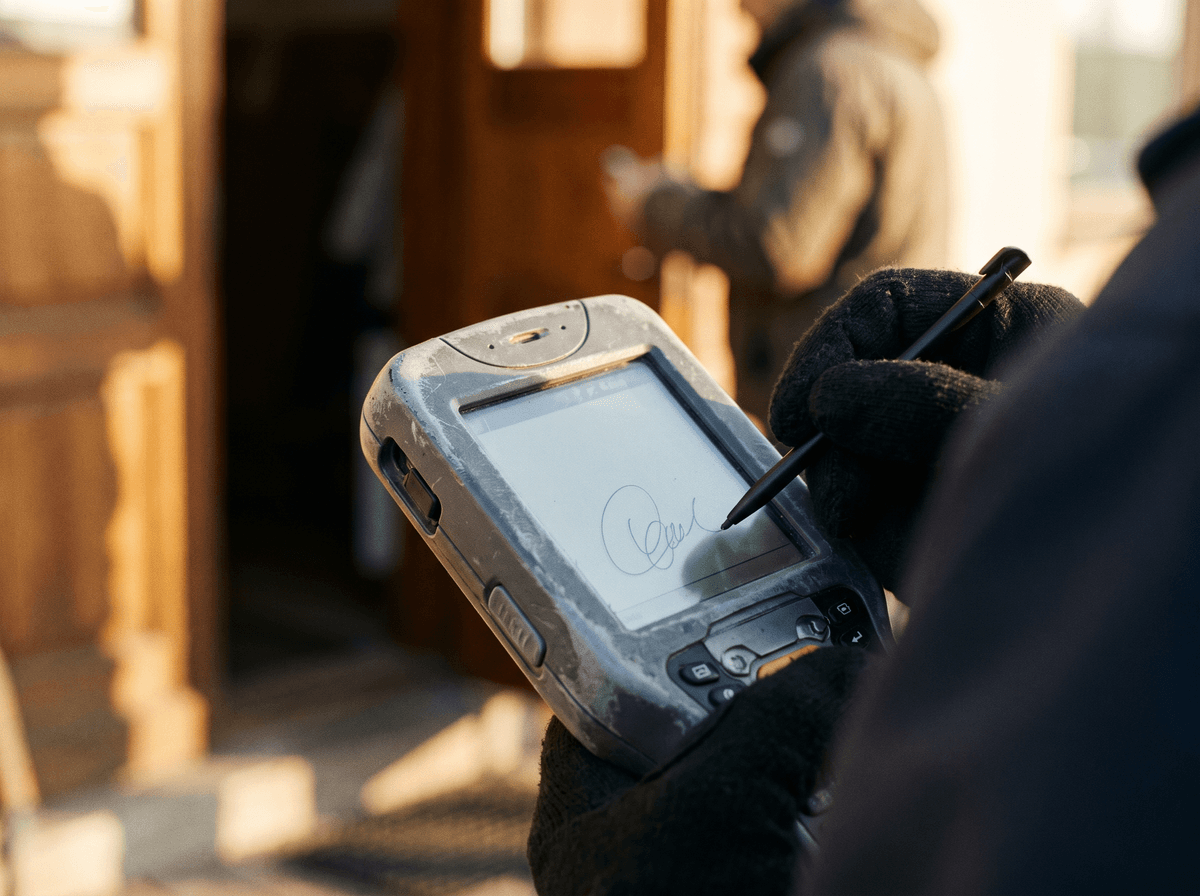
Same mark, different weight
Not every signature carries the same weight. Hardly anyone looks closely at the signature on a school trip form or a parcel delivery, but for a bank agreement or a passport your mark may later be compared with an earlier specimen. The higher the stakes, the more it matters that your signature is consistent.
- Parcel deliveries, courier terminals
- School forms, trip slips
- Birthday cards, signing a book
- Rarely compared with anything
- A quick, short form is fine
- Contracts, tenancy agreements
- Bank accounts, loans, insurance
- ID cards, passports, driving licences
- Often compared with your specimen
- Always needs the same form
One practical tip follows from this: don't keep two completely different signatures for everyday and official use unless you've decided to on purpose. A signature you write the same way everywhere becomes reliable in official settings without any extra effort. If you do use several forms, our guide to having more than one signature helps you keep them in order.
Handwritten, drawn on screen, electronic: what's the difference?
These days a good share of your signatures don't happen on paper. That causes confusion, because we use the word signature for three different things, and they don't do the same job.
- A handwritten signature on paper. Pen, ink, your own hand. The oldest and best-understood form.
- A signature drawn on a screen. The same movement, made with a finger or stylus on a display. The result is an image of your signature that the system attaches to the document. What it's worth depends on what the system records alongside it.
- An electronic signature. An umbrella term for anything you use to commit to something electronically: ticking a box, typing your name, pasting in a signature image. These are the simpler forms.
- A certificate-based e-signature. Based on a verified digital identity. In many countries it can fall into the strictest category, treated like a handwritten signature, but exactly when depends on local rules.
In practice, when you sign a PDF or draw on a terminal, your hand makes the same movement while something different happens behind the scenes. We cover the details in our pieces on signing PDFs and e-documents and signing on screens.

Does it have to be legible?
Short answer: there's generally no rule saying your signature must be readable. Many adult signatures are legible only in the capital or the first syllable, with the rest an undulating line. For everyday use that's fine, as long as the mark is distinctive and always looks the same.
Legibility still helps. When a clerk or the other party glances at it, a readable capital or surname instantly links the mark to your printed name. That's why forms so often ask for your name in capitals as well as your signature. Where to draw the line between legibility and personality is the subject of a separate article.
Does your name have to be in it?
Here too, in many places there's no general requirement: a signature can be your name, part of it, or a distinctive mark. In practice, though, most people's signatures do contain their name, at least as an initial, because it makes them easier to recognise and clearer if anything is ever disputed.
How risky a bare line, initials or a drawing is, and where the sensible middle ground lies, is something we cover in detail in a separate article.

Why do people ask for a specimen signature?
Banks, passport offices and employers often keep a record of your signature: on a specimen card, in your passport or on an account-opening form. The reason is simple. One job of a signature is identification, and for that there has to be something to compare your later signatures with.
That's why it matters that your specimen and your everyday signature don't drift apart. If yours has got shorter and looser over the years, or you've deliberately chosen a new one, it's worth updating the specimen in the places that matter. We cover the practical steps in our articles on changing your signature and the signature on your ID and passport.

Signature, initials, autograph, e-signature: the words
Several words float around signing, and they don't all mean the same thing. A short glossary, so you know what you're being asked for:
- Signature. Your full personal mark, used to commit to something. This is what contracts, ID documents and bank forms ask for.
- Initials. A short mark, usually your first letters, used to mark each page of a long document or to approve a correction.
- Artist's mark. A shortened signature or monogram on a painting, a drawing or a piece of craft.
- Autograph. A signature given as a keepsake, to a fan or in a book. It has no legal weight and can be more decorative than your official signature. The difference is explained here.
- E-signature. Electronic signature, the umbrella term above. If someone asks for a “qualified” or “certified” e-signature, they mean a specific, stricter kind.
What doesn't depend on how it looks
It's a common myth that a signature is stronger for being beautiful, long or hard to read. Appearance matters for recognition, but much of what gives a signature its weight has nothing to do with the lines.
- Intent and consent. A signature obtained under pressure or by deception may be judged quite differently, however elegant it is.
- Knowing what you're signing. That's why it's worth reading every page and asking about anything you don't understand. Our checklist before signing a contract helps.
- Age. In many matters, minors can only sign validly with the consent of a parent or guardian. The exact rule varies by country.
- The form the matter requires. Some documents need a witness, a notary or a certified e-signature. In those cases a signature alone isn't enough.
That's good news when you design yours: your signature doesn't need to be intimidatingly complex to be taken seriously. It just needs to be yours, consistent, and up to the demands of everyday life. Nor do its flourishes or size reliably reveal anything about your character; our article on graphology explains why, and this one covers what makes a signature look confident.
What this means for your own signature
If you're designing your first signature or choosing a new one, three practical rules follow from all this. None of them is about beauty; they're all about your signature doing its job well.
- 1Make it yours. Don't copy anyone else's signature. Take inspiration, but let the letter shapes come from your own hand.
- 2Make it consistent. Write it ten times, one under another, and each should look like the same mark. That's worth more than any flourish.
- 3Make it work everywhere. In small boxes, in a hurry, standing up, on screens. Your signature rarely lands on a lovely blank page.
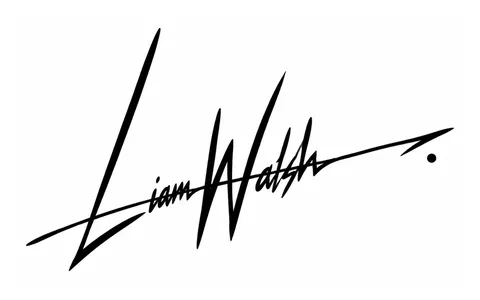
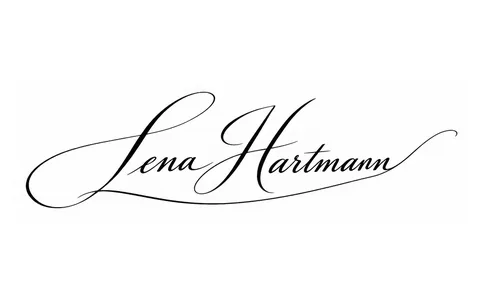
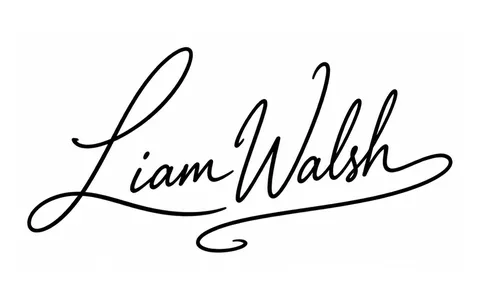
Our guide to creating your own signature shows how to get there step by step. If you'd like to see a few different but equally repeatable signatures for your name side by side, in Calligra you can try many styles with your name, and it teaches the one you choose stroke by stroke. Try it with your name.
The one sentence worth taking away
A signature is a mark on a document that's linked to you and shows your intent: it doesn't have to be beautiful, legible or your full name, but it does have to be yours and the same every time, and for official matters the institution's own rules always decide.
Questions
What counts as a signature, in simple terms?
Any personal mark you put on a document to show it comes from you or that you agree to it. Usually it's a distinctive handwritten form of your name, but it can also be a shortened form, initials or a mark drawn on a screen. Which one is enough in a given case depends on the matter and the institution's rules.
Do initials count as a signature?
They can, but they aren't accepted everywhere in place of a full signature. You're often asked for initials specifically, to mark each page or a correction. At the end of a contract or an official document, your full signature is usually expected.
Is a signature drawn with a finger on a phone valid?
In many everyday situations, yes, such as parcel deliveries or simpler online agreements. Some matters require a stricter, certificate-based e-signature, though. If you're not sure, ask which form they accept.
Does a signature have to be legible?
Generally there's no such rule. What matters is that the mark is distinctive and consistent. A readable capital or the start of your surname still helps a lot, because it links the signature to your printed name.
Can I sign in print rather than cursive?
Yes, a printed signature is still a signature if you write it the same way every time. A joined, cursive form is usually faster and more distinctive, which is why most people choose it.
What's the difference between a signature and initials?
Your signature is your full personal mark, used to commit to a document. Initials are a short mark, usually your first letters, used on individual pages or corrections. It helps if the two belong to one family, for example by sharing the same capital.
Try it with your own name
Read these too
Knowledge Basics
What makes a signature look professional?
It isn't the number of flourishes. Flow, a strong capital, a consistent slant, good proportions and a clean finish make a signature confident and repeatable.
 Basics
How legible should your signature be?
Not every letter needs to be readable, but pure chaos isn't the answer either. Here's how to find the balance between legibility and personality.
 Basics
What does a signature reveal? Graphology myths and facts
A big capital, a long underline, a rightward slant: many people believe these reveal our character. Here's an honest look at what a signature can and can't tell you.