
Knowledge › Law & official
Law & official
Signing your ID card and passport: what to know
How your signature gets onto your documents, how to prepare before you sign a tiny pad or box, what to do if it goes wrong, and what happens if your signature changes later.
The signature on your ID card or passport isn't just one signature among many. It's what a bank clerk, a post office counter or the other party to a contract may look at if they want to compare it with something you've signed. It stays the same for years and goes into a very small space. So it's worth arriving prepared: know which of your signatures you'll give, practise it small, and don't experiment on the day. This guide covers how signatures are recorded on identity documents, what to watch for at the appointment, what to do if it goes wrong, and what happens if your signature changes later.
Why this signature matters more than most
The signature on your identity document works as a kind of official reference sample. If someone wants to check whether a signature is yours, this is often what they compare it with. So it matters whether a rushed, one-off version ends up on it, or the one you actually write day to day.
- It lasts for years. For as long as the document is valid, this signature stays on it, even if your everyday signature evolves in the meantime.
- The space is small. A card-sized ID or a passport data page leaves very little room, and the signature may be printed at a reduced size.
- Others compare against it. Banks, offices and service providers may glance at it when you sign something in person.
- It's a one-off moment. At the appointment there's usually no time for long experiments. What you write there is what goes on the document.
How the signature gets onto the document
There are two basic methods, and depending on your country and document you may meet either or both.
- Captured electronically when you apply. You sign a signature pad with a stylus, the officer sees it on screen, and an image of your signature is put on the document, often reduced in size. Many countries record ID card and passport signatures this way, at the same time as the photograph.
- In ink, on paper. You sign a box on an application form that is then scanned, or you sign the finished document itself in a dedicated box when you receive it. Some passports work the second way.
Whichever applies to you, you'll be told where you apply. If you'd like to know in advance, check the issuing authority's guidance or ask when you book your appointment. If you apply at a consulate abroad, the rules of the issuing country still apply.
Preparing: which signature will you give?
The most important decision is best made at home: which version goes on the document. If you have more than one signature, a formal one and a relaxed everyday one, use the formal one, the one you sign contracts and bank papers with. We look at keeping more than one signature in a separate piece.
- 1Write your usual formal signature ten times. You're not looking for the prettiest one, but the one most typical of you.
- 2Practise it in a small space. Draw a rectangle of about 5 × 1.5 cm and sign inside it a few times. If you already have the document, measure the real box.
- 3Try it on a screen too. If it will be captured electronically, a test with your finger or a stylus on a phone helps a lot.
- 4Don't change it at the last minute. If you're thinking about a new signature, practise it beforehand, and only put it on a document once it comes naturally.
If this is your first document and you don't yet have a settled signature, it's worth designing one deliberately a few days beforehand. We've written about your first official signature and about creating your own signature.
At the appointment, on a signature pad
A signature pad is a small, smooth surface you write on with a tethered stylus. It feels different from paper: the stylus slides more easily, and the area is often smaller than you'd expect. A few things help the same signature end up on it as on paper.
- Get comfortable. Stand or adjust your chair if you need to, and don't sign at the end of an outstretched arm.
- Check the frame. The pad or screen usually shows how far the recording area goes. Stay inside it; anything outside may be lost.
- Sign at your usual pace. A signature drawn slowly and carefully comes out shaky. Do it in one go, as on paper.
- Look at the screen. In many places the officer shows you the recorded signature. If it clearly slipped or stopped halfway, say so and ask whether you can do it again.
We cover the general knack of signing on screens, including how to simplify deliberately if the pad is awkward, in signing on screens.
If you sign the document in ink
If you have to sign the finished document or an application form with a pen, the pen and the movement matter more than on everyday paper. Document pages are often coated and less absorbent.
- Follow the instructions you're given. If the guidance or the officer specifies a pen type or ink colour, use it.
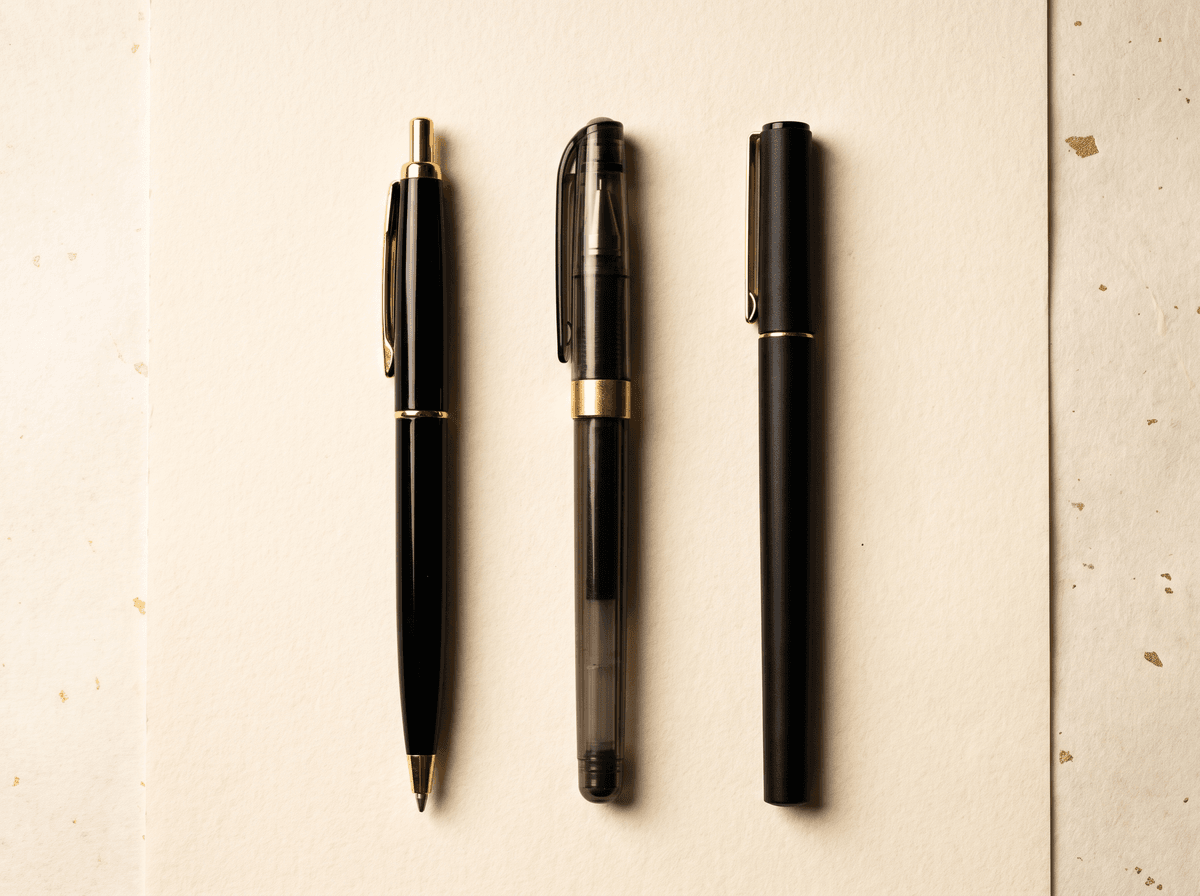
- With no instructions, a dark ballpoint. Ballpoint ink dries quickly and smudges less. Gel pens and felt tips smear more easily on coated pages.
- Stay inside the box. Don't write over the photo, the printed details or the machine-readable lines at the bottom of the page.
- Let it dry. Don't close it straight away or run your finger over it.
- Once, in one go. Don't start, stop and correct.
If it goes wrong
It happens: the pen slips, the movement stops halfway, or the signature runs out of the box. The most important thing is not to try to fix it afterwards.
- Don't write over it. A signature that's been gone over twice looks more suspicious than one that slipped a little.
- Don't use correction fluid or scratch it. On an identity document, any such mark can count as damage.
- On a pad, speak up at once. Until the document is produced, the signature can often be recorded again.
- With a finished document, ask the issuer. Whether a document with a spoiled signature box is still valid, or needs replacing, is for the issuing authority to decide.
A signature that slipped a little is less of a problem than one corrected afterwards.
Children, and people who can't sign
Rules for children's documents vary especially widely. Depending on the country, the document and the child's age, the signature box may be left empty, a parent may sign the application, or from a certain age the child signs for themselves. If your child is old enough to sign, practise together a few times in a small box beforehand.
Anyone who can't sign for health or other reasons usually has a separate procedure available, and the document may carry a different marking instead. It's always worth arranging this with the issuing authority in advance, so there are no surprises on the day.
What if your signature changes later?
Signatures naturally change over the years, and some people deliberately choose a new one. In many places that alone doesn't invalidate your document, but rules differ by country, so if you're unsure, ask the issuing authority.
- The old signature stays on the document. While the document is valid, it shows the old form. If someone compares against it, the difference may raise questions.
- The new one goes on at the next application. When it expires, is replaced or is lost, the new document carries your new signature.
- A name change brings a new document anyway. After marriage, divorce or a change of name, the new document will carry a signature that fits your new name.
- Update banks and providers too. Where you need to register a new signature varies by institution.

We cover the practical steps of switching in changing your signature, and what to do after a name change in your signature after marriage.
Small space, small signature: making it fit
The signature box on an ID is small compared with everyday signature lines, and an electronically captured signature may be reduced on top of that. Flourishes you love on a big page can merge into a blur here.
- A readable capital. If the capital is still recognisable when small, the signature on the document stays clearly yours.
- A short ending. A long underline or trailing line easily runs out of the frame or gets cut off.
- Fewer tiny loops. When reduced, tiny loops close up into dots. One or two larger shapes survive better.
- Consistent size. Don't start big and then shrink towards the end because you're running out of room.
For more on signing in very small spaces, from the strip on a bank card to form boxes, see our separate piece.
Checklist before your appointment
- 1Know which signature you'll give. Your formal one, the one you use at the bank and on contracts.
- 2Practise in a small frame. A few days beforehand, several times, at your real pace.
- 3Try it on a screen. If you'll be signing a pad, a test on a phone helps a lot.
- 4Read the authority's guidance. Whether you'll need to sign anything in ink, and any rules on pen, ink or children's signatures.
- 5Don't experiment on the day. Write your usual form at your usual pace.
- 6Look at the recorded signature. If something clearly went wrong, speak up straight away.
- 7Check the finished document. When you collect it, check your details and the signature.
The one sentence worth taking away
The signature on your ID card and passport serves as an official reference for years, so bring your usual formal signature, practise it beforehand in a small frame and on a screen, don't experiment on the day, never correct a spoiled signature afterwards, and always ask the issuing authority about the exact rules.
Questions
How does my signature get onto my ID card?
In many countries it's captured on an electronic signature pad when you apply, at the same time as your photo, and that image is printed on the document. Elsewhere, or for other documents, you sign an application form or the document itself in ink. You'll be told which applies where you apply.
What pen should I use to sign my passport?
If the issuing authority specifies a pen type or ink colour, use that. Without instructions, a dark ballpoint is the safest choice, because it dries quickly and smudges less on coated pages. Stay inside the box and don't write over the photo or the printed details.
What should I do if I messed up the signature on my passport?
Don't go over it again and don't use correction fluid. On a signature pad, speak up at once, because it can often be recorded again before the document is made. With a finished document, the issuing authority decides whether it's still valid or needs replacing.
Does my passport become invalid if my signature changes?
In many places a change of signature alone doesn't require a new document, and the new signature goes on at your next application. Rules differ by country, though, so if you're unsure, ask the issuing authority. After a change of name, a new document is needed anyway.
Does a child have to sign their own passport?
It depends on the country, the document and the child's age. The signature box may be left empty, a parent may sign the application, or from a certain age the child signs themselves. The issuing authority's guidance or the officer will tell you the exact rule.
Try it with your own name

Read these too
Knowledge Law & official
Signing as a witness: what it means and what to watch for
A friend's power of attorney, a car sale, a will or a wedding: being asked to witness a signature is common. Here's what your signature confirms, what it doesn't, what to write next to it, and when it's better to say no.
Law & officialBefore you sign anything: a contract checklist
Details, amounts, deadlines, blank fields, page numbers, attachments and copies: a practical checklist you can work through calmly before signing a tenancy, employment or service contract.
 Law & official
How do experts detect a forged signature?
Natural variation, line quality, tremor, pen lifts, pressure and proportions: how a forensic document examiner works, why comparison samples matter, and what they can conclude at the end.