Knowledge › Basics
Basics
Can you have more than one signature? Official, everyday and autograph
One for the bank, one for signing for parcels, and a showier one in case someone ever asks for your autograph. Here's when several signatures are a good idea, when they cause trouble, and how to keep them in order.
Many people wonder about it, usually while writing their third different version of the week at some counter: am I even allowed more than one signature? Your teenage notebooks held ten variations one under another; one became the official one, another the quick one, and somewhere there's a third you'd write if anyone ever asked for your autograph. The short answer: in most places it isn't forbidden, but every institution treats the signature you gave it as yours, and compares later ones with that. Everything else follows from this. In this article we sort out what an official, an everyday and an autograph signature mean, look at where to stick to a single form and where a separate mark helps, how to design an autograph so your bank signature doesn't end up in public, and what to do if you already have too many versions. We've covered short forms, initials and monograms in a separate article; here the subject is parallel, full signatures. This isn't legal advice: where the stakes are high, the rules of the institution concerned always decide. If you want a second form designed for your name, here's how Calligra does it.
Why does this even come up?
We rarely plan to have several signatures. It usually just happens: the hand is in a hurry, the situation is different, and after a while there are two or three forms that are all yours, but not the same.
- The teenage legacy. You invented your first signature at school; perhaps a different one went into your ID, and a third into your bank.
- Quick and slow situations. With a contract you have time; with a courier or at the till you're in a rush. The rushed version slowly takes on a life of its own.
- The autograph. Whether you play sport, perform, draw or write, many people want a showier public mark that isn't their bank signature.
- Work and private life. Some people use a tidier form at work and a looser one in private.
Some of these are deliberate and useful; some just happened. The aim of this article is more of the first and less of the second.
What does “more than one signature” mean here?
It's worth being clear about what we're discussing, because “more than one signature” can mean several things, and they aren't all the same question.
- Parallel full signatures. Two or more distinct full signatures that you use in different places. That's what this article is about.
- Full and short form. One full signature and its first part used as initials. That isn't two signatures but one family; see the article on short forms.
- A different name, a different signature. When a version starts from your nickname or your middle name. Which name to sign with is covered in the article on middle names and nicknames.
- Old and new signature. When you replace the old one with a new one. That's a transition, not parallel use; changing your signature describes the steps.
From here on there are three roles: the official signature you use on documents and important papers, the everyday signature for quick situations, and the autograph you hand out in public.
Is it allowed? What's generally worth knowing
In most places a signature has no single, mandatory form kept in some central register. Instead, every institution works with its own specimen: the bank with the one you gave when you opened your account, the authorities with the one on your ID, your employer with the one on your contract.
- The specimen is the reference point. If an institution keeps a specimen signature for you, it typically compares your later signatures with it. A completely different form can raise questions.
- Consistent per institution. At the same bank, on the same document, with the same employer, always write the same thing.
- A difference isn't forbidden, but may need explaining. A differing signature won't necessarily be rejected, but it can slow things down and they may ask to check.
The question isn't how many signatures you have, but whether everyone it matters to always gets the same one from you.
The official signature: one, and always the same
If you take one thing from this article, let it be this: have one official signature. It's the one on your documents, at your bank and on important contracts, and the one your later signatures are compared with.
- 1Identity documents. ID card, passport, driving licence: what appears here is the most important specimen.
- 2Banking and finance. Opening an account, loans, insurance. Many banks keep a specimen signature and go by it.
- 3Contracts. Employment, rental, purchase: the full, official form is the safe choice.
- 4Authorities and offices. Applications, declarations, powers of attorney.
- 5Notaries and certification. Here it's especially important that your signature matches the one on your ID.
This signature doesn't need to be spectacular. It should rather be calm, always writable the same way, and suited to your name. What makes a signature confident and repeatable is the subject of the article on professional signatures.

The everyday signature: do you need a separate one?
With a courier, at the till, on an attendance sheet or a school form, many people write a quicker, looser form. That's understandable, but decide deliberately: an everyday signature works when it's a faster-written version of the official one, not a different mark.
- The same form, just more fluid.
- The same capital and slant, less detail at the end.
- Your own short form for tight spaces.
- Simplified on screens, but recognisable.
- A completely different mark that doesn't resemble the official one.
- An improvised scribble that's different every time.
- The everyday version for banking.
- Three “quick” forms for different places.
If your official signature is too slow to be comfortable at a counter, that's a sign the official form could be simplified, not that you need a second one. We've covered signing on screens in a separate article.
The autograph: why it helps to keep it separate
The autograph is the one case where a separate signature, different from the official one, can be a genuinely good idea. You don't need to be famous: it's enough that you play sport, perform, exhibit, write books, or simply sign things for lots of people.
- It becomes public. Autographs get photographed, posted, sold and framed. If yours is the same as your bank signature, your official specimen is circulating in the world.
- It can be showier. An autograph doesn't need to be quick and restrained. It can be bigger, more ornate, more sweeping.
- It can use another name. A nickname, a stage name, just your first name: the autograph can carry the name your audience knows you by.
- It can be extended. A short dedication, a date, a drawn symbol or your shirt number can all be part of it.
Designing an autograph that's yours, but not your bank signature
A good autograph is a relative of your official signature, not its twin. It's recognisably you, yet nobody can read your official specimen from it.
- 1Start from the official one, then depart from it. Keep your style, such as the slant or a characteristic loop, but change the capital, the proportions or the ending.
- 2Choose a different name or form. If your official signature starts from your full name, the autograph can be your first name only, your nickname or a stage name.
- 3Make it bigger and freer. Autographs often go on large surfaces: posters, photos, shirts. It should hold up at size.
- 4Add a feature of its own. A star, a heart, a number or a short word that appears only in your autograph.
- 5Practise it separately. An autograph needs practising just like the official signature, or it will come out differently at every signing.
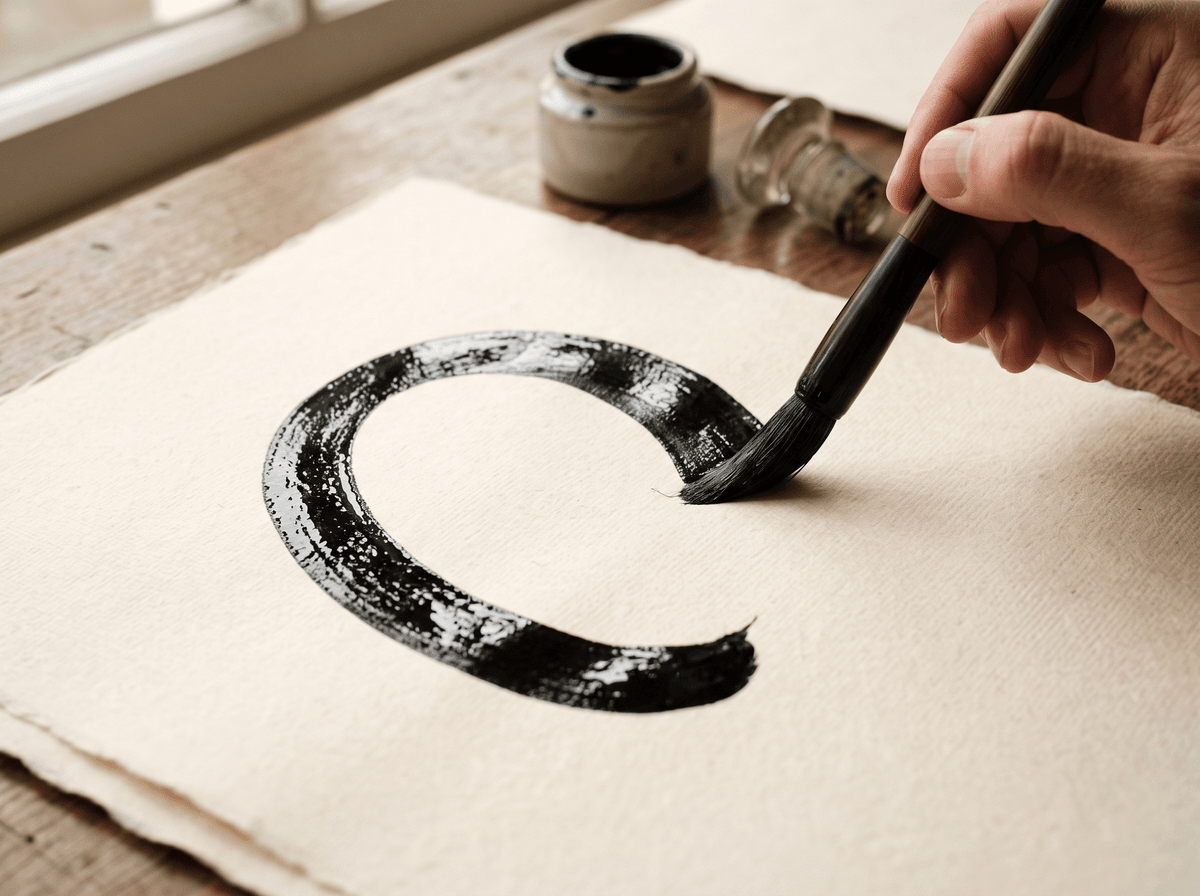
Chloe Bennett is an illustrator, and for years she signed her prints with the same signature she used at the bank. At a craft fair a buyer remarked that her signature looked exactly like the one on her tenancy agreement, which he'd once seen photographed in a listing. Chloe then designed a separate artist's mark: a big round “C”, her first name after it, and a small star at the end. At the bank and on contracts she kept her usual, calm signature.
In Calligra you can try more than 70 styles with your name. If you'd like an autograph too, you can pick a more restrained one for your official signature and a showier one for your autograph, or type in your nickname or stage name and get designs for that.
Stage names, artist's marks, signing your work
Creators have long used a separate mark on their work. A painter's signature in the corner of a canvas, an illustrator's mark on a print, a musician's signature on an album cover: these are relatives of the autograph that become part of the work.
- Always in the same place. If you mark your work, decide where the mark goes and stick to it. That's part of being recognisable too.
- Always the same way. A signature on your work becomes yours by being the same on every piece. Small variations are fine, but the form should stay.
- Official matters get the official one. If you sign a contract under your stage name, your legal name and official signature on the signature line are the safe choice, unless the other party explicitly asks otherwise.
When several signatures cause trouble
The problem with several signatures isn't that they exist, but that they get mixed up. Most of the hassle comes from a few typical situations.
- The wrong form in the wrong place. At the bank you write your everyday or autograph version, and it doesn't match the specimen. They may want to check, or ask you to sign again.
- You don't know which is where. Years later you can't remember which form you gave which bank, so you sign hesitantly and inconsistently.
- The forms start to merge. If you use two similar signatures, your hand eventually mixes them up, and neither stays consistent.
- Confusing for others. At work or in family matters, others can't tell which one is yours, and that can even raise suspicion.

Tidying up: if you already have too many versions
If you've read this far and realised you have three or four signatures in circulation, don't worry. It can be sorted out in a few steps.
- 1List where each one appears. Documents, banks, work, important contracts. If you can't remember, check your documents and the copies you keep.
- 2Pick the official one. The best candidate is usually the one on your ID card, because that's the hardest specimen to change.
- 3Decide whether you need an autograph. If so, choose or design a deliberately different form. If not, one signature covers everything.
- 4Let the rest go. Simply stop using the unnecessary everyday versions. Write the official one everywhere, at most more fluidly.
- 5Tell people if needed. If a bank or office holds a different form from the one you're keeping, ask whether they need a new specimen. Changing your signature walks you through it step by step.
Practise the form you keep deliberately for a few days, so your hand doesn't slip back into the old ones. The practice article has a 7-day and a 21-day plan.

Common mistakes and how to fix them
Problems with several signatures almost always come from the same few mistakes, and each can be fixed.
- Two official signatures. One on your ID, another at the bank. Fix: pick one, and if needed give a new specimen where it differs.
- The autograph is the same as the official one. The mark you hand out in public is your official specimen. Fix: design a deliberately different autograph and use that in public from now on.
- The everyday version is a different mark. The quick form looks nothing like the official one. Fix: make the everyday one a more fluid version of the official, with the same start.
- Improvising every time. You don't really have a form, just mood-dependent versions. Fix: settle on an official one and practise until ten out of ten match.
- You don't know what you gave where. Fix: a simple list of where each one appears, and a gradual move to a single official form.
A checklist for your signatures
Run through this list. If the answer to everything is yes, your marks are in order, whether you use one signature or several.
- 1Do you have one official signature? Your documents, your bank and your contracts all show the same one.
- 2Do you know which one is on file where? If not, make a short list.
- 3Does your everyday version start from the official one? Same capital, same slant, just more fluid.
- 4Is your autograph different from the official one? Recognisably you, but not your bank specimen.
- 5Is each form the same ten times out of ten? Whichever you write, you're not improvising.
- 6Do you only hand out the autograph in public? Your official signature doesn't end up on social media, posters or photos.
The one sentence worth taking away
Have one official signature and keep it the same; let the everyday version be a quicker form of it, and if you need an autograph, make it deliberately different, so the public never gets your bank signature.
Questions
Am I allowed to use two different signatures?
In most places there's no general ban, but every institution treats the signature you gave it as yours and compares later ones with it. So at the same bank, on the same document or with the same employer, it's best to always write the same one. If you're unsure about a specific matter, ask the institution concerned in advance.
Can my signature at the bank differ from the one on my ID?
It happens, but it isn't ideal: you end up with two official specimens that are easy to mix up. It's simpler to choose one official signature and, where a different one is on file, ask whether you should give a new specimen.
Do I need a separate autograph?
It's not required, but if you often sign in public, for example at performances, sports events or book signings, it's worth it. That way the signature that gets photographed and posted isn't your official specimen.
How different should my autograph be from my official signature?
Different enough that nobody can read your official form from it, while staying recognisably yours. A different name or form of your name, a different capital or proportions, and a feature that appears only in the autograph all work well.
Can I use a quicker signature with couriers or at the till?
Yes, if it's a more fluid version of your official signature, with the same start and slant. Rather than a completely different mark, it's better to simplify the official form so it's comfortable at a counter too.
If I work under a stage name, can I sign contracts with it?
Always clarify that with the other party or a professional. Usually your legal name and official signature on the signature line are the safe choice; the stage name and artist's mark belong on your work and in public settings.
I have three signatures and don't know which is where. What should I do?
List where you've used each one, pick the official one (usually the one on your ID card), and gradually switch to it everywhere. Where a different specimen is on file, ask whether you need to give a new one. Changing your signature helps with this step by step.
Try it with your own name
Read these too
Knowledge Practical
A handwritten signature in your email: how to add it in Gmail, Outlook and on your phone
Transparent image, the right size, the right version: a step-by-step guide to putting your handwritten signature at the bottom of your emails, and making it look good in dark mode and on phones too.
 Basics
Cursive vs print signature: pros, cons, and which one suits you
Plenty of people print rather than write joined-up these days, and wonder whether they can sign that way. They can. Here's what cursive does better, what print does better, the semi-cursive middle ground, and how to turn a printed name into a real signature.
 Basics
The anatomy of a signature: the parts and what they do
Entry stroke, capital, body, ascenders and descenders, connections, ending: a glossary of every part of a signature, each defined in one sentence and walked through on a worked example.