Signature ideas
Signature ideas: 40 concrete forms by style, and how to choose yours
The best signature ideas are concrete choices: what your capital looks like, how much of your name stays, and how you finish it. Here they are grouped by style, from minimal to celeb, with real samples from the app and a quick way to pick the one that suits you.
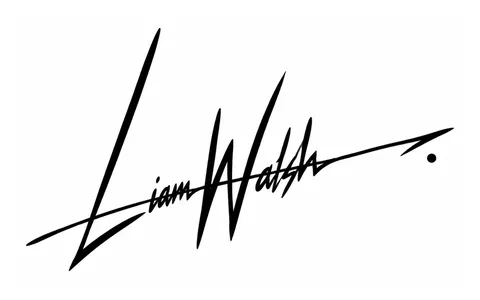
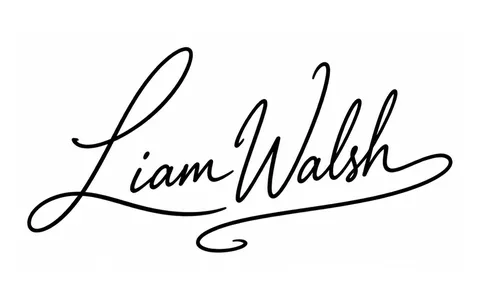
If you're looking for signature ideas, you've probably tried a few in the margin of a notebook already, and none quite felt like yours. That's normal: a ready-made sample was made for someone else's name. You don't copy an idea; you borrow one element of it, a capital, a slant, a finish, and build it on your own name. That's why the ideas below are elements and forms, not finished signatures. They're grouped by style, each with a note on what it's good for, and at the end there's a short test to help you choose.
What makes a good signature idea?
An idea is good if you can say yes to three questions. Run through them for every form below before you fall for it.
- Can you write it quickly, in one flow? If a form only works when you draw it slowly, it will fall apart in everyday use.
- Does it come out the same the twentieth time? A signature's whole job is to be consistent. Complicated decoration gets in the way.
- Does it suit your name? A long loop is easy on an “L” and awkward on an “E”. The letters of your name decide a lot; there's a separate guide on that.
Minimalist signature ideas
A minimalist signature uses few strokes and plenty of air. It's modern, fast and works in small spaces. A good pick if you don't like ornament or sign a lot every day.
- A capital and a straight line. One clean capital, then the rest of the name smooths out into a barely waving line.
- Full surname, lowercase first initial. Something like “e. clarke” in an even, thin line. Relaxed and contemporary.
- Surname only, no ornament. Even letter height, a slight slant, no finish. Tidy and easy to read.
- Two capitals with a full stop between them. “E. C.” side by side at the same slant. Ideal for small boxes.
- A short, tapering exit stroke. At the end of the name the pen lifts and the line thins to a hairline. That's the only decoration.
Initials and monogram ideas
If your name is long, or you like your signature to be more of a mark than a word, build on your initials. The capital is the face of a signature: it can carry most of the character. How to design a distinctive capital is covered in detail in this article.
- Two interlaced capitals. The first-name and surname initials share one stem, like a monogram.
- A big capital, a tiny name. The first letter two or three times the size, the rest low and fast.
- A capital that wraps around the name. One curve of the capital turns back and bends under or over the other letters.
- A monogram in one mark. Only the initials, in one movement. For initialling pages and small spaces.
- On two lines, like a logo. The first initial on top, the surname below. The app's Two-line style does exactly this.
An initials version also makes a good second signature: a longer one for contracts, a short one for quick signing. When it's worth shortening, and how far, is here.
Underlines and finishes: ideas for the end of your name
The end of a signature is as recognisable as the start. A good finish closes the line, and it's often what turns an ordinary name into a signature. There's a separate article on the types of finish.
- A straight underline. One decisive line under the name. Classic, confident, easy to repeat.
- A return underline. The last letter's stroke curves back under the name. Elegant, and it needs no separate movement.
- A tapering sweep. The line starts strong and thins out to a hairline. Momentum without decoration.
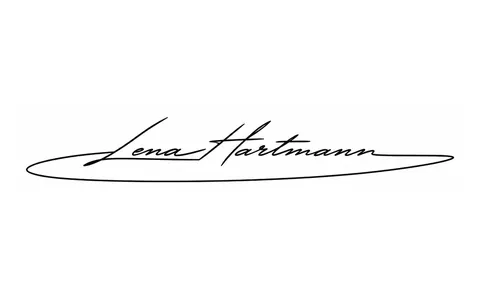
- An oval frame. A flat curve runs round under the name, as if it were sitting on an arc. Striking but orderly.
- A full stop at the end. One small dot after the last stroke. It adds surprisingly much and costs no time.
- A lead-in stroke before the name. A long, thin line runs into the name like a thread. Rare, so it stands out.
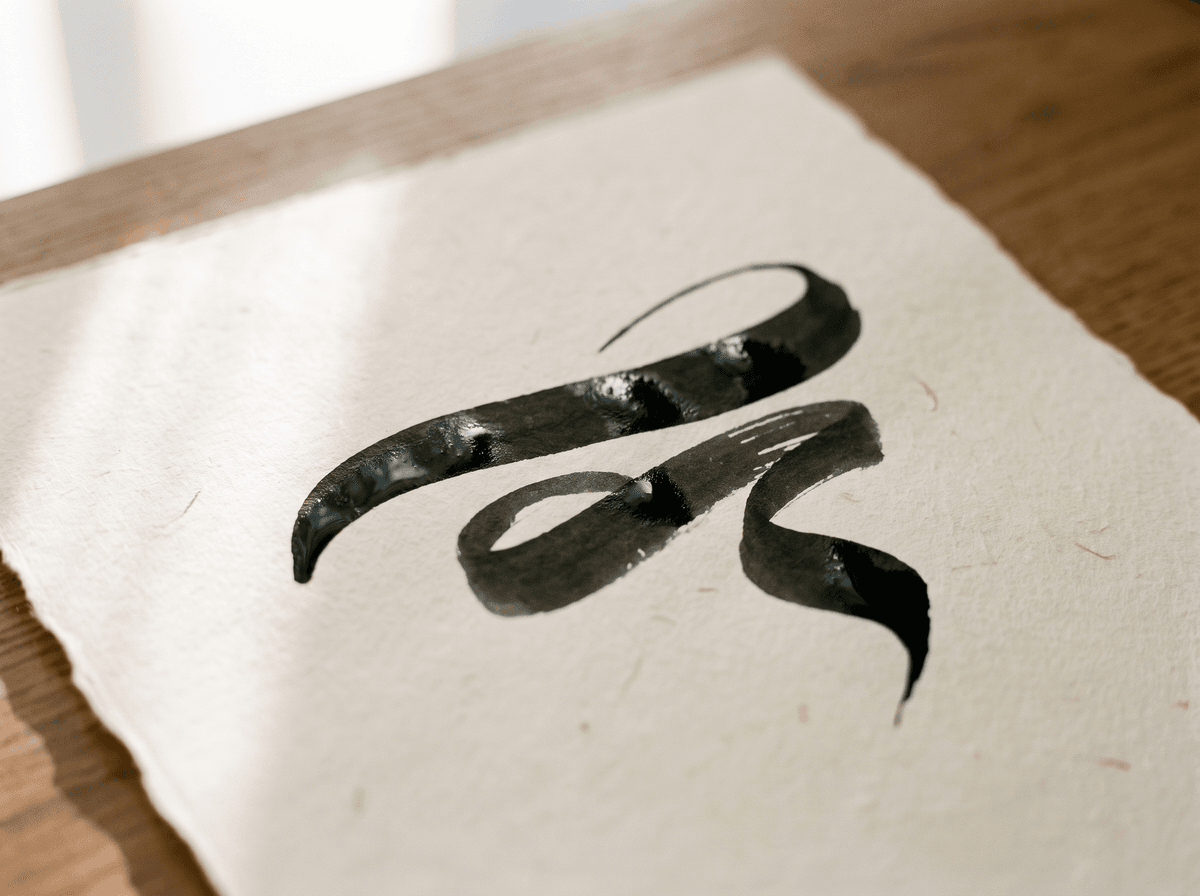
Elegant cursive signature ideas
If you love the classic, calligraphic look, cursive is your territory. Letters join, capitals loop, the line is fine. It can be formal or romantic, and with a strong capital it suits anyone.
- Tall looped capitals. The upper loop of the capital reaches well above the small letters.
- Letters joined all the way. The pen doesn't lift until the end of the name. That's what makes it flowing and fast.
- An even slant to the right. Every letter leans at the same angle. A consistent slant does more than any flourish.
- A long sweep out of the capital. The bottom stroke of the capital runs right under the name and closes it as an underline.
- Round, open small letters. Full, open “a”, “o” and “e”, with loops all the same height. Calm and classic.
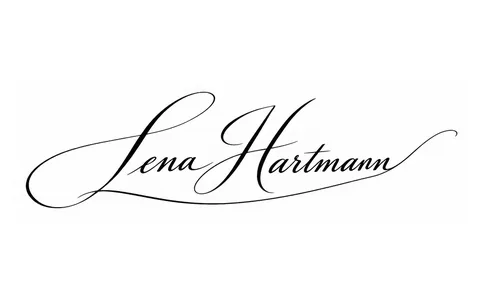
If you're torn between cursive and print for a signature, this article helps you decide.
Celeb-style ideas: the autograph look
Celebrity signatures are big, fast and recognisable at a glance. What matters in them isn't whether you can read every letter, but the movement. If that's what you want, try these elements.
- A huge capital. One big loop or curve that dominates the whole name, with the other letters small and quick.
- A steeply rising line. The whole signature climbs at an angle, as if written on the move. Dynamic and sporty.
- One long stem. A single tall upright, the stem of an “l”, “h” or “k”, that says it all.
- Spiky, angular letters. Sharp peaks instead of round shapes, like a rock star's signature.
- One huge sweep around it. A wide line that wraps the name. Spectacular for autographs.
Aesthetic, modern signature ideas
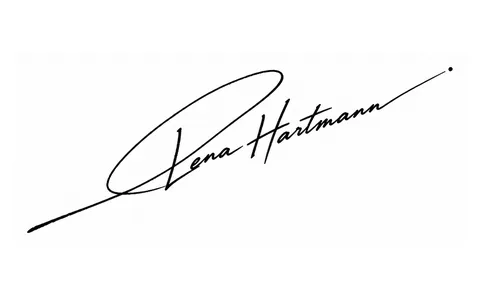
An aesthetic signature is thin, airy and light: the kind that looks good on a photo, in the corner of a drawing or on the first page of a book. These elements create it.
- A thin, even line. A fineliner or a fine fountain pen, no pressure. The line shouldn't thicken.
- All lowercase. The whole name in lowercase, lifted by one long stem or loop.
- Plenty of air between letters. Wide, flat letters with generous gaps.
- A soft wave at the end. The name runs out into a light wave rather than a firm line.
- A dot instead of a tiny heart or star. Decorative icons date quickly; a dot or a short stroke lasts.
Bold, confident signature ideas
If your signature will sit at the bottom of contracts, on letters from a manager or on company papers, confidence is worth more than grace. These elements give it strength.
- A straight, strong baseline. The line doesn't wave; it runs level or rises slightly.
- An angular capital. An “M”, “N” or “H” with sharp peaks and no loops.
- A decisive underline. One line from the start of the name to the end, without wandering.
- A readable start to the surname. The first three or four letters are clear; the rest can shorten.
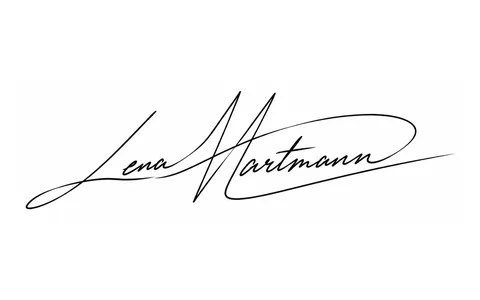
For more on a signature for contracts and work, see our article on professional signatures.
Ideas by situation
- Contracts, bank, ID: a readable capital or start of the surname, an even slant, a simple finish.
- Small boxes (parcels, forms): a shortened form, low letters, no underline. Tips here.
- Screens and card terminals: a larger form you can write in one movement, with few tiny details. See this article.
- Autographs and dedications: a big capital, a spectacular sweep; it can be less legible.
- Email signature: an image of your own signature in a clean version. How, here.
Many people use two signatures rather than one: a fuller one for official papers and a short one for everyday life. If that appeals, read when it's worth having more than one signature.
How to choose yours
Don't decide everything at once. Pick two or three elements from above and try them on your own name.
- 1Pick one style. Minimal, elegant, celeb, modern or bold: whichever you nodded at first.
- 2Add one capital and one finish. For example a tall looped capital and a return underline.
- 3Write it ten times with your own name. Fast, not drawn. Whatever still works at speed stays.
- 4Try it small and standing up. On a sticky note, in a card-sized box, on a sheet held against a wall.
- 5Look at it a day later. If you still like it and eight times out of ten it comes out the same, you've found it.
If you'd like to see these styles on your own name faster, Calligra draws your name in more than 30 celeb styles, and when one clicks it teaches you to write it in eight steps or fewer. Try it with your name. The full step-by-step method is in this guide, and how the online tools differ is explained on the page about signature generators.
The one sentence worth taking away
A good signature idea is an element, not a finished sample: pick a style, a capital and a finish, write them quickly with your own name, and keep the one that comes out the same in a small box and on the twentieth try.
Questions
How do I make my signature look cool?
Give it one big, distinctive capital, an even slant and a decisive finish. A cool signature is fast and confident, not complicated. Choose one striking element, such as a long stem or an underline, and keep everything else simple.
What is an aesthetic signature?
A thin, even, airy signature, often in lowercase, ending in a soft wave or a short exit stroke. It uses little ornament; the space between the letters does more of the work than loops do.
Should my signature be readable?
For official use, at least partly: a readable capital or start of your surname helps a lot. For autographs and dedications it matters less. What an institution expects can vary, so for important documents ask them.
Can my signature be just my initials?
It can; many people use a monogram or an initials signature, especially in small spaces and everyday use. For a first, official signature a fuller form is usually the safer choice, with the initials version alongside as a second signature.
Can I copy a celebrity's signature?
Don't copy it, but take inspiration from it. You can borrow the style, the slant or the type of finish, but the letter shapes should be your own name's. Your signature identifies you, so it needs to be yours.
How do I know which idea suits my name?
Write it quickly ten times with your own name. Whichever form stays clean at speed, without you having to slow down, suits it. The letters of your name, such as loops or descenders, decide a lot; there's a separate guide on that.
How many signature ideas should I try?
Two or three at a time. With too many versions none of them sticks. Pick a few, write each ten times, and a day later see which one you still like.
Try it with your own name
Guides
Knowledge