A signature for your name
Signature for my name: how the letters of your name decide which signature suits you
A signature that suits your name is decided by its letters: the length, the initials, the loops and descenders, and which of your names you go by. Here's what to do with short, long and double names, tricky letters and initials-only signatures, with worked examples.
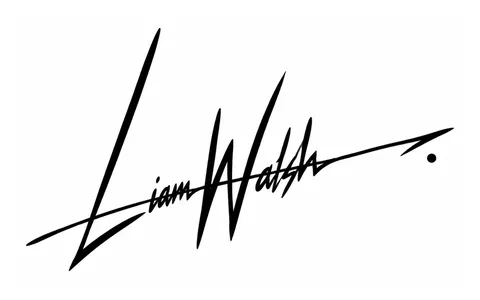
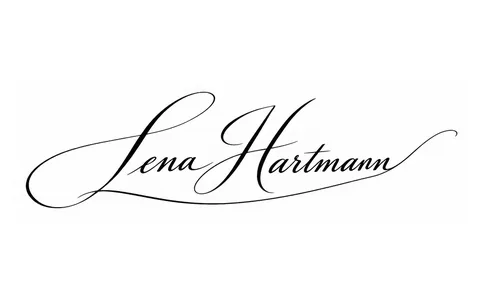
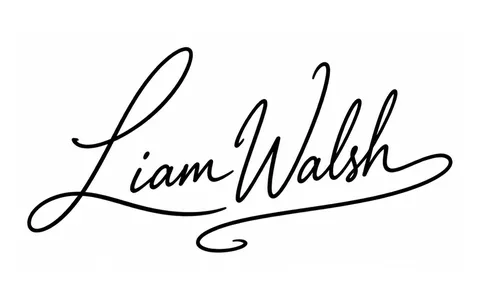
The same style works very differently on two different names. A long looped capital comes naturally on an “L” and looks forced on an “E”. A three-part, hyphenated name won't fit where a four-letter one does. So the right question isn't which signature is beautiful, but which one suits the letters of your name. This guide goes through what your name decides: which name to build on, what to do with short and long names, double names and tricky letters, when initials are enough, and we walk through the decisions on made-up names.
Why your name decides, not the style
A signature is a movement, and the order of the letters shapes the movement. Every letter has a natural direction and every join has a difficulty. If the style starts from your name, the pen travels through it without hesitating. If you force your name into a ready-made style, it will fall apart wherever your letters don't join the way the sample's did.
- The length decides how much can stay written out and how much has to shorten.
- The initials decide where the character can go: is there something to build a loop, stem or curve on?
- The small letters set the rhythm: runs of same-height strokes (m, n, u) melt into a wave, while descenders and ascenders (g, y, l, h) add height.
- The number of names decides which is the main name and what shortens to an initial.
First name or surname: which to build on?
In English the first name comes first, but most formal signatures lead with an initial and the surname: “E. Clarke” rather than “Emma Clarke”. Then the surname's capital is the main one, and that's where the character goes. If people know you by your first name, or its initial is much more rewarding to write, lead with it instead: “Emma C.” or “Emma Clarke” with a big “E”.
- Build on your surname if you sign mostly for official papers and work, and if its capital is easy to shape.
- Build on your first name if you want a more personal feel, if your surname is very common, or if a name change is likely and your first name is the stable part.
- Write both out if it's your first signature or your name is short: it's the most legible.
How much of your name a signature should contain, and how readable it should be, is covered in detail in this article.
Short names: how to give them weight
A short name such as “Ava Fry” is quick to write and easy to read, but it can easily look too plain, even childish. The answer isn't more decoration; it's size and the finish.
- Write both names out. With a short name there's nothing to shorten; the full name gives it mass.
- Give the capital some weight. A taller “A” or a long stem on the “F” turns it into a signature at once.
- Join the two names. If the end of the first name runs into the surname, two short words become one line.
- Close it with a line. An underline or a sweeping exit makes it longer and more finished.
More ideas for short names are in this article.
Long names: what to keep and what to shorten
A long name such as “Maximilian Wetherington” is slow to write out in full and won't fit a small box. The question is what stays readable. The rule that works: keep the start clear and let the end shorten.
- Keep the start of the surname. “Wether” or even just “Weth” written out, the rest running into a wave.
- Shorten the first name to an initial. “M. Wetherington” is tidy and much faster.
- Let the capital carry the character. With a long name, one strong capital does more than many written-out letters.
- Don't pile decoration on the end. A long name is long enough already. A short exit stroke will do.
More ways to shorten a long name are here.
Double names: two first names, hyphenated surnames, married names
If you have two first names, a double-barrelled surname or a married name, you don't have to write everything out. Pick one main name, write that one out, shorten the rest to initials, and make sure the initials join at the same slant.
- Two first names (for example “Mary Jane Ellis”): “Mary J. Ellis” or “M. J. Ellis”. The second first name can often be left out. Details: two first names in a signature.
- Hyphenated surname (for example “Charlotte Harrington-Bligh”): “C. Harrington-B.” or “C. H.-Bligh”: one surname in full, the other as an initial. See double surnames.
- Married or combined names: decide which part you use every day and write that one out; the rest can become initials.
Tricky letters and what to do with them
Almost every name has a letter or two that trips the pen. You don't need to avoid them, just simplify them.
- Descenders (g, j, p, q, y): their loops hang into the space below and collide with an underline in small boxes. Shorten the loop to a straight stem, or drop the underline.
- Ascenders (l, h, k, b, d): these are your friends. A long stem or a tall loop on them gives the character.
- Same-height strokes (m, n, u, w, i): in a row they melt into a wave. That's fine: the wave can be the shortened end of the name.
- Awkward capitals (E, X, Z, Q): simplify them to two or three strokes and let the finish carry the character.
- Rewarding capitals (L, H, S, M, D, B): they take a loop, stem or curve easily, so build on them.
- Dots and accents (i, j, é, ñ): add them at the end in one quick movement, or leave them out if the form is cleaner that way. More in accents in a signature.
Initials only: when is a monogram enough?
An initials signature makes sense if your name is very long, if you sign a lot every day in small boxes, or if you want your signature to be a mark rather than a word. Two letters can still make a unique form if you join them: a shared stem, curves that run into each other, or one big letter wrapping a small one.
For a first, official signature, initials only is usually less advisable, because it's harder to recognise. A good solution is to have a fuller signature too and use the monogram as your short signature or for initialling pages. How having more than one signature works, and when a short one is enough, are covered in separate articles.
Worked examples on made-up names
Here's how the points above lead to decisions on four made-up names. You can run your own name through them the same way.
- “Ava Fry” (short name): both names written out, a taller “A”, the end of “Ava” joined into the “F”, whose stem drops low, and a short underline. Fast, readable, and it has weight.
- “Maximilian Wetherington” (long name): “M. Weth” written clearly, the rest shortening into a wave. The “W” gets two tall peaks, and the finish is just an exit stroke.
- “Peggy Young” (lots of descenders): the loops of “g”, “g” and “y” shorten to straight stems so they don't collide. The “P” and “Y” share one big curve, and there's no underline, because the descenders already give it a lower line.
- “Charlotte Harrington-Bligh” (hyphenated name): the everyday signature is “C. Harrington-B.”: the two uprights of the “H” reach high, the “B” is a single loop. For small boxes, the same as a “C. H. B.” monogram.
How Calligra designs for your name
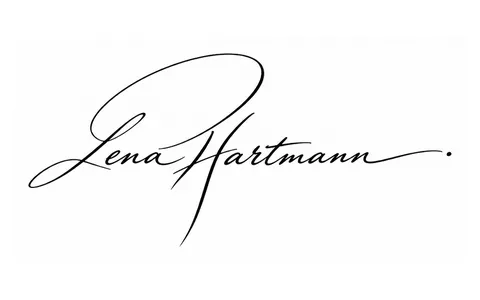
Calligra doesn't type your name onto a ready-made template; it draws the signature from the letters of your name. You type your name, write your current signature with your finger, and we score it on five criteria: legibility, uniqueness, elegance, balance and speed. Then you pick from more than 30 celeb styles, and the app fits the style's strokes to your name. Every drawing is different, so if one doesn't click, ask for another.
The same style comes out differently on two names because the letters are different: that's why it's yours and not a template. We break the finished signature into eight steps at most, show it in an animation you can slow down, and the practice pad scores every try. You can design one for someone else's name as a gift, too. Try it with your name.
If you're still looking for a style, browse signature ideas; for the complete method, the step-by-step guide; and to choose between tools, the page on signature generators.
The one sentence worth taking away
A signature that suits your name is decided by its letters: build on the more rewarding capital, write both names out and give the capital weight if your name is short, keep the start of the main name and shorten the rest if it's long or double, and simplify tricky letters rather than avoiding them.
Questions
How do I design a signature for my name?
Find which of your initials is more rewarding to write, decide which name is written out and what shortens, simplify the tricky letters and add a simple finish. Write it quickly ten times and keep the version that flows without hesitating.
Should my signature start with my first name or my surname?
Formal signatures often lead with an initial and the surname, but there's no rule. If people know you by your first name, or its initial is more rewarding, start with that. What matters is that you write it the same way every time.
What if my name is very short?
Write both names out, give the capital a taller stem or bigger loop, join the two names and close with an underline or sweeping exit. Size and the finish give it weight, not lots of decoration.
What if my name is long?
Keep the start of your surname clearly readable, let the end shorten into a wave and reduce your first name to an initial. One strong capital does more than many written-out letters.
Do I have to include both of my first names or both surnames?
No. Pick one main name, write that out and shorten the rest to initials. What a particular institution expects can vary, so for important documents ask them.
Can my signature be just my initials?
It can, especially as a short signature or for initialling. For a first, official signature a fuller form is usually recommended because it's easier to recognise, with the monogram alongside as a second signature.
Is there a site that designs a signature for my name?
Yes. Calligra draws a signature from the letters of your name in more than 30 celeb styles, in real, human handwriting, and teaches you to write it in eight steps or fewer. First it scores your current signature on five criteria.
Try it with your own name
Guides
Knowledge