Kennisbank › Style
Style
Can a signature include numbers or symbols? Hearts, stars, an 8 and drawn shapes
A little heart over the i, a star at the end of the stroke, a loop shaped like an 8 around the first letter: plenty of people want something of their own in their signature. We look at when a number or a drawn symbol works, where it can cause trouble, and how to add one so your name stays the main thing.
Some people add their birth year after their name, some draw a tiny heart over the i, and some build the whole signature out of a loop shaped like an 8. It makes sense: a small symbol makes the form personal and easier to remember. A number or a drawn motif can be part of a signature, but it only works everywhere if your name, and above all its first letter, stays recognisable. In this article we go through the symbols people tend to add, the difference between everyday and official use, why an institution might question a mark made only of a symbol, and how to add a small motif without losing your capital. Official rules differ between countries and institutions; this is general information, not legal advice.
In short: yes, but where matters
A signature is a movement that says: I signed this. What exactly counts as a signature varies from place to place, and our article on what counts as a signature covers that in more detail. In practice, most places check whether it is your usual, recognisable mark and whether it matches the one you gave them before.
A small heart or a number doesn't change that, as long as the rest of the form is made of your name. The trouble starts when the symbol takes over and nobody can tell from the signature whose it is. A star with nothing beside it is sweet on a birthday card, but it may raise questions when you open a bank account.
A motif is the seasoning, not the meal: let your name carry the form and the symbol simply come along.
Which numbers and symbols do people add?
These are the most common additions people use to make a signature feel more personal.
- Numbers. The last digits of a birth year, a favourite number or an important date. Most people write them after the final stroke, smaller than the name.
- The 8 as a shape. Many people use it not as a number but as a loop: an 8 is written in one movement and is easy to repeat, so it fits neatly around a first letter or into the ending.
- Hearts. Most often in place of the dot on an i, or at the end of the stroke. Especially popular with younger writers and on cards and notes.
- Stars. A small star above the name or at its end. You often see it on autographs, where the mood matters more than the formal shape.
- Drawn shapes. A wave, a crown, a flower, an arrow or a little spiral. These usually grow out of the capital letter or decorate the ending.
- Dots and lines. A dot after the name, two short lines beneath it. The simplest marks of all, and the easiest to repeat the same way every time.
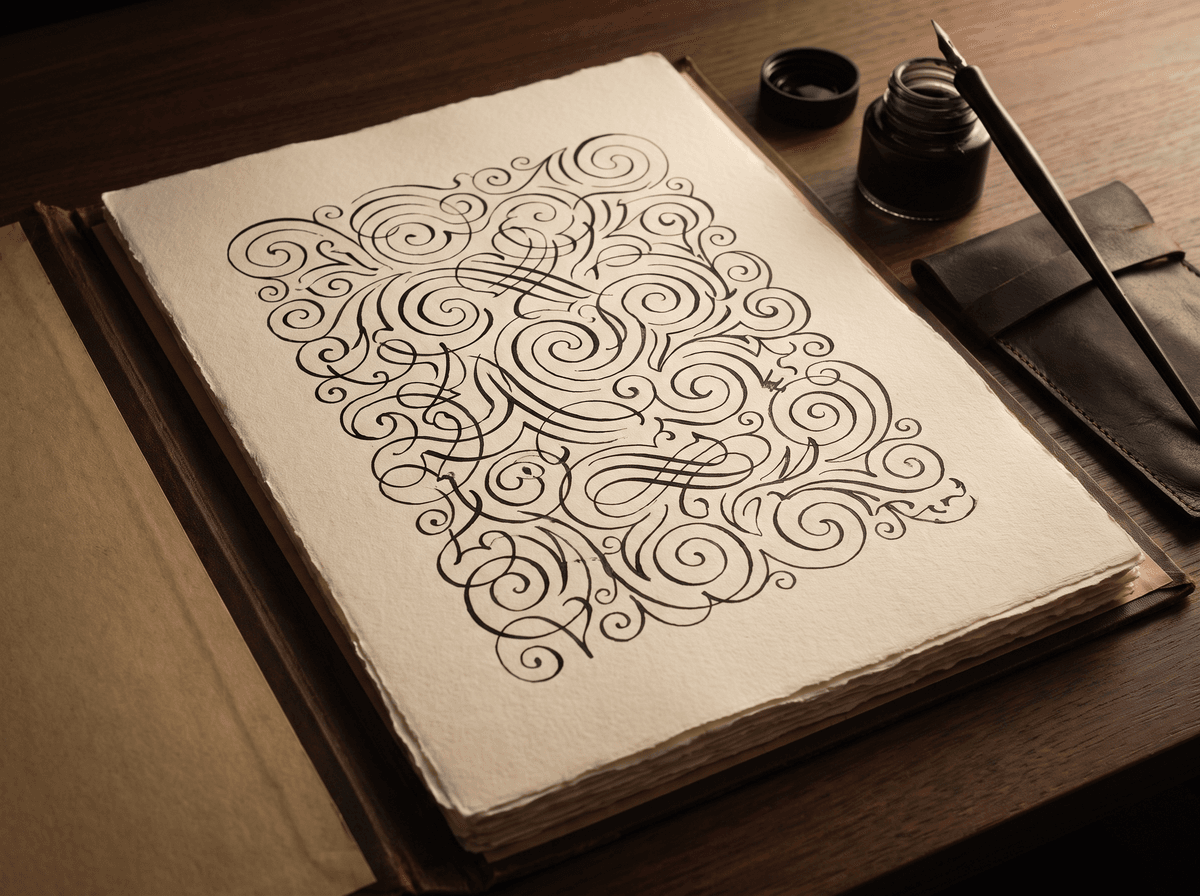
Everyday and official signatures: how much fits where?
It helps to separate two kinds of situation. In one, nobody compares your signature with anything; in the other, it is checked against an earlier specimen.
- Birthday and thank-you cards.
- Autographs and dedications.
- Parcel deliveries and school notes.
- Your own notebooks, drawings and gifts.
- An image signature in emails or on social media.
- Bank accounts and signature specimens.
- ID cards and passports.
- Contracts and official applications.
- Notarial and court documents.
- Anything that may be compared later.
That's why many people use two forms: an official one made of their name, and a more playful one with the heart or the star. That's fine as long as you're consistent and always use the same one in official places. Our article on having more than one signature goes into this in detail.
Why might an institution question a symbol-only mark?
Not because a heart or a number is forbidden. It's because an institution needs to be able to tell later whether you really signed. A mark made only of a symbol is less suited to that for a few reasons.
- It isn't tied to your name. Nobody can say whose a star or an 8 is. If at least your first letter is in it, the signature already points to you.
- It's easier to copy. Anyone can draw a simple, familiar shape. The personal joins between the letters of a name, the slant and the pace are much harder to imitate.
- It can be confused with something else. A number next to a signature on a form can easily be mistaken for a date, an amount or a reference number.
- It's hard to compare. A bank or an office checks your signature against your earlier specimen. A drawn symbol has fewer personal features to make that comparison reliable.
If you'd like to use a motif at your bank or on your ID, read our articles on signing at the bank and the signature on your ID and passport first, because a specimen there stays with you for years.
How to add a small motif and keep your capital
The aim is for anyone looking at it to see your name first and only then notice the symbol. These steps help.
- 1Start with the first letter. The capital is the most important part of a signature; it's what the eye catches first. Don't swap it for a symbol, and don't draw the motif into it so heavily that it becomes unrecognisable. If you haven't found its shape yet, our article on the first letter can help.
- 2Choose one motif. A heart or a star is enough. With several symbols the signature gets crowded and harder to repeat the same way.
- 3Put it at the edge. The best spots are the dot of an i, the end of the final stroke or the space above the name. In the middle of the name a motif breaks the rhythm.
- 4Keep it smaller than the letters. The symbol should be no bigger than a lowercase letter. Any larger and it takes over.
- 5Write it in one movement. An 8, a loop or a wave blends into the line. A heart or a star is a separate movement, so leave those for the end.
- 6Test it in a small space. Write it into a narrow box. If the motif takes space away from your name there, leave it out of the official version.

Examples in words: what it can look like
A few imagined examples to show how a name and a symbol can sit side by side.
- A heart over the i. The name is fully legible; only the dot of the i is a tiny open heart. Lovely on cards and notes, and in the official version it simply becomes a dot again.
- An 8 loop around the capital. The stem of the first letter runs into a sideways 8 and the name carries on from there. Here the number is a shape, not a value, so it can't be confused with anything.
- A star at the end. After the surname the line runs out and finishes in a small star. Good for an autograph; at the bank the trailing line is enough.
- A year after the name. Two smaller digits after the name, such as the end of a birth year. Personal in everyday life, but easily mistaken for a date on official paper, so leave it off there.
- A wave under the name. A single wavy underline that starts from the capital. Hardly a motif at all, more of an ending, so it fits almost anywhere.
If you're after more playful shapes, our article on cute and cool signature ideas has plenty more. And if you'd like a base you can add a small symbol to later, Calligra lets you pick from more than 70 styles, each shown with your own name, and the AI draws your signature in it.
De ene zin om te onthouden
A number, a heart or a star can be part of your signature as long as your name, and especially its first letter, stays recognisable beside it. Play with it as much as you like in everyday life, but at the bank and on official papers let your name lead, and keep the motif small, at the edge, or leave it out.
Vragen
Can my signature include a number?
In everyday life, yes; many people add a year or a favourite number after their name. On official paper a number can be confused with a date or an amount, though, so it's better to leave it out there, or use it only as a shape, such as an 8-shaped loop.
Can I draw a heart or a star in my signature?
Yes, as long as your name stays legible beside it. Its best place is the dot of an i or the end of the final stroke, and it should be smaller than the letters.
Will a bank accept a signature that's only a symbol?
That differs between banks and countries. A symbol-only mark is harder to tie to your name and to compare, so you may be asked about it. Ask your own bank before giving it as a specimen.
What does an 8 in a signature mean?
Usually not a number but a shape: an 8 is a loop written in one continuous movement and easy to repeat, which is why many people build it around their first letter or into the ending.
Can I have one official and one more decorative signature?
Yes, many people use a simple official form made of their name and a more playful one with symbols. What matters is that you always use the same one in official places.
How do I add a motif without it looking childish?
Choose one simple symbol, put it at the edge, keep it smaller than the letters and write it with the same line weight as your name. That way it becomes part of the form rather than a separate drawing.
Probeer het met je eigen naam
Lees ook
Kennisbank Basis
Hoe leesbaar moet je handtekening zijn?
Niet elke letter hoeft leesbaar te zijn, maar pure chaos is ook niet het antwoord. Zo vind je de balans tussen leesbaarheid en persoonlijkheid.
 Oefenen
Zo leer je je nieuwe handtekening, stap voor stap
Opwarmen, de volgorde van de halen leren, overtrekken en dan tempo opbouwen: een plan van 7 en een van 21 dagen om een nieuwe handtekening echt de jouwe te maken.
 Praktische tips
Je handtekening veranderen: wanneer, waar en hoe
Je kunt op elk moment een nieuwe handtekening aannemen, maar hoe je hem invoert maakt verschil. Waar je handtekening geregistreerd staat, wat je moet vragen en hoe je de onwennige eerste weken doorkomt.