Knowledge › Style
Style
How to improve your signature: 7 small changes that make it look better
You don't need a new signature for it to look better. Seven small changes to the capital, the slant, the proportions and the ending make your old signature tidier, while it stays recognisably yours.
Most people don't want a new signature. They've written the same one for years, they're used to it, it's on file at the bank and on their documents; they just glance at a piece of paper now and then and think: this could look better. The good news is that you don't have to throw it all away. A signature's look is rarely spoiled by the shape of its letters; it's spoiled by a few small things: an unsure capital, a line leaning this way and that, an underline that's too long. You can fix those one at a time, and the result is still the same movement, just tidier. In this article we look at how to find where to start, go through seven small changes with a before-and-after for each, give you a one-week plan, and tell you when polishing isn't enough. If you'd rather start from scratch, see the article on creating your own signature.
First, take a look: where does it slip?
Before you change anything, find out what the real problem is. You can't tell from a single signature, because that might just be a good or a bad moment.
- 1Sign ten times. One under another, on plain paper, at your usual pace. Don't prettify it; write it the way you would at a counter.
- 2Hold it at arm's length. Up close you see details; from a distance you see the whole. If it looks messy at a glance, it's usually not about the letters.
- 3Look for what stays the same. Whatever is the same in all ten is yours; keep it. Whatever differs each time is where the work is.
- 4Name the three most annoying things. For example: “the capital is squashed, the end runs away, the middle is unreadable”. Working on those three is enough.
If you'd like an outside eye, Calligra scores the signature you write on screen on five criteria: legibility, uniqueness, elegance, balance and speed. It explains every number, so you can see which part to start with. A family member's opinion helps a lot too: show them the ten lines and ask which they like best.
The basic rule: one thing at a time
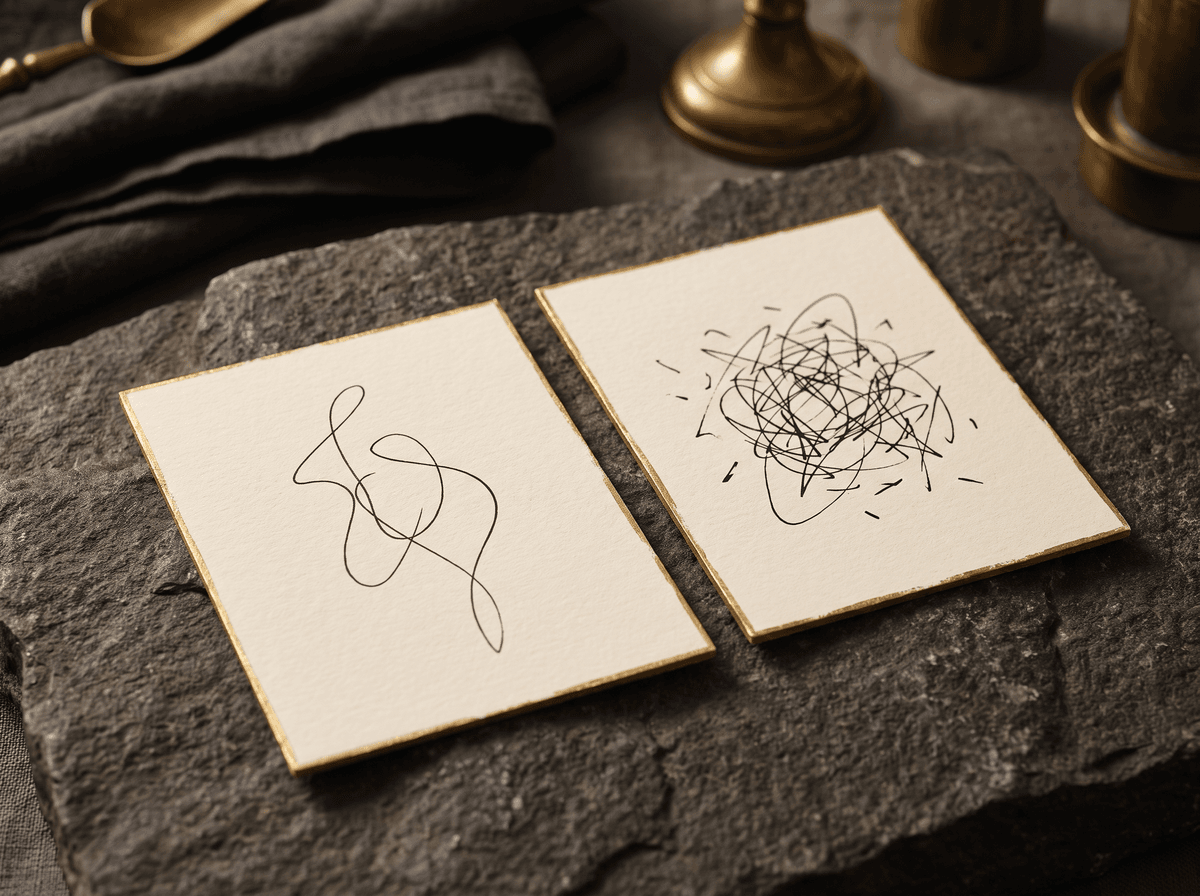
The most common mistake is changing everything at once. Two weeks later the new form still won't come, and the old one no longer feels confident. Small fixes work because your hand already knows most of the movement.
- One change a week. Practise the one that gains the most first, and only move on once it comes by itself.
- Recognisability stays. Anyone who knew your signature should recognise the polished version too. Same start, same rhythm.
- Don't beautify on paper. Don't draw your signature slowly. What only works slowly won't work at a counter.
You don't need a new signature; you need the same movement, a little tidier.
The start: your capital
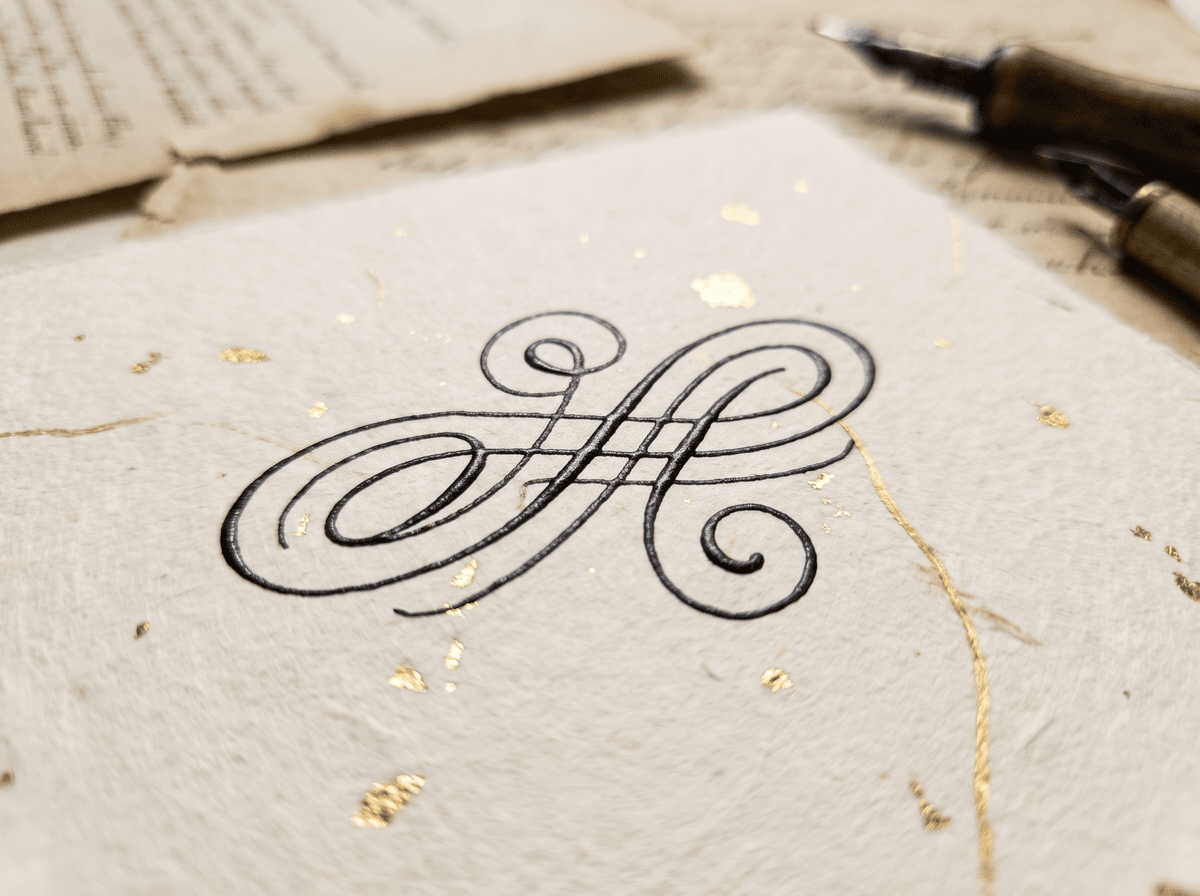
The first letter carries the signature's character, and it's where the eye begins. So this is where the least work brings the biggest gain.
- 1. Make it clearly bigger. Before: the capital is barely taller than the rest, and the name is a grey line. After: the capital is one and a half to two times the height, and the eye finds the start of the signature at once.
- 2. Clean up its shape. Before: the capital has two or three stray strokes because the pen slips over it. After: one clean movement from a decisive starting point. If the letter changes slightly as a result, that's fine as long as it's recognisable.
To get more out of it, the article on capitals goes through the entry stroke, loops and connections step by step.
The middle: slant, proportions, simplifying
The middle of the name decides whether a signature looks tidy or rushed. Three small changes usually help most here.
- 3. Make the slant consistent. Before: one letter leans right, another stands upright, a third tips left. After: every letter points the same way. Even a slight but consistent slant makes the line much calmer.
- 4. Sort out the proportions. Before: all letters are about the same height, or tall and short ones alternate at random. After: deliberately emphasised tall elements and low, even lowercase letters. That's what gives a signature rhythm.
- 5. Drop what only gets in the way. Before: you try to write out every letter and the middle runs together. After: a few letters melt into a simple wave. Not every letter has to be readable, but what stays should be clean.
How readable a signature should be is covered in a separate article. Slant is easiest to practise with faint slanted guidelines: draw a few in pencil and write your signature on them.
The end: your finishing stroke
The last stroke stays longest in the eye. Many signatures go wrong right where the hand is already on to the next thing.
- 6. Shorten and clean up the ending. Before: a long, shaky underline longer than the name itself, or a dying scribble at the end. After: a short, flowing stroke that thins as it exits and goes no further than the length of the name. If you have no ending at all, one short exit stroke adds a lot.
The types of ending, and what each one says, are covered in the article on endings.
The whole thing: pace and pen
The seventh change isn't about the letters but about how you write them.
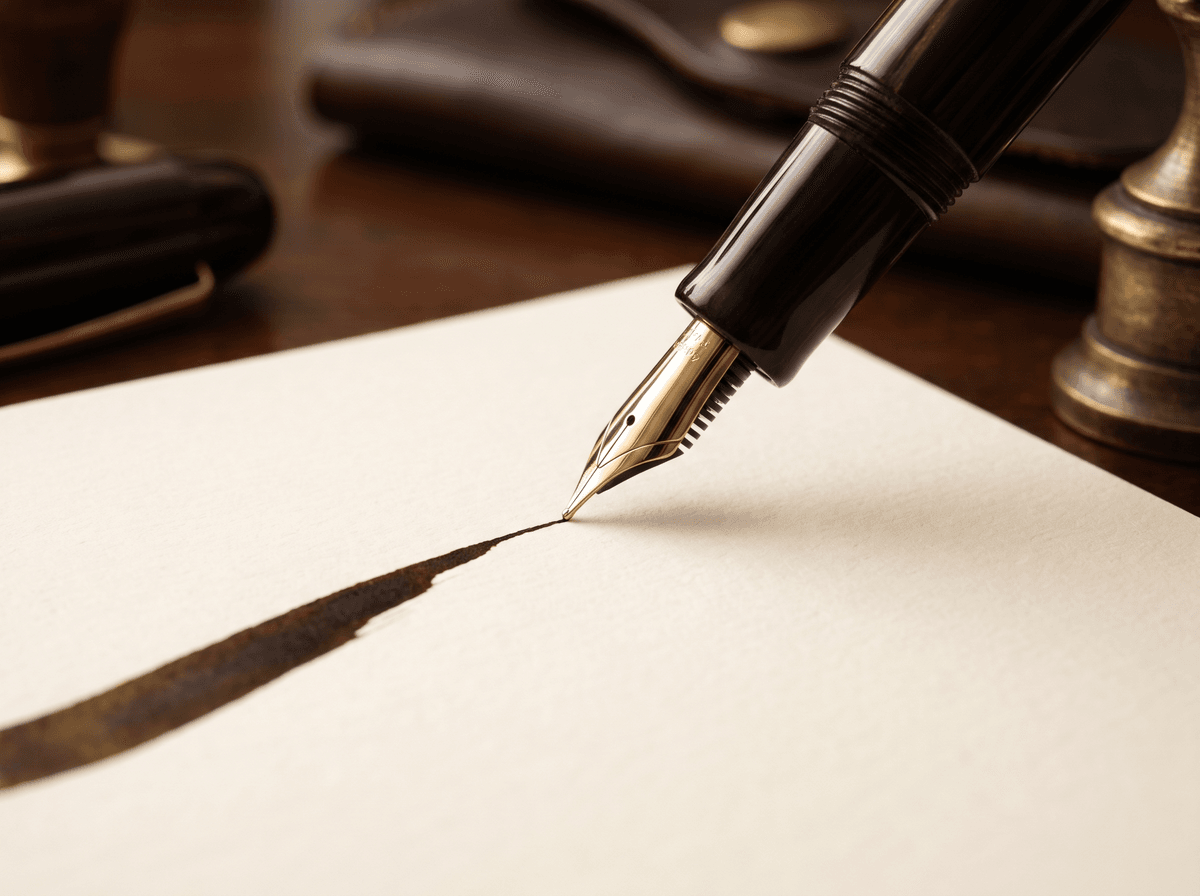
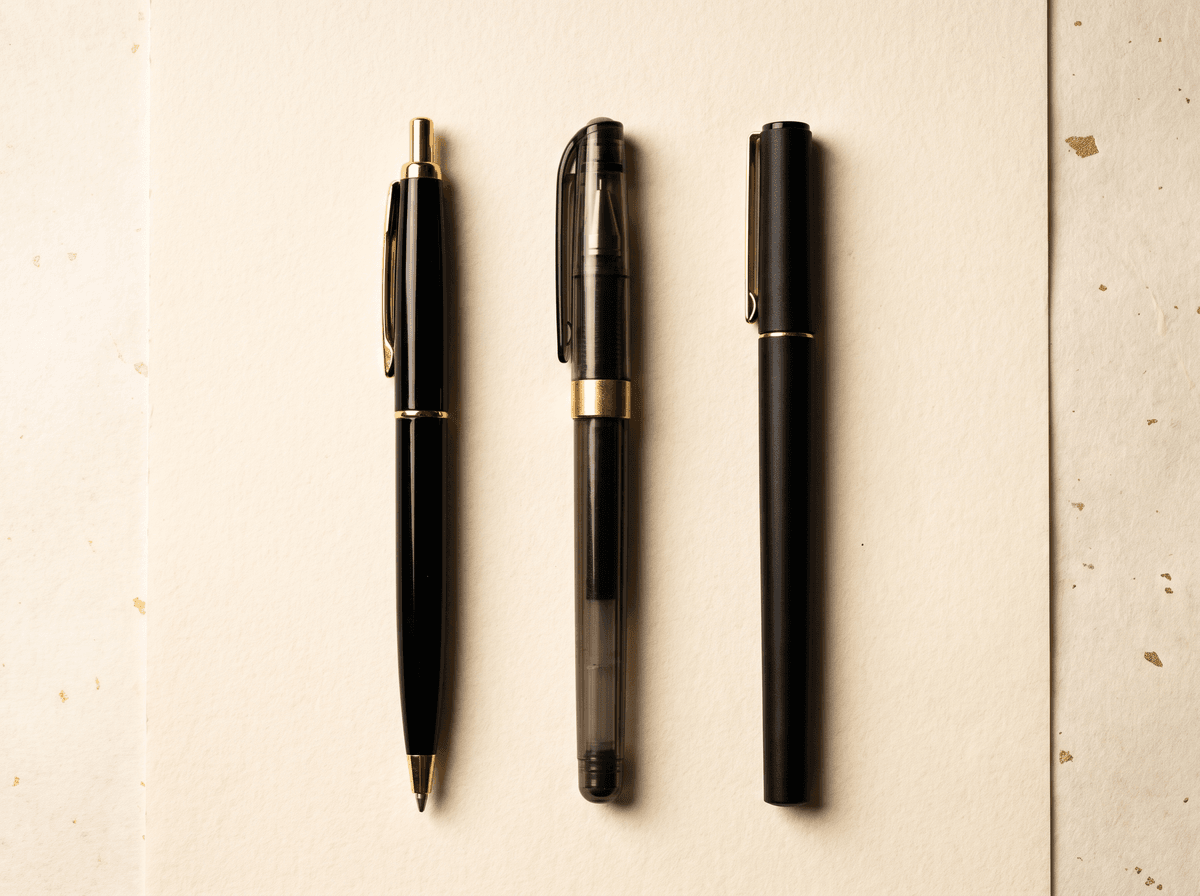
- 7. Find your pace and your pen. Before: you draw it slowly, so the line trembles, or you hurry so much the shape falls apart. After: an even, comfortable flow that's the same across all ten signatures. The pen matters too: a dry ballpoint breaks the line, while a smoother gel pen or fineliner gives a better stroke straight away.
A signature doesn't have to be fast, but it should be written in one movement. Try the same form with three different pens: often that alone makes your signature look better without changing a thing. The article on pens and ink helps you choose.
Before and after: an example
Daniel Brooks had used the same signature for fifteen years: a small “B”, a few identical waves and a long, shaky underline. He didn't want a new one, because his bank and his workplace knew this one. From his ten signatures he saw that the “B” started differently every time and the waves leaned sometimes right, sometimes left. First he worked only on the “B”: he made it bigger and wrote it in one movement. In the second week he made the slant consistent, and in the third he swapped the long underline for a short, thinning stroke. It's still the same signature, and his colleagues recognise it just as before, but he no longer winces at it at the bottom of a contract.
A one-week plan
Five minutes a day is enough. Short, focused sessions beat one long afternoon, because tired repetition practises your mistakes as well.
- 1Day 1: where you stand. Ten signatures one under another, and name the three most annoying things.
- 2Days 2–3: the first change. Work only on what gains the most, which for most people is the capital. First the letter on its own, then the whole signature.
- 3Days 4–5: the second change. Usually the slant or the ending. Keep the first change going as you do.
- 4Day 6: pace. Write the polished signature at your normal speed, standing up or on the edge of a counter too.
- 5Day 7: compare. Put ten new signatures next to the ten from day one. If it's tidier and still you, you're on the right track.
Once a change has settled in, move on to the next. The practice article has more detailed methods.
When isn't polishing enough?
Small fixes work when your current signature has a base worth keeping. Sometimes you need more than that.
- you basically like its shape;
- you already use it in many places;
- it just feels untidy;
- you can always write the same movement.
- you never liked it, just got used to it;
- it's completely different every time;
- your name has changed;
- it looks like a tick or a plain line.
If you decide on a new signature, the style quiz suggests a style that suits you from eight questions, and the app shows your name in more than 30 styles. Changing your signature describes how to introduce it.
Common mistakes
- Fixing it with decoration. More loops and a longer underline rarely help, because they just pile onto the mess. Tidy first, and decorate afterwards, if at all.
- Drawing it slowly. It looks nice on paper, but it won't work at a counter, and the line trembles. Always practise at your usual pace.
- Everything at once. After two weeks none of the changes have settled in. Choose one, then the next.
- Only looking at the good days. One nice signature isn't a result. It's done when ten out of ten look alike.
- Copying someone else's signature. A well-known signature can give you ideas, but yours should stay yours. A foreign form rarely suits your hand, and it always stays foreign.
The one sentence worth taking away
You don't need a new signature to get a better result: see from ten signatures where it slips, and fix the capital, the slant, the proportions and the ending one at a time, at your own pace.
Questions
Can I improve my signature without learning a new one?
Yes. For most signatures a few small changes are enough: a more decisive capital, a consistent slant, tidier proportions and a shorter, clean ending. The movement stays the same, so it settles in quickly.
How long does it take for my signature to look better?
A single small change usually starts to settle in within a few days at five minutes of practice a day. The full polish can take a few weeks if you go one change at a time.
What's the most important thing to change?
For most people it's the capital, because that's where the eye starts and where the least work brings the biggest gain. Once that's right, the slant and the ending come next.
Do I need to tell my bank if I polish my signature?
For small changes where the form stays recognisable, usually not. If the result barely resembles the old one, it's worth asking your bank whether you need to give a new specimen. Rules vary by institution.
How do I know it really looks better?
Put ten old and ten new signatures side by side and look at them at arm's length. Is it tidier, and still you? If so, you're heading the right way. Calligra's five-part score lets you compare the two in numbers as well.
Try it with your own name

Read these too
Knowledge Style
Designing the capital: the face of your signature
The first letter carries the character, the rhythm and most of the recognisability. Proportion, entry strokes, loops, connections and simplification, step by step.
 Style
Underline, loop or tail? Finishing your signature
The last stroke sets the tone of a signature. Here are the most common finishes, what each one says, and how to pick the one that fits your name and the places you sign.
 Style
Middle names and nicknames: what goes into your signature?
Emily Rose, whom everyone calls Rosie. James Edward, who has gone by Ned since he was a baby. If you carry more than one name, your signature makes you choose: both, just one, an initial or the nickname. Here's when each one works.