Knowledge › Basics
Basics
Cursive vs print signature: pros, cons, and which one suits you
Plenty of people print rather than write joined-up these days, and wonder whether they can sign that way. They can. Here's what cursive does better, what print does better, the semi-cursive middle ground, and how to turn a printed name into a real signature.
If you print at school, or your joined-up writing never really felt like yours, sooner or later you'll wonder: can I sign like this too? Or does a “real” signature have to be in connected, cursive letters? The short answer: a signature usually doesn't have to be cursive; what matters is that it's yours, consistent and recognisable. There are still practical differences between the two: in speed, uniqueness, how easy it is to copy and how well it copes with small boxes. In this guide we compare them, show the semi-cursive middle ground most people actually use, and turn a printed name into a proper signature in five steps. What counts as a signature in a given place can vary by country and institution; we cover that in general terms in this article.
The two basic types, one sentence each
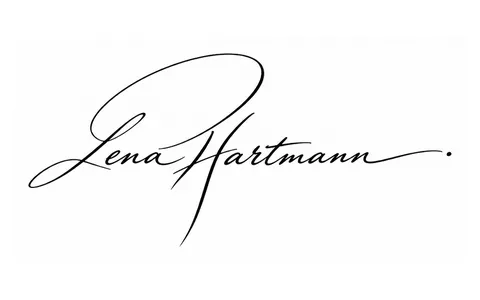
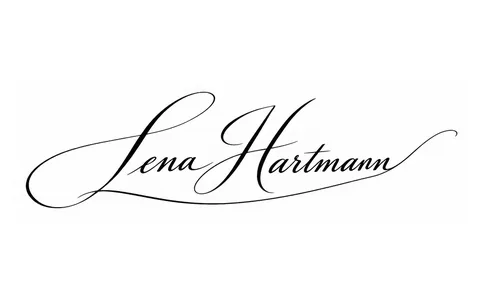
- Cursive (joined-up) signature. The letters are linked by a continuous line and the pen rarely lifts, so the signature is a single flowing movement.
- Print signature. The letters stand apart, the way you'd print your name on a form, and the pen lifts after each one.
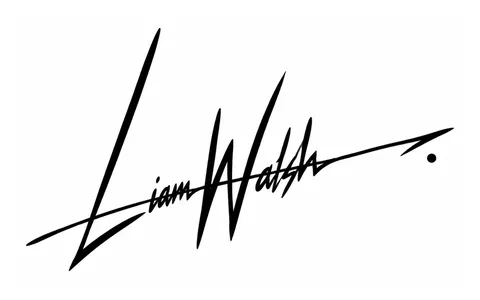
- Semi-cursive (mixed) signature. A separate, often print-like capital followed by partly joined lowercase letters or a flowing wave; the most common adult signature today.
Most people actually belong in the third group, even if they don't know it. Few adult signatures are pure school cursive, and few are a pure row of printed letters.
Can you sign in print?
Usually, yes. Most places don't require a signature to be in cursive; what matters is that you wrote it yourself and that it resembles the sample you gave that institution. A printed signature isn't a problem in itself.
Two things are worth watching. First, many forms have separate boxes for “name in block capitals” and “signature”. If your signature is exactly the same as your printed name, the two boxes look identical, which sometimes causes confusion. Second, a purely printed form is less distinctive, so it's worth adding at least one element of your own. We show fixes for both below.
Cursive signatures: pros and cons
- Fast: one movement, few pen lifts
- A personal rhythm that's hard to copy exactly
- Compresses well into small boxes
- Shortens easily into a wave
- Traditionally “looks like a signature”
- You have to learn it if you don't write cursive
- Less readable when rushed
- Easy to overdecorate
- Stiff if your hand doesn't enjoy it
- Long joins can slip on a screen
Cursive's greatest strength is flow. If the pen doesn't stop after every letter, the signature is faster, more unified and carries your hand's own rhythm, which makes it distinctive. That's why most traditional signatures look this way.
Print signatures: pros and cons
- Easy to read
- No new writing style to learn
- Easy to keep consistent if your letters are
- A modern, clean look
- Stable on screens and touch pads
- Slower: a pen lift after every letter
- Less distinctive, easier to copy
- Looks like the “print your name” box
- Harder to compress into small spaces
- Very slow with a long name
Print's greatest strength is readability and simplicity. Its weak spot is uniqueness: if you write it exactly the way anyone would on a form, there's little in it that's only yours. Readable and recognisable aren't the same thing; we cover that in a separate article.
Why so many young people print
In several countries, schools spend less time on cursive than they used to, and many people write almost entirely on keyboards and screens day to day. For lots of young people, print is their natural handwriting and cursive feels like a slow, foreign movement.
That's fine. A signature doesn't have to be built from school cursive; it should be built from what your hand writes easily and quickly. If that's print, start there and add only as many joins as feel comfortable. Our step-by-step guide covers designing your first signature.
Copying: which is more secure?
No signature is impossible to copy, and security doesn't depend on the signature alone. But as a general rule, a continuous line with its own rhythm is harder to copy accurately than separate, regular printed letters. A copier can reproduce the shapes of letters, but the speed, pressure and curve of the joins are harder.
- One personal element helps a lot. A distinctive capital, an unusual join or a unique finish makes copying harder even if the rest is printed.
- Speed matters. A signature written quickly and confidently is harder to copy than one drawn slowly.
- Consistency matters. If your own signatures vary a lot, it's harder to tell which one isn't yours.
We cover online protection in our article on protecting your signature, and the signs of forgery in this article.
The middle ground: semi-cursive signatures
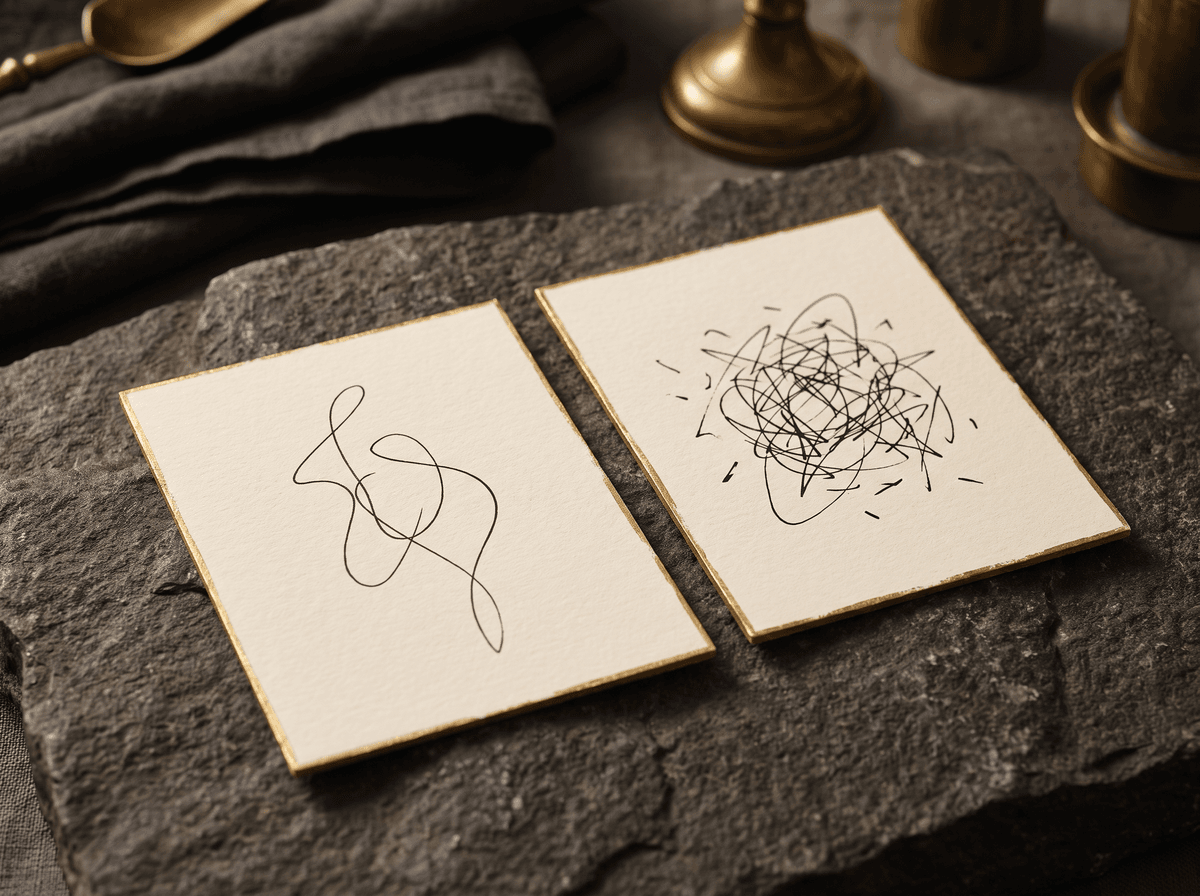
Most adult signatures are semi-cursive, combining the best of both. A few common variants, using “Rachel Moore”:
- Print capital, cursive continuation. A clean, separate “R”, then a joined “achel”. A readable start, a quick finish.
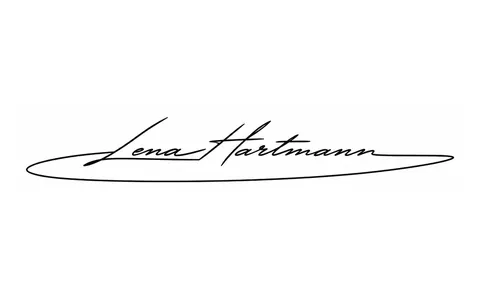
- Printed name, flowing finish. “MOORE” or “Moore” in separate letters, with a long tail or underline coming off the last one.
- Letters joined in groups. Not every letter connects, just two or three at a time: “Ra” “chel”. For many people this is the most natural.
- Cursive capital, printed surname. A sweeping cursive “R” and a neat printed “Moore”.
Which one suits you?
- If you never write cursive. Semi-cursive or print, with one personal element. Don't force a foreign script on yourself.
- If you enjoy cursive. Cursive or semi-cursive. Use the flow, but keep to one main flourish.
- If your name is long. Cursive or semi-cursive: printed letters with a lift each time are very slow for a long name. See our article on long names.
- If your name is short. Either works. In print, a bigger capital and a finish make it feel fuller. See our article on short names.
- If you're left-handed. Many left-handers find shorter joins and separate letter groups more comfortable. We cover this in a separate article.
- If you sign on screens a lot. Semi-cursive with short joins stays stable on a touch pad.
Five steps to turn a printed name into a signature
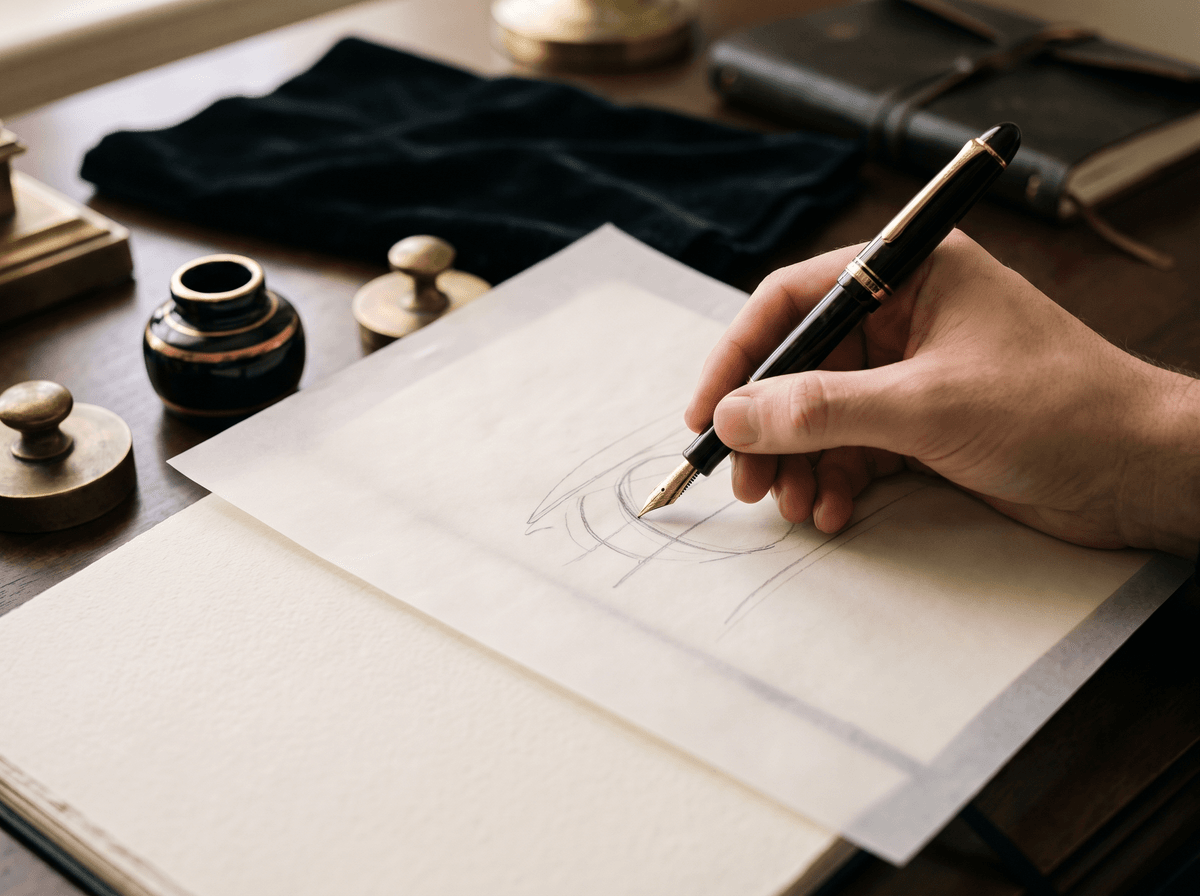
If print is your natural handwriting, you don't have to start again. These five steps turn your printed name into a signature without making it feel foreign to your hand:
- 1Join the first two or three letters. Not the whole thing, one connection is enough: “Ra” with a curve. That already sets a rhythm.
- 2Give the capital its own shape. A larger size, an entry stroke or a simplified form. Our article on the capital helps.
- 3Choose a slant. A slight right slant already makes it look like a signature, simply because it differs from your printed name.
- 4Add a finish. A tail or a short underline. Pick one in our article on finishes.
- 5Speed up. Write it faster and faster. Where speed naturally joins two letters, let it.
If you want to learn cursive from scratch
If you like the look of a cursive signature but have never written that way, you don't need to learn the whole alphabet. Practising the letters in your own name and how they join is enough.
- 1Write out the letters of your name one by one. Only the ones in your name, lowercase and capital.
- 2Practise the joins in pairs. “ra”, “ac”, “ch”, “he”, “el”: each neighbouring pair separately.
- 3Slowly, large, between guidelines. In the first few days, accuracy matters, not speed.
- 4Then speed up and shrink it. After a week, at your normal size and your normal pace.
Our practice guide explains how to practise; the printable practice sheet helps too.
Try both with Calligra
Calligra designs several kinds of signature from your name, from joined-up to clean, partly separate letters, so you can see side by side which one suits your hand. It teaches your chosen one stroke by stroke with animation, and you can try it with your finger on the practice pad.
The one sentence worth taking away
A signature usually doesn't have to be cursive: cursive is faster and more distinctive, print is more readable and simpler, and for most people the semi-cursive middle ground works best, where a personal capital, a few joins and a finish turn a printed name into a signature.
Questions
Can you sign your name in print?
Usually, yes. Most places don't require a signature to be cursive; what matters is that you wrote it yourself and it resembles the sample you gave. What a particular institution accepts can vary by country.
Which is better: a cursive or a print signature?
Neither is better in general. Cursive is faster and harder to copy; print is easier to read. For most people a semi-cursive form works best: a separate capital and partly joined lowercase letters.
Is a printed signature easier to forge?
As a general rule, a continuous line with its own rhythm is harder to copy accurately than separate, regular letters. A distinctive capital or finish makes a printed signature more unique too.
Can my signature be different from my printed name?
Yes, and it's often a good idea. Many forms have separate boxes for your printed name and your signature; if the two are identical, it can cause confusion. A personal capital, a slant or a finish is enough to tell them apart.
Do I need to learn cursive to have a signature?
No. It's enough to turn your printed name into a signature with a join or two, your own capital and a finish. If you do want cursive, practising the letters and joins in your own name is enough.
Try it with your own name
Read these too
Knowledge Basics
What makes a signature look professional?
It isn't the number of flourishes. Flow, a strong capital, a consistent slant, good proportions and a clean finish make a signature confident and repeatable.
 Basics
How legible should your signature be?
Not every letter needs to be readable, but pure chaos isn't the answer either. Here's how to find the balance between legibility and personality.
 Basics
What does a signature reveal? Graphology myths and facts
A big capital, a long underline, a rightward slant: many people believe these reveal our character. Here's an honest look at what a signature can and can't tell you.