Knowledge › Basics
Basics
What does a signature reveal? Graphology myths and facts
A big capital, a long underline, a rightward slant: many people believe these reveal our character. Here's an honest look at what a signature can and can't tell you.
You've probably heard it before: people who sign big are confident, people who underline their name think highly of themselves, and people who scrawl illegibly have something to hide. These ideas come from graphology, the practice of reading character from handwriting, and they're remarkably persistent. It's worth saying plainly: graphology's claims to predict personality have not held up in scientific testing, and psychology does not treat it as a reliable method. That doesn't mean a signature tells you nothing. It tells you quite a lot, just not what the popular interpretations promise. In this article we go through the most common myths one by one, look at what actually shapes your handwriting, explain how graphology differs from forensic handwriting examination, and show how to use all of this when you design your own signature.
What graphology is, and why it's so appealing
Graphology claims that features of handwriting, such as letter size, slant, the direction of lines, pen pressure or the shape of loops, reveal the writer's personality, emotional state and even abilities. In many countries there are books, courses and services built on it, and in some places it has been used in hiring.
It's easy to see the appeal. Handwriting is personal and slightly different for everyone, and it feels as though something so individual must say something about us. The interpretations also sound intuitive: a rising line means optimism, cramped letters mean reserve, a large capital means pride. These images stick because they're good metaphors, not because they've been shown to be true.
A good metaphor sticks easily, but that doesn't turn it into a measuring tool.
What testing has found
If a method promises to predict personality or job performance, that promise can be checked: you can compare graphological assessments with other, reliable measures, and you can see whether different graphologists reach the same conclusions from the same sample. When this has been examined carefully under controlled conditions, graphology has not proved to be a reliable predictor. That's why the psychology profession doesn't recommend it for personality assessment or selection.
There's an important trap here. When someone analyses a handwritten text, it's easy to draw conclusions from the content rather than the letterforms. A cover letter reveals how someone writes, what they know and what interests them, and that influence is there even if the analyst believes they're looking at the loops. A signature is also made of very few strokes, so there's even less to go on.
The most common myths, one by one
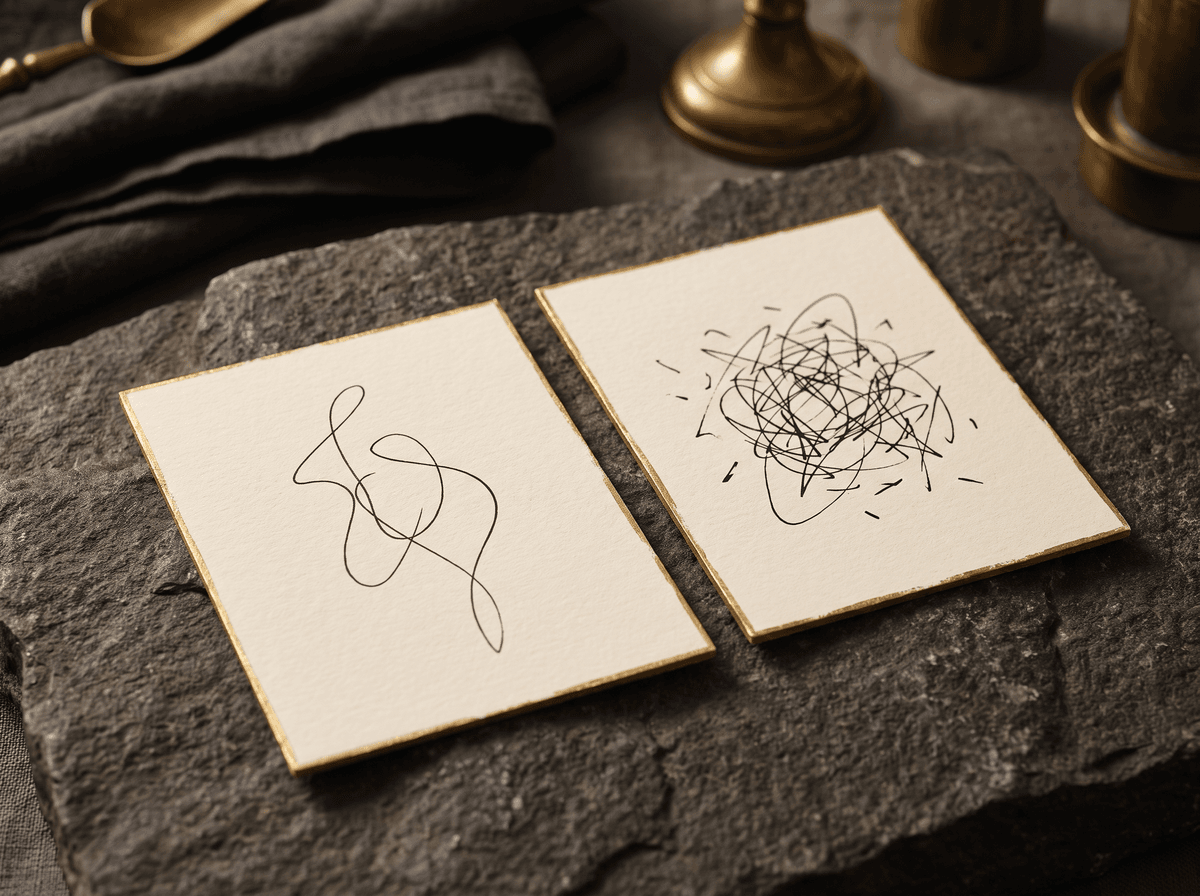
Let's look at the best-known claims. For each one there's a simpler, more down-to-earth explanation for why a signature looks the way it does.
- “A big signature means a big ego.” Size often depends on how much space you had when you learned it, what pen you usually use and whether you sign standing or sitting. People who sign into small boxes a lot tend to end up with smaller signatures.
- “An underline shows confidence.” An underline is a type of finish that many people simply saw as children and copied. It's a matter of style and habit, as we explain in our article on finishing your signature.
- “A rightward slant means openness, a leftward slant means reserve.” Slant is strongly affected by which hand you write with, how the paper is turned and the handwriting model you learned at school. Many left-handers quite naturally write upright or with a backward slant.
- “An illegible signature means you're hiding something.” Signatures usually get simpler because we write them often and quickly. If you sign many times a day, the form shortens over time. That's a practical process, not a character sketch.
- “If your signature is bigger than your handwriting, you show a different face to the world.” Many people deliberately sign a little larger and more decoratively than they take notes, because signatures go on important papers. That's fitting the occasion, not a split personality.
- “A rising line means optimism.” Whether a line rises or falls depends largely on the position of your hand, wrist and paper. Turn the sheet and the direction changes too.
What actually shapes your handwriting
If not character, then what shapes a signature? Quite a lot, and most of it is easy to observe in everyday life. If you've ever signed for a parcel on a courier's screen and then signed a contract at a desk, you know the same hand can produce very different signatures.
- The tool. Fountain pen, ballpoint, fineliner or a finger on glass: each glides differently and makes a different line. We cover this in detail in pens, ink and paper.
- The surface and your posture. At a desk, on your knee, standing at a counter or on a clipboard, you'll get very different lines.
- Speed and fatigue. In a hurry, a signature gets shorter and flatter. At the end of a long day it's less crisp.
- The school model. Every country and era taught different letterforms. Many features we think of as personal are actually a shared school inheritance.
- Handedness. Writing with your left hand changes how the hand, paper and pen sit, and that shows in the slant and the direction of strokes. We wrote a separate article on signing left-handed.
- Age and health. Handwriting changes naturally over the years. Some health conditions, such as tremor or injury, affect it too. But these are about movement, not character.
- Habit and practice. Whatever you write often gets shorter, faster and simpler. This is one of the strongest influences on your signature.

A small experiment: one hand, five signatures
To see for yourself how much circumstances shape a signature, try a simple experiment. It takes ten minutes and teaches more than any theory. You'll need a plain sheet, two different pens and a clipboard or a thick book.
- 1Calmly, at a desk. Sit comfortably and sign as you would on an important document. This is your baseline.
- 2In a real hurry. Imagine the courier waiting at the door. Sign as fast as you can.
- 3Standing, sheet in hand. Stand up, rest the sheet on the clipboard or book along your forearm, and sign.
- 4With a different pen. If you used a ballpoint, switch to a fineliner or fountain pen and sit back down.
- 5On a turned sheet. Rotate the paper well to one side and sign without adjusting your posture.
Lay the five signatures side by side. You'll probably see that the rushed one is shorter and flatter, the standing one less steady, the one with the other pen thinner or bolder, and on the turned sheet the slant and line direction have changed. Yet you were the same person throughout, with the same character. If the form changes this much in five minutes, it's hard to take a character profile from a single signature seriously.
The experiment has a useful side effect: it shows you where your signature falls apart most. If the rushed version is unrecognisable, practise at real speed too. If the standing one wobbles, practise now and then on your knee or a clipboard.
Graphology vs forensic handwriting examination
The two are often confused, but they answer completely different questions. Graphology tries to read personality. Forensic handwriting examination, which can come up in court cases or authenticity checks, looks at whether a piece of writing or a signature could come from the same person as a set of comparison samples.
- Asks: who wrote this, and was it the same hand?
- Works with comparison samples.
- Looks at features of the movement, stroke order, pressure and tempo.
- Says nothing about what kind of person the writer is.
- Asks: what kind of person wrote this?
- Tries to draw conclusions from a single sample.
- Links shapes to personality traits.
- These links have not been confirmed by testing.
For your own signature, the logic of forensic examination is what matters: consistency. A signature doesn't need to show character. It needs to show that it always comes from the same movement. That's why we write so much about practice and consistency, for example in how to learn your new signature.
First impressions are real, but they're about something else
Just because a signature can't reliably reveal character doesn't mean people don't form impressions of it. Most people see a tidy, flowing signature as careful and decisive, and a shaky, broken line as uncertain. But that's the effect of appearance, in the same way a well-cut jacket or a nicely handwritten card makes an impression without proving anything about the wearer or the writer.
That's good news, because appearance can be designed. Whether a signature looks confident doesn't depend on your inner qualities but on concrete things like a continuous line, a consistent slant, good proportions and a clean finish. We go through these in detail in what makes a signature look professional.

Why readings still feel accurate
Plenty of people say a graphology reading described them surprisingly well. There's a well-known psychological explanation for this, called the Barnum or Forer effect: we tend to feel that general descriptions, which would actually fit almost anyone, were written just for us.
- General, two-sided statements. “You're outgoing in company, but sometimes you need time alone.” That's true of nearly everyone.
- A flattering tone. We're more willing to accept positive descriptions as accurate.
- Selective memory. We remember the hits and forget the misses.
- Prior information. If the analyst knows your age, your job or what the text says, they can infer a lot from that, quite apart from the letterforms.
A description fitting us doesn't mean it came from our handwriting.
If you're curious, try it with a friend: each get a reading, then swap the texts and see how well the other person's fits you. Often surprisingly well.
If someone wants to analyse your handwriting
You may be asked for a handwriting sample during a hiring process, on a course or by an acquaintance, so that conclusions can be drawn about you. It's perfectly fine to ask what it's for.
- 1Ask about the purpose. Is it for a personality assessment, or do they just need to see your handwriting, for example on a form that must be filled in by hand?
- 2Ask what happens to it. Who sees it, how long it's kept and how it's deleted. A signature sample is valuable; don't hand it out lightly.
- 3Check the rules. How accepted or permitted such assessments are at work varies by country and organisation. If you're unsure, ask someone qualified to advise.
- 4Don't take it as a verdict. Whatever they write, remember that a character sketch drawn from handwriting isn't an established fact about you.
What this means when you design your signature
Once you let go of the idea that your signature must reflect your character, you can design far more freely. You don't need to worry that a long finish will “label” you as arrogant or small letters as timid. The question is simpler: what do you like, and what works in practice?
- Your taste. Classic, modern, minimal or more ornate? Choose something you're happy to see where your name goes.
- How you'll use it. Small boxes, many signatures a day, screens? A simpler form is more practical here. See also signing on screens.
- How easy it is to learn. A signature is only good if you can write it quickly and the same way every time.
- Recognisability. How legible should your name be? The balance is covered in how legible should your signature be.
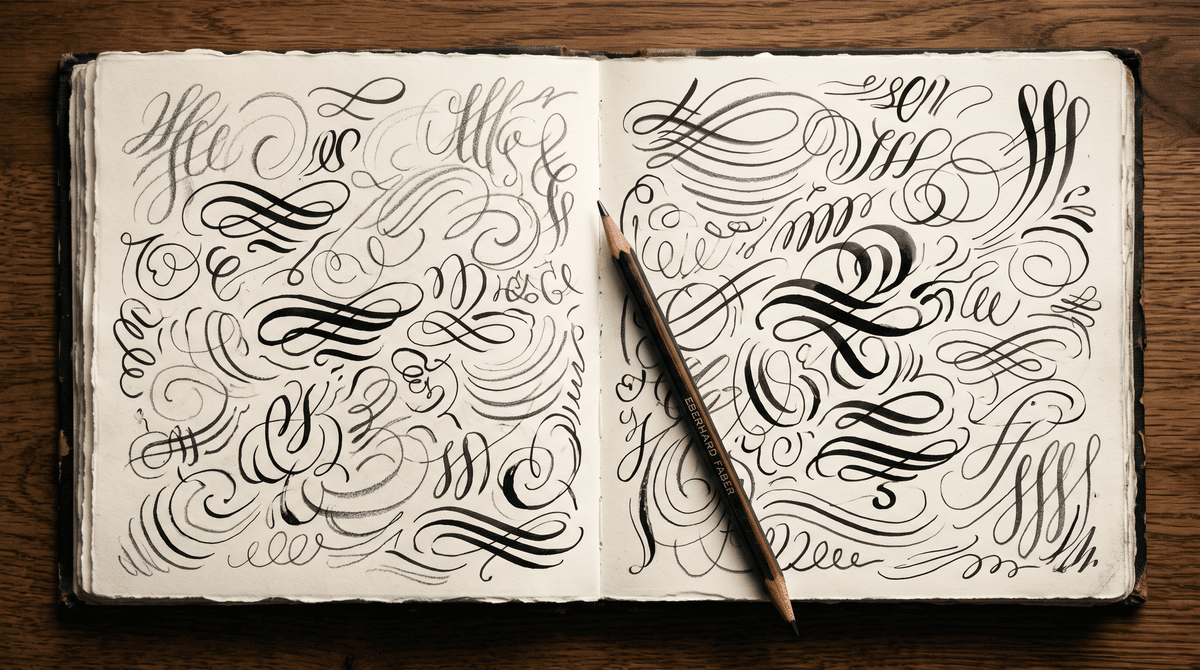
Lily Shaw, for example, avoided a long, sweeping underline for years because she'd read somewhere that it looked showy. When she realised there was nothing behind that claim, she tried it, and it turned out to suit her name perfectly: it closes off her short surname and can be written in a single movement. She uses it today. That's also why Calligra lets you choose from many different styles: so you choose between forms, not between predictions.
When your signature changes
Signatures change over time, and most of the time that's completely natural. They get simpler because we write them often, and they adapt to a new pen, a screen or a new name. None of this calls for conclusions about some inner change.
- Gradual shortening. Over the years many signatures lose their middle letters, leaving the capital and the finish. If that bothers you, a little practice can bring it back.
- Adapting to the situation. On a screen, at a counter or in a hurry it will look different. That's fine as long as the main features stay.
- A deliberate change. If you choose a new signature, we cover rolling it out in changing your signature.
- A sudden, unexplained change. If your handwriting changes a lot in a short time for no clear reason, for example becoming shaky, much smaller or harder to control, it's worth talking to a doctor. That's not a question of character; it's about movement.

What a signature really does reveal
To sum up, a signature can reveal quite a lot, just not the categories of a personality test. It can show whether it was written in a hurry or calmly, with what tool and on what surface. It can show whether the form is well practised or still taking shape. And from a carefully compared set of samples, it can show whether the same hand wrote them.
- Tempo and flow.
- The tool and the surface.
- How well practised the movement is.
- Whether it's consistent with your other samples.
- Your personality or character.
- Your intelligence or abilities.
- Your honesty.
- Whether you're suited to a job.

The one sentence worth taking away
A signature reveals tempo, tools and practice, but not your character. So design yours for taste and use, and make it consistent: that's what makes it look confident, not any prediction.
Questions
Does my signature really reveal nothing about me?
It reveals quite a lot about your movement: tempo, flow, how well practised it is, what tool and surface were used. But testing suggests that what kind of person you are, your character or your honesty can't be reliably read from it. The impression it makes is real, but it's about appearance, not about you.
Then why do graphology readings so often feel accurate?
Often because they contain general statements that fit many people, which we tend to feel were written for us. This is called the Barnum or Forer effect. Analysts also often draw on the content of the text or other information, not just the letterforms.
What's the difference between a graphologist and a handwriting examiner?
A graphologist infers personality from handwriting. A forensic handwriting examiner looks at whether a piece of writing or a signature could come from the same person as a set of comparison samples, and says nothing about character. What qualifications and rules apply to each varies from country to country.
Is an illegible signature a bad sign?
No. Signatures usually get simpler because we write them often and quickly. Legibility is a practical question: how recognisable your name should be and how quickly you want to write it. If you'd like to change it, our article on legibility gives you things to consider.
Can my signature affect my career?
A tidy, consistent signature makes a good impression, just like a careful email or a well-organised document. But it's not worth attributing more than that to it. If a hiring process wants to draw conclusions about you from handwriting, feel free to ask what it will be used for.
Does Calligra analyse my personality?
No. Calligra's score looks at properties of the line: flow, uniqueness, confidence of line and proportion. These are features of the form that you can improve through design and practice, and they make no judgement about what kind of person you are.
My signature has changed over the years. Should I worry?
Signatures change naturally: they get shorter, simpler and adapt to different tools. That's usually nothing to worry about. But if your handwriting changes a lot in a short time without a clear reason, for example becoming shaky or hard to control, it's worth talking to a doctor.
Try it with your own name
Read these too
Knowledge Basics
What makes a signature look professional?
It isn't the number of flourishes. Flow, a strong capital, a consistent slant, good proportions and a clean finish make a signature confident and repeatable.
 Basics
How legible should your signature be?
Not every letter needs to be readable, but pure chaos isn't the answer either. Here's how to find the balance between legibility and personality.
BasicsHow to create your own signature: step by step, with ideas
From a blank page to a signature you can write without thinking: how much of your name to use, the capital and the ending, ten style ideas, simple tests and a one-week plan.