Knowledge › Creative
Creative
Wedding invitations and thank-you cards: how to sign them as a couple
Who signs, in what order, with your old name or your new one, first names or full names? Here are the wordings that work, how to make two signatures look right side by side, and how to keep the fiftieth card as neat as the first.
Invitations and thank-you cards are the two most personal pieces of wedding paper. Unlike official signatures, there's no rule about which name to use or who holds the pen: that's up to you. Which is exactly why it comes up as a question. On a thank-you card, a signature doesn't identify you, it tells the guest something: that you really wrote this line. Your first names, a tidy order and two signatures that look good together are all it takes. In this article we cover when to sign by hand, which name to use before and after the wedding, who signs and in what order, which wordings work, and how to keep the last card neat at the end of a long afternoon.
Invitation or thank-you card: where does a handwritten signature belong?
The two cards do different jobs, and so do their signatures. On an invitation your names are usually printed; on a thank-you card the handwritten line and signature are the whole point.
- Invitations. The wording and names are usually printed and don't need signing. If you add a personal line to some, say for a grandparent or an old friend, sign that by hand.
- Thank-you cards. Handwriting is what matters here. Even under a printed message, a handwritten signature adds a lot, and a personal sentence adds more.
- Save-the-dates, menus, place cards. No signature needed. If your names appear as decoration, they can be printed or a shared monogram.

Which name: old or new?
On official paper you always need the name on your ID. On a card, the choice is yours. A few simple principles help.
- On invitations: your current names. Invitations go out before the wedding, so it's natural to use your current names, or just first names.
- On thank-you cards: whatever you like. After the wedding you can use your new shared name, even if your new documents aren't ready. It isn't an official document.
- The simplest: first names. “Emma and James”: guests know who you are, and you don't have to decide which surname to show.
- More formal occasions: full names. For an older relative, a boss or a formal acquaintance, full names can look lovely.
If you're practising your new name, thank-you cards are a good opportunity: you write it many times, calmly, on real paper. Designing your new signature is covered in this article.
Who signs: one of you, or both?
There are two accepted approaches, and both are perfectly polite. The choice depends mostly on how many cards you have and who writes the personal lines.
- Each writes their own name, in their own hand
- The most personal: the guest sees both handwritings
- Takes longer, each card passes through two pairs of hands
- Works well if you sit down to write together
- Keep the two signatures a similar size
- Whoever wrote the card signs it
- Quicker, less coordination
- Both names in one hand, one rhythm
- Good if you split the cards between you
- Many people put their own name first in that case
A practical middle way: split the guest list, each of you writes to your own relatives and friends, and you both sign. The personal line comes from the person who knows the guest better, and the signature is from both of you.
In what order?
There's no fixed rule. What matters is that it's consistent within a set of cards, or that any change is deliberate.
- First, whoever wrote the line. If Emma wrote the personal sentence, “Emma and James”. The most natural choice.
- First, whoever the guest is closer to. For James's aunt, “James and Emma”. A small gesture, but many people notice.
- Always the same order. If you'd rather not decide card by card, pick one and stick to it.
If you both sign, write your names side by side or one above the other. Stacked looks tidier; side by side feels friendlier. On a narrow card, stacking usually fits better.
Wordings that work
A thank-you card usually ends with a short sign-off before the signature. A few that work well, from relaxed to formal:
- Warm. “Thank you for celebrating with us! Emma and James”
- Affectionate. “With love, Emma & James”
- Short. “Thank you! E & J”, with a shared monogram if you have one.
- More formal. “With our sincere thanks, Emma and James Clarke”
- Family. “Love from the Clarkes”, for close relatives who know your shared name.
Whichever you choose, the personal sentence matters most. A specific memory from the day or a word about the gift beats any elegant sign-off. Many etiquette guides suggest keeping “Mr and Mrs” for envelopes and formal invitations rather than personal notes. If you use a printed message, add at least a few handwritten words above the signature.
On a thank-you card, a signature says: we wrote this, for you.
Making two signatures look right together
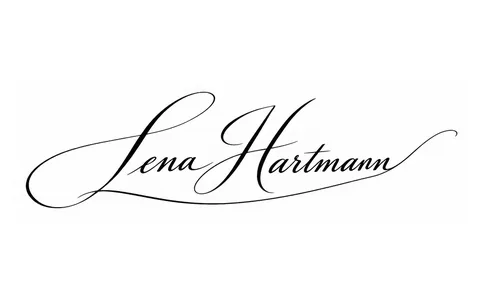
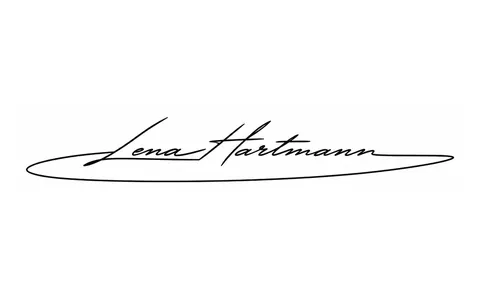
Two signatures on a card always sit side by side, and the eye compares them. If one is tiny and cramped and the other large and sweeping, the card looks a little lopsided. They don't have to match, only to belong together.
- Similar size. Keep the height of the signatures roughly the same. A faint pencil line helps for the first few cards.
- A shared baseline. If you sign side by side, start on the same line.
- The same pen. The same ink and line weight make the card look unified, even when your handwriting is very different.
- Styles can differ. An elegant, looped signature and a clean one look good together. In fact, it's nice if each is recognisably yours.
A shared monogram or mark
Many couples like a shared mark on their wedding stationery: two initials intertwined or joined with an ampersand. It isn't a signature, more a decoration, but it complements one well.
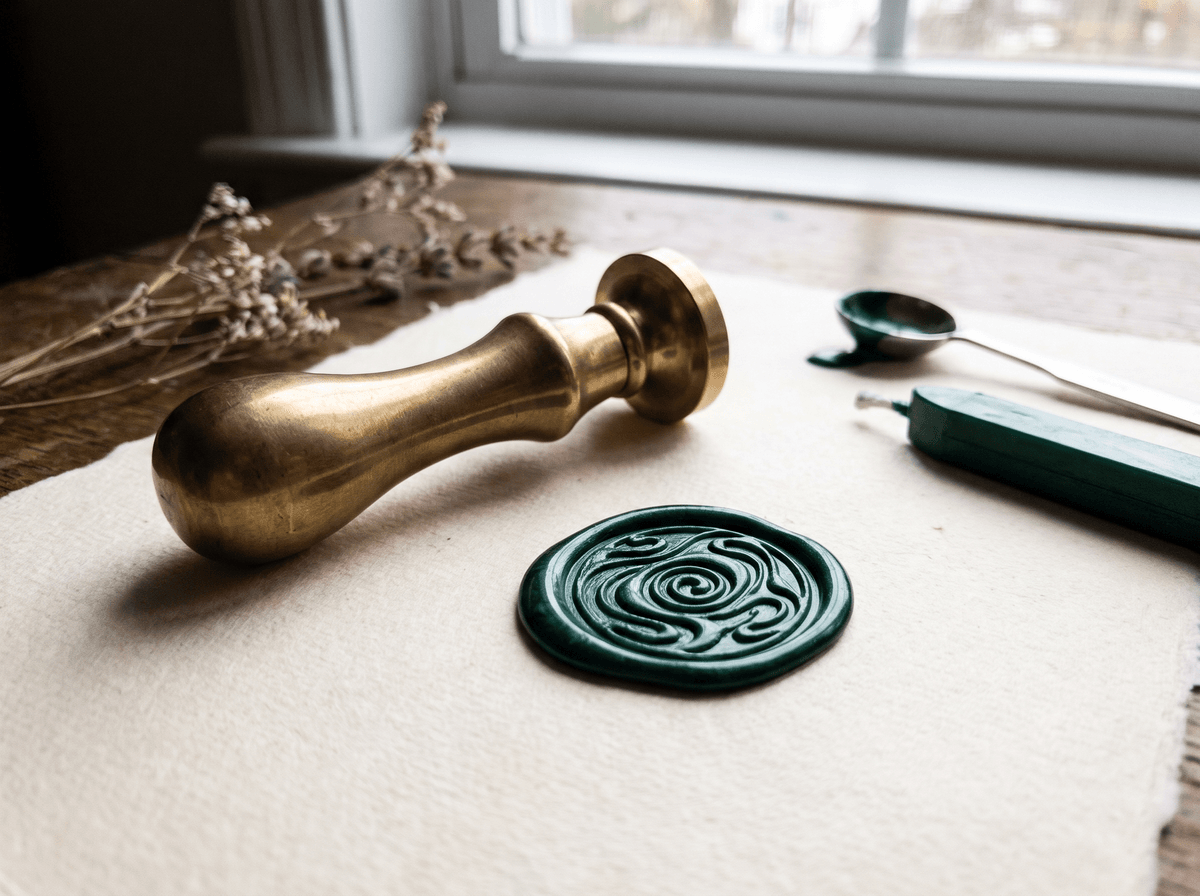
- Where to use it. On a wax seal, at the top of the invitation, on the menu, in the corner of the thank-you card.
- How to design it. Two capitals with the same slant and weight, one tucked slightly behind the other. A simple form that stays legible small is worth more than an intricate flourish.
- Handwritten or printed? On invitations and seals it's usually printed or pressed. On a thank-you card, a printed monogram looks good beside a handwritten signature.
Designing monograms and short forms is covered in this article; for the shape of the initials themselves, see designing your capital.
Pen, ink, card: test them first
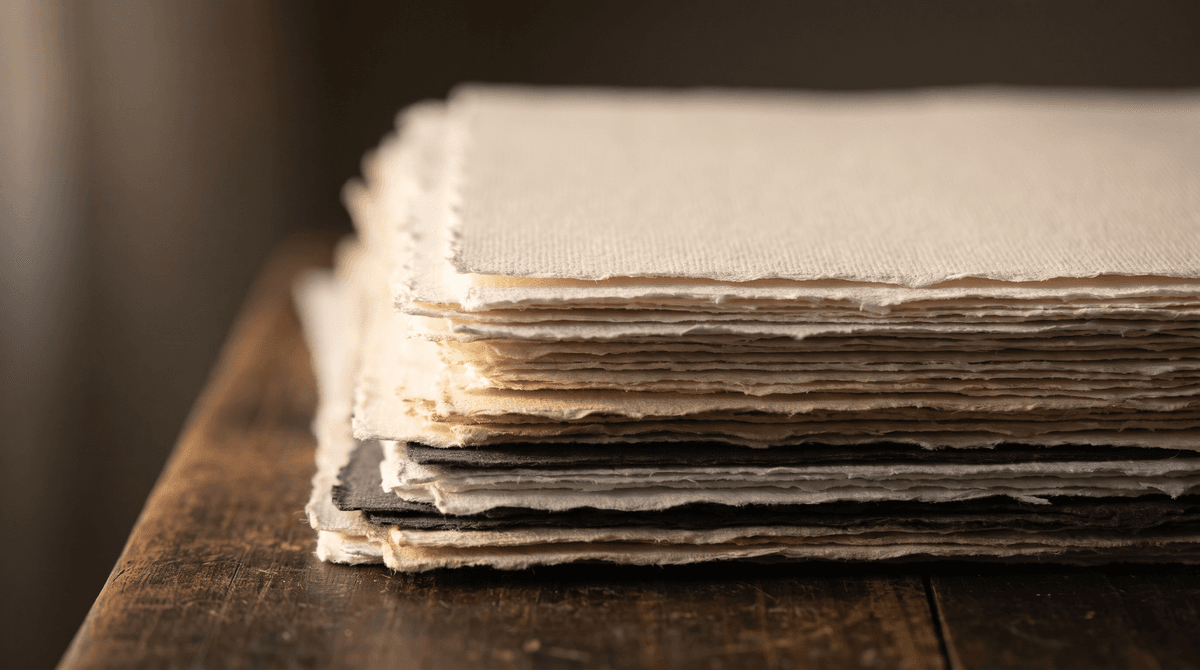
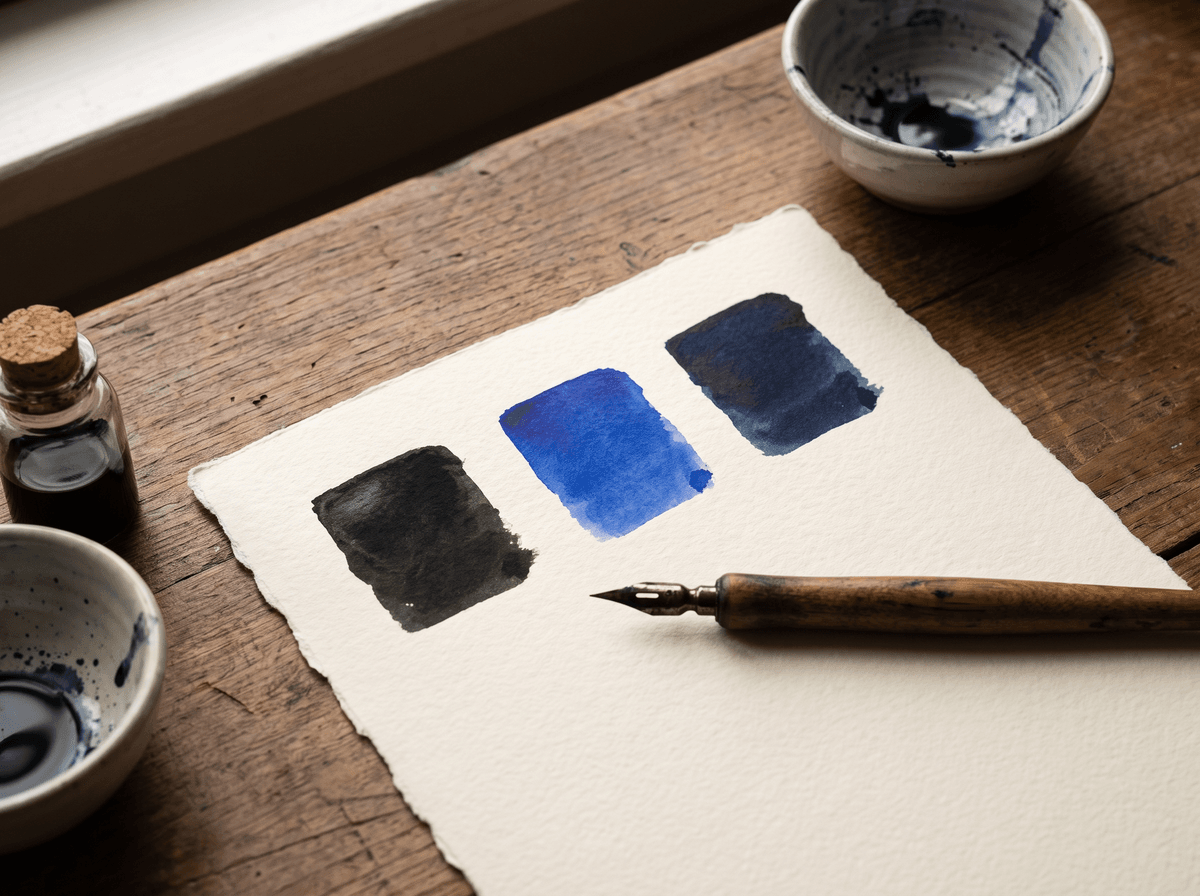
Wedding stationery is often thick, coated or deckle-edged. Not every pen writes well on it, and a smudged signature on a beautiful card is especially annoying.
- 1Ask for one or two spare cards. Test the pen on these before you touch the guests' cards.
- 2Check drying time. Write a signature, wait half a minute and run your finger across it. If it smears, you need another pen or more time.
- 3Go carefully on coated card. On a glossy surface, gel and fountain pen ink dry slowly or bead up. A fineliner or a pen made for the purpose is often best.
- 4Choose a colour. Black and navy are always elegant. On a dark card, white or gold can be lovely, but test that too.
Which pens and inks suit which papers is covered in detail in our pen and ink article.
Fifty cards: keeping the last one as neat as the first
The first five cards always look lovely. By the thirtieth your hand is tired and the signature gets smaller and more rushed. A few simple habits keep the whole set consistent.
- Short batches. Ten or fifteen cards at a time, then a break. Several evenings beat one long afternoon.
- Lines prepared in advance. Make a list of guests with a personal thought for each. At the card you only have to write it, not think of it.
- Warm up. Before you start, write your signature five times on scrap paper. Your hand settles into the size.
- Keep a model in view. Put out the first good card and match the rest to it.
- Timing. Many etiquette guides suggest thank-you cards arrive within a few weeks, a few months at most. Short batches help with that too.

Digital cards with a shared signature
If you send your thanks by email or as printed, reproduced cards, you can still include handwritten signatures: both sign on a clean sheet, scan or photograph it, and place it under the message.
- A clean, light sheet. White or cream paper, dark ink, even light. That makes the background easy to remove.
- Side by side or stacked. Just as on a handwritten card: similar size, shared baseline.
- First names are enough. On a reproduced card it's especially sensible to show your first names rather than your official signatures.
How to make a clean signature image is covered in this article. If you'd like both your signatures to look beautiful and matched on a card, Calligra designs for each of your names and teaches the form you pick. Try it with your names.
The one sentence worth taking away
On a thank-you card, your first names, a consistent order and two signatures that belong together in the same pen are enough; invitations carry your current names, thank-you cards can already carry your new one.
Questions
How do you sign wedding thank-you cards?
The simplest way is with your first names, such as “Emma and James”. You can each sign in your own hand, or the person who wrote the card writes both names. Use the same pen and a similar size so the two signatures belong together.
Whose name goes first?
There's no fixed rule. Many couples put first the person who wrote the personal line, or the one the guest is closer to. If you'd rather not decide card by card, pick an order and keep it.
Can I use my new married name on thank-you cards?
Yes. A thank-you card isn't an official document, so after the wedding you can use your new shared name even if your new ID isn't ready yet.
Do wedding invitations need to be signed?
Usually not: the names are printed. If you add a personal line to an invitation, it's nice to sign that by hand.
What pen is best for thank-you cards?
One that doesn't smudge on your particular card and dries quickly. On coated card a fineliner often works best. Always test on a spare card first.
Try it with your own name

Read these too
Knowledge Creative
Signature tattoos: a loved one's handwriting on your skin
A grandmother's signature from an old postcard, “love you” in your mum's hand, your own name the way you wrote it as a child. Here's where to find the sample, how to digitise it, what to discuss with your tattoo artist, and how to keep it beautiful for years.
 Basics
What makes a signature look professional?
It isn't the number of flourishes. Flow, a strong capital, a consistent slant, good proportions and a clean finish make a signature confident and repeatable.
 Basics
How legible should your signature be?
Not every letter needs to be readable, but pure chaos isn't the answer either. Here's how to find the balance between legibility and personality.