
Knowledge › For teens
For teens
Autograph vs signature: what's the difference, and which should you practise?
A signature identifies you; an autograph is a keepsake. Here's how the two differ, which one to practise first, and how to design an autograph that looks great without giving away your official signature.
The back page of the notebook is full of them: ten, twenty versions stacked on top of each other, with big loops, a heart, a star, sometimes just your first name. At that point you don't really know what you're practising: the signature that will go on your passport, or the autograph you'll hand out once you're famous. They aren't the same thing: a signature proves it was you; an autograph shows you gave someone a memento. In this guide we pull the two apart, look at which one to practise first, when an autograph comes in handy even now, and show plenty of name examples of how the two can be related yet separate. The rules around having parallel signatures are covered in a separate article; here we look at the question from a teenager's point of view.
The difference in one sentence
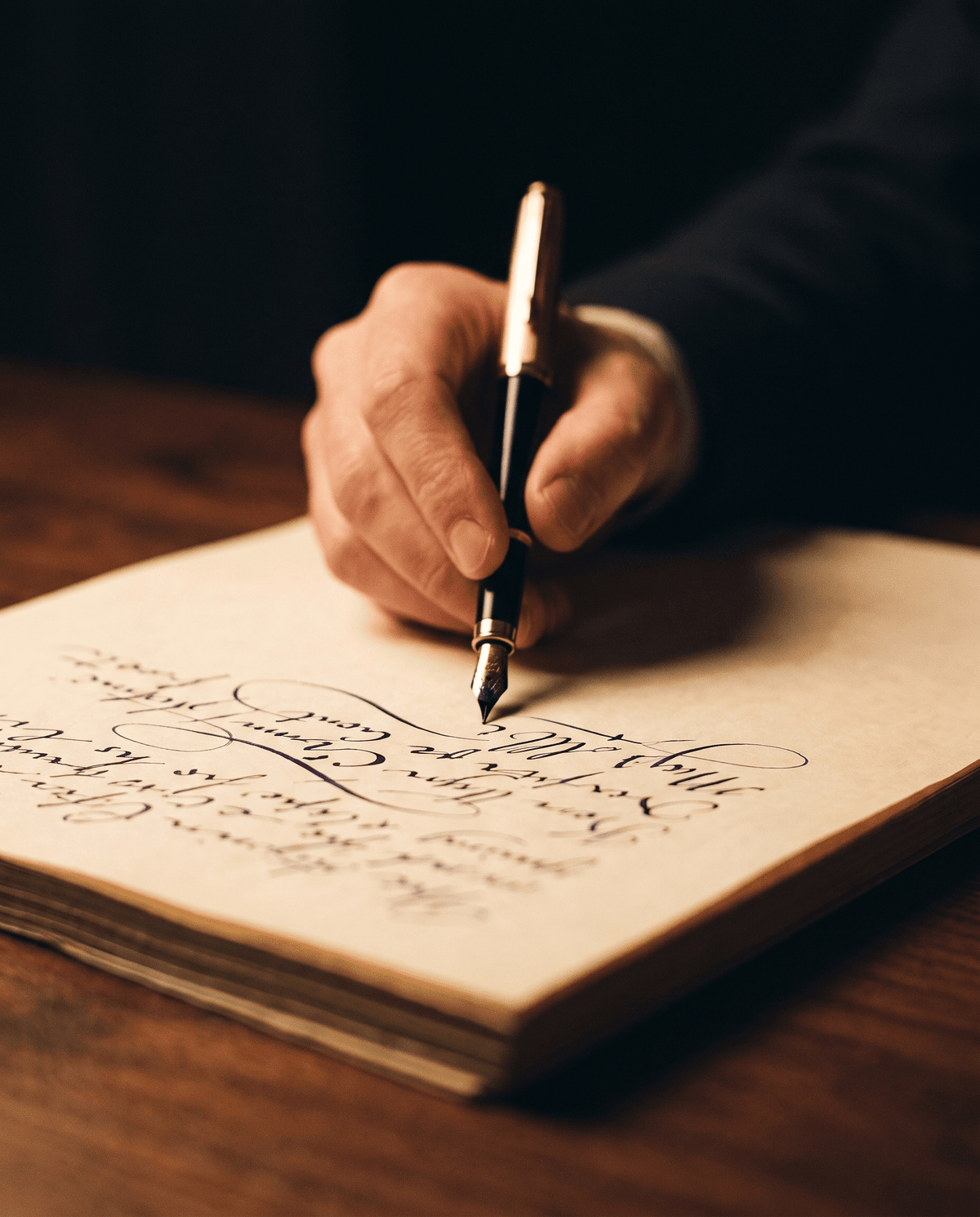
A signature is a mark written by your own hand to confirm that you agreed to or signed a document. It appears on IDs, bank cards, contracts and exam papers, and it has to look the same every time, because it will be compared later. An autograph, by contrast, is a handwritten name or mark you give someone as a keepsake, on a photo, a T-shirt or in a book. It doesn't identify you; it's a gift.
- Job: identifies and confirms
- Where: ID, bank, contracts, exams
- Always the same, for years
- Has to fit small boxes
- Simple and quick works best
- You don't post it online
- Job: gives a memento
- Where: photos, shirts, yearbooks, casts, books
- Can vary a little each time
- Often goes on a big surface
- Can be showy and decorative
- Public: photographed and shared
In everyday English the word “autograph” is sometimes used for any signature, and the two blur together. In practice it matters a lot which one you mean, because they have very different jobs to do.
Why the two get mixed up
As teenagers, most people try out both on the same page, often without noticing. One line holds a neat full name; the next a giant “J” and a heart. Both are your name, both are your hand, so it feels like one and the same thing.
The difference shows up the first time you sign something official. At the passport office or the bank nobody asks for your prettiest version; they want the one you can repeat the same way for years. That's usually when people realise the notebook version was really an autograph: lovely, full of energy, but different every time.
Which one should you practise first?
The signature. The reason is simple: you'll need a signature soon, and an autograph perhaps never, or only now and then. A first passport or ID, a student card, a first bank card, an exam attendance sheet or a part-time job contract all ask for your signature, and wherever you give it, later signatures will be compared with it.
- A signature has to last for years. You don't change the signature on your ID or at your bank every term. Choose a well-thought-out form now and you won't need to update it everywhere later.
- A signature is harder. It has to be fast, small and consistent. That takes more practice than a looser autograph.
- An autograph grows out of a signature. Once your official form is settled, building a bigger, showier relative of it is easy. The other way round is much harder.
If you're designing your first signature now, start with our step-by-step guide. Where and when it first becomes official is covered in our article on your first official signature.
When an autograph comes in handy right now
You don't need to be famous for someone to ask for your name as a keepsake. As a teenager, these moments come up more often than you'd think:
- Leavers' shirts and yearbooks. When everyone signs everyone's shirt, yearbook or leavers' book. A quick, readable autograph works best here.
- Casts, posters, class photos. Big surface, felt-tip pen, a hurry. Size and flow matter more than precision.
- Sports teams, matches, tournaments. If you coach younger kids, or a team gets asked for autographs at an event, many people add their shirt number.
- Concerts, plays, exhibitions. The name you write on a programme after a school show, or in the corner of a drawing, is already a small autograph.
- Things you make. Signing a drawing, a handmade zine, a video or a craft piece. This is the autograph's closest relative.
- Online. In a profile picture, a channel logo or a challenge. Here it's especially important not to show your official signature.

Why your official signature shouldn't be your autograph
Autographs get photographed and posted, and can sit on a shirt or in a yearbook for years. If yours is exactly what you use at the bank or on your ID, your official sample is out in public. That isn't a disaster in itself, but it's an unnecessary risk.
The other reason is simpler: an autograph can be bolder. When you don't have to worry about the bank recognising it, it can be bigger, more decorative, just a first name or a nickname. Each mark then gets better at its own job.
What makes a good autograph?
A good autograph is recognisably yours, quick to write and looks good large. Build it from five parts:
- The name. Your first name, your nickname or your full name. Most autographs are shorter than an official signature: “Jess”, “Sam”, “Ellie”.
- A big, distinctive capital. In an autograph the capital can be much larger and livelier than in your signature. Our article on the capital letter helps here too; just apply it more boldly.
- A personal trademark. A star, a heart, a wave, a number (your shirt number, say) or a small symbol that only appears in your autograph.
- A showy finish. A long, curving underline or a loop that sweeps back, too much for an official signature, looks right here. We've collected the types of finish in this article.
- Room for a message. An autograph often comes with a few words. Design it so a short message fits above or before the name.
Examples: signature and autograph from the same hand
Here are a few pairs showing how one name can appear in two roles. They're directions, not templates: the letter shapes should always come from your own hand.
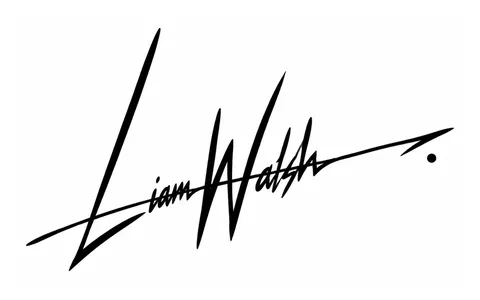
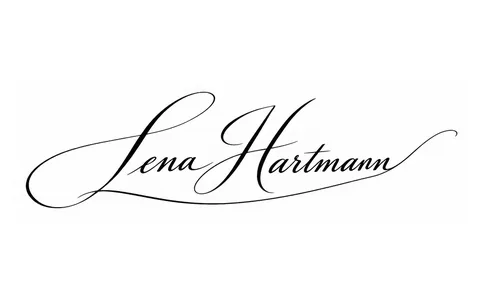
- Jessica Turner. Signature: “J. Turner”, a readable “T” and “urner”, a short tail. Autograph: a big looped “J”, then “ess”, with a small star at the end.
- Samuel Brooks. Signature: “Samuel Brooks” in joined-up writing on a straight baseline. Autograph: “Sam” with a firm “S” and his shirt number, “#7”, beside it.
- Eleanor Hughes. Signature: “E. Hughes”, slanting slightly to the right. Autograph: “Ellie”, the double “l” melting into one wave, a long curved underline beneath.
- Oliver Grant. Signature: “O. Grant”, the “G” simplified to one curve. Autograph: “Ollie”, the dot of the “i” turned into a tiny lightning bolt.
- Alexandra Price. Signature: “A. Price”, because the full name is long. Autograph: “Lexi”, a tall, open “L” with the “exi” running along its foot.
- Zoe Mitchell. Signature: “Zoe Mitchell” in clean, round letters. Autograph: “Zoe”, with a deep lower loop on the “Z” and a heart above the “e”.
You can see the two marks are related: same hand, often the same slant or the same idea for the capital. Yet the autograph uses a different name or size, and has something the official one doesn't.
Dedications: what to write with your autograph
An autograph becomes a real keepsake when it's addressed to someone. The message can be very short; what matters is that it's readable and doesn't drown out the name.
- A name and a good wish. “To Megan, with love – Jess”.
- A shared memory. “Best school trip ever! – Sam”.
- Some encouragement. “Go for it, Leo! – Ellie”.
- A date. “Leavers 2027” or just the year. Years later, that's what makes it precious.
Practical tip: write the dedication above the name, in smaller, plainer letters, and let the autograph be the biggest element. That way it's obvious in a photo what matters.
How to keep the two apart in your hand
If you practise both, your hand can easily mix them up, and the autograph's flourishes start creeping into your official signature. A few simple habits help:
- 1A different name, if you can. If your signature starts with your initial and surname, start your autograph with your first name or nickname. Your hand then knows from the first letter which one is coming.
- 2A different size. Practise the signature on a normal signature line, the autograph large, across a whole page.
- 3A different tool. A ballpoint for the signature, a thicker felt-tip for the autograph. The tool also tells your hand which role it's playing.
- 4Signature first. In each practice session, always start with your official form, and only then do the autograph.
- 5Never swap them. No autographs on official documents, and no official signature in public places.
Our practice guide covers regular practice in detail. A week of a few minutes a day is usually enough for both marks to settle separately.
Common mistakes
- The autograph becomes the official signature. A huge, first-name-only, heart-dotted form goes onto a first passport and stays there for years. Before that, ask yourself whether you'd be happy with it on a job contract at twenty-five.
- The official signature becomes the autograph. The bank signature ends up in a post or on a shirt, and the public sees your official sample.
- An autograph that's too complicated. If you have to sign forty leavers' shirts, a form with three loops and two stars falls apart by the tenth. An autograph should be quick too.
- Copying a celebrity. Copying a famous person's autograph won't make it yours. Borrow the direction, like a big capital or a long underline, but keep your letters your own.
- Constant changes. If you invent a new autograph every week, none of them becomes recognisable. Pick one and stick with it for a while.
Design both with Calligra
Calligra creates several different signature versions from your name, from understated to showy, and teaches each one stroke by stroke with animation. Type in your full name and you can pick a version that suits an official signature; type in your nickname or first name and you can pick one for an autograph. On the practice pad you can try them with your finger and see which one comes out the same every time.
Try it with your name and see your signature and your autograph side by side.
The one sentence worth taking away
A signature identifies you, so it's simple, consistent and the same for years; an autograph is a keepsake, so it can be bigger, more decorative and written with a different name. Practise your signature first, build a related but separate autograph from it, and never swap the two.
Questions
What is the difference between an autograph and a signature?
A signature authenticates a document: it shows you signed it, so it has to look the same every time. An autograph is a handwritten name or mark given as a keepsake, for example on a photo or a shirt. A signature identifies you; an autograph is a gift.
Can my autograph be the same as my signature?
It can, but it's not a good idea. Autographs get photographed and shared, so if yours matches your official signature, your official sample is out in public. It's better if the autograph uses a different name, a different size or its own decorative element.
Which should I practise first?
Your signature. You'll need it sooner, for a first ID or bank card, for example, and it has to last for years. Once the official form is settled, it's easy to build a showier autograph from it.
Can I use just my first name as an autograph?
Yes, that's very common for autographs. It can be your first name, a nickname or a stage name. An official signature usually needs your surname too; exactly what's accepted is always up to the institution concerned.
What should I write with my autograph?
A short dedication: the person's name and a good wish, a shared memory or a date. Write it above the name in smaller letters, so the autograph stays the most eye-catching element.
Try it with your own name
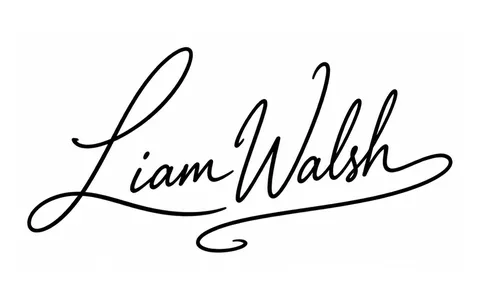
Read these too
Knowledge For teens
Signature ideas for short names: making 3–4 letters look like a real signature
Amy, Ben, Leo, Eva, Max: a short name is quick to sign, but the signature can easily look thin. Seven proven techniques and lots of worked examples for giving a few letters weight and character.
 For teens
Signature ideas for long names: what to shorten and what to keep
If your name barely fits on one line, your signature can easily turn slow and cramped. Here's the order to shorten things in, what to always keep, and six long names worked through from start to finish.
 For teens
Your first official signature: ID, bank account and exams at 16–18
Somewhere between 16 and 18 your signature suddenly gets serious: it goes on an ID, at a bank, on exam papers and contracts. Here's where it's recorded first, why it pays to decide in advance, and how to prepare.