
Knowledge › Name change
Name change
Taking back your maiden name: a new signature after divorce
If you return to your birth name after a divorce, your signature changes too. There are two ways to go: bring back your old form, or design a completely new one. Here are both, calmly, step by step.
After a divorce many things are being rearranged at once, and your name is only one of them. If you return to your birth name, you may find yourself at a counter with your hand starting your married name, even though your ID already shows the old one. That's natural: the movement has been set for years. A new signature after divorce isn't a big decision or a celebration, just a practical step: either you bring back your old form, or you calmly design a new one, and within a few weeks it settles. In this article we look at how to find your old signature, why it's worth updating, when a completely new one is better, and how to bring it in on your ID, at the bank and day to day. The focus is the signature; we only touch on the official name-change process in general terms. This isn't legal advice: which name you can use, and how, depends on your country's rules and the registrar's guidance.
A practical step, at your own pace
Changing a signature can be exciting or satisfying at other times. After a divorce, for many people it's just another item on the list, sometimes a slightly harder one, because the old name brings memories with it. Both feelings are fine. There's no need to make a big thing of it, and no need to rush.
- You don't have to be ready straight away. While your documents still show your married name, that name and signature belong on your papers. You'll need the new signature when your new documents are issued.
- Small steps work. A few minutes of practice a day is enough. If you don't feel like it one day, skip it.
- It's your decision. Whether you bring back your old form or design a new one is up to you. Neither is better than the other.

First, the name: what will your legal name be?
A signature follows the name, so it's worth settling which name you'll use after the divorce. That isn't the same for everyone.
- You keep your married name. Many people do, for example because of their children or their professional name. Then your signature doesn't need to change either.
- You return to your birth name. This is the most common case that calls for a new signature, and most of this article is about it.
- You choose another form. For example, a double-barrelled name becomes a single one. The signature follows the new name here too.
If you had a double-barrelled name and now drop one part, the change in your signature can be bigger than it seems: a long name with two capitals becomes a short one with one. Signing double surnames is covered in this article.
Two ways: your old form or a new one
When you return to your birth name, you can take your signature in one of two directions. Both can work well; the question is what feels right to you.
- A familiar movement that returns quickly
- Your hand still remembers it
- Continuity with the years before marriage
- Good if you liked your old signature
- Worth updating a little
- A clean page, your own decision
- Doesn't bring back old memories
- Designed the way you want it now
- Good if you never liked the old one
- Needs more practice
There's a third, in-between option: keep what was yours from your married signature, such as the slant, the shape of your first name and the ending, and only swap the surname for your birth name. That works well if you like the movement of your current signature and only the name is changing.
There's no right or wrong choice: the right signature is the one you're happy to write and that comes out the same the twentieth time.
Where to find your old signature
If you want to bring back your old form, you first need to find it. Many people no longer remember exactly how they signed years ago. A few places almost certainly have it.
- Copies of old documents. An expired passport or ID card, if you still have it, or a photocopy of one.
- Old contracts and papers. A tenancy agreement, an employment contract, an insurance policy or a bank form from before the marriage.
- School and university papers. Exam entries, enrolment forms, an old student card.
- Letters, cards, notebooks. If you wrote to someone by hand, or still have an old diary or notebook, your name may be there, often as a signature.
If you find several samples, lay them side by side. You'll see which was most typical, and which element came back in all of them: a capital, a join, an ending. Those are your starting points.

Don't copy it: update it
Your hand has changed over the years. Your pace is different, you may hold the pen differently, and your married signature probably developed something that's now yours. Copy the old signature letter by letter and it easily turns stiff and slow, because your hand no longer knows that movement exactly.
- 1Write the old one slowly a few times. Look at the sample and write it five times. Notice what comes easily and what catches.
- 2Write it quickly, without the sample. Now don't look. What comes out is the old form meeting your current hand.
- 3Keep what appears in both. If the capital and the ending are similar in the old version and the quick one, keep them. Where they differ, go with the quick version.
- 4Carry over what's yours from your married signature. If a nice join or a steady slant developed in recent years, you don't have to give it up. It belongs to your hand, not to the name.

If you'd rather have something completely new
For some people it's better if the signature recalls neither the years before marriage nor the married years. A new signature is then the cleanest solution. You don't need beautiful handwriting, only a few decisions.
- How much of your name? Full name, initial and surname, or a strong capital and a wave. The options are covered in how to create your own signature.
- Which style suits you now? A clean, upright form, a dynamic forward-leaning one, or an elegant, looped one. Styles are covered in this article.
- How legible should it be? It will be your specimen on your ID and at the bank, so a readable capital helps. See the legibility article.
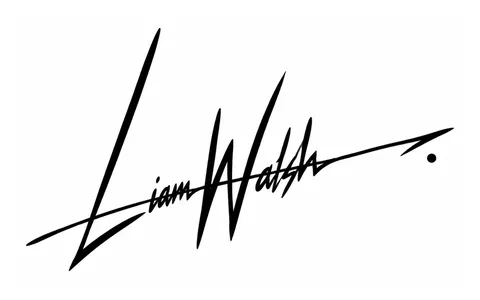
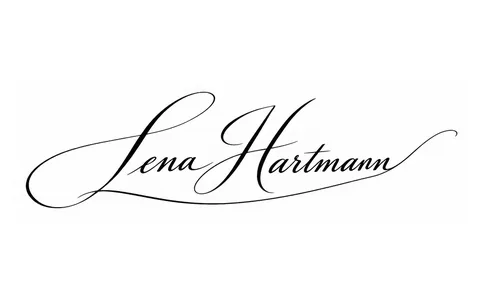
If you'd like to see your birth name in a few different signatures, Calligra designs five options for your name and teaches the one you choose step by step. Try it with your name.
If your children keep a different surname
In many families the children keep the other parent's surname after a divorce. That means your name and theirs differ on school, medical and other forms. It's a common situation and causes no problems.
- Always sign your own name. On a consent form or school note, your signature belongs to your name, not your child's.
- Let the school or nursery know. If they knew you by your married name, tell them it has changed so they recognise your new signature.
- Keep proof handy if asked. Occasionally, an official matter may need you to show the relationship. Your child's birth certificate usually does that; ask the office concerned exactly what they need.
Where to bring in the new signature
Returning to your birth name is a name change just like the one after marriage, only in reverse. The same places come up: ID, bank, employer, providers. The order is similar too: first the document that proves the change, then your new ID, then everything else.
- 1Your new ID. Your new signature is recorded here and becomes the specimen. Arrive with a practised form.
- 2The bank. If the bank keeps a signature on file, ask whether you should give a new one.
- 3Work. HR, payroll, your email address, and if you sign for the company, any signature on file.
- 4Everywhere else. Utilities, insurance, subscriptions, online accounts, saved signature images.
The full, ordered list is in the name change checklist; just skip the pre-wedding part. How to roll out a new signature in general is covered in changing your signature.

Practising, calmly
A new signature settles when you practise regularly but briefly. It doesn't take long afternoons, and it's fine to miss a day.
- 1Five minutes a day. One sheet, one pen, ten signatures in a column. That's enough.
- 2Mind the first letter. Your hand usually slips back into the familiar name on the first movement. Start the capital deliberately and the rest follows.
- 3Try real situations. Standing, in a small box, with a finger on a phone. That's how you'll sign day to day.
- 4Look back after a week. Put the first day's sheet next to the seventh. If it's more even, you're on the right track.
If feelings come up while you practise, that's fine too. Stop and carry on tomorrow; the signature will wait. General practice methods are in this guide.
The in-between weeks
For a while your hand will sometimes start your married name. That's not a mistake, it's habit. A few things help these moments pass without fuss.
- Don't patch it. If you started the wrong name, ask for a fresh form, or strike it through neatly and sign again. A signature written over another looks worse than a clean restart.
- Follow the paper. As long as a document or ID still shows your married name, that name and signature belong there. The new signature starts with your new documents.
- The same everywhere. Once the new form is ready, use it everywhere and don't mix it with the old one.

The one sentence worth taking away
After a divorce, for your birth name you can either bring back your old signature, updated to your current hand, or calmly design a new one; practise briefly at your own pace, and give it in a consistent form on your new documents.
Questions
Can I go back to the signature I had before I married?
Yes, and many people do. Find your old signature on old documents, contracts or letters and write it a few times. It's worth updating it to your current hand, because your movements have changed over the years.
Do I need a new signature if I take back my maiden name?
A new name calls for a matching signature, but that can be your old form. Whether you bring it back, adapt your married signature or design a new one is your decision.
When should I start using the new signature?
When your new documents are issued, because it's recorded there and becomes your specimen. While a paper or ID still shows your married name, that name and signature belong on it.
What do I sign on my child's school forms if our surnames differ?
Always your own name and your own signature. Let the school know your name has changed so they recognise your new signature.
Do I need to tell my bank about my new signature?
If your bank keeps a signature on file, it's worth asking whether you should give a new one. You'll be contacting them about the name change anyway, so you can ask then.
Try it with your own name

Read these too
Knowledge Name change
 after marriage: the complete checklist, in order
ID documents, bank, employer, healthcare, utilities, subscriptions and online accounts: what to update, in what order and with which papers when you take a new name after marriage. Your signature is on the list too, and we show where it fits.
 Name change
The Hungarian “-né” married name and your signature: what to write if you became Kovácsné
Kovács Jánosné, Kovács Jánosné Nagy Éva or Kovácsné Nagy Éva: “-né” names are longer, have a different rhythm and end with an accent. Here's what to put in your signature, what you can shorten, and how to make it one quick, consistent movement.
 Name change
Which name do you sign at your wedding? Register, prenup and witnesses
Several signatures await you around the wedding: when you give notice, on a prenuptial agreement, at the ceremony and perhaps in church. Here's which name goes where, why it's usually still your current one, and how to prepare so your hand is calm at the big moment.