Knowledge › Practice
Practice
Signing in tiny spaces: cards, forms, cheques
The narrow strip on the back of a card, a tiny box on a form, a table cell: suddenly your usual signature doesn't fit. Here's how to scale it down while keeping it the same signature.
At its usual size, your signature is confident and good-looking. Then someone hands you a form where the signature space is a box two centimetres high, or an attendance sheet where the cell is half the length of your name. Your hand improvises: the letters get squashed, the finish runs into the next box, or a completely different, hurried mark ends up on the paper. A signature in a small space works when it's a proportionally scaled-down copy of your full signature, not a new drawing. In this article we look at where you'll meet cramped signature boxes, the difference between scaling down and shortening, how to keep your proportions, what you can drop and what you shouldn't, which pen helps, and how to practise a small version in a few days. Signing on screens, for couriers or at card terminals, has its own article; here the focus is mainly on paper.
Why small spaces are hard
Your signature is a practised movement, and that movement has its own natural size. Your hand knows how big the curve of the capital is and how far the finish runs. When the space is smaller, the movement has to be re-cut on the fly, and for most of us that doesn't happen automatically.
- Squashing. The letters slide into each other, the loops close up, and the signature turns into a dense tangle.
- Overflowing. The start fits, but the end runs out of the box, over the printed text or into the next field.
- Distortion. Only the height shrinks, not the width, or the other way round. The signature ends up flattened or narrowed.
- Improvising. The hand gives up and writes a completely different quick mark. That's the least fortunate outcome, because it's no longer your signature.
There's a fix for each of these, and none needs special talent. All it takes is practising the scaled-down version the same way you practised your usual size.
A small space doesn't need less of your signature, just the same signature, smaller.
Where you'll meet small signature boxes
Once you start noticing, you'll find cramped signature spaces in surprisingly many places. A few typical examples:
- The back of a bank card. Some cards have a narrow signature strip. A small, smooth surface where the pen you use really matters.
- Boxes on forms. Applications, declarations, consent forms: the signature space is often a small box at the bottom of the page, next to the date.
- Cheques. Where cheques are still used, the signature has to fit on a short line or in a small field.
- Tables and sheets. Attendance sheets, receipt lists, loan logs: one row, one cell, one signature.
- The signature field on documents. For some identity documents, your signature is taken in a small box or on a signature pad when you apply, and transferred to the document from there.
- Delivery notes and receipts. Often in a hurry, standing up, on a small slip of paper.
We cover screen situations, from couriers' devices to card terminals, in detail in signing on screens. There it's not just the size that's different, but the surface too.
Scaling down or shortening?
In a small space there are two routes: write your full signature smaller, or use a shorter form. They aren't the same thing, and they aren't interchangeable everywhere.
- The same shape, just smaller.
- Works where the full signature is expected.
- Resembles the signature you gave your bank or on your documents.
- Takes practice so it doesn't distort.
- Just the capital and the first sweep.
- Quick, and fits even very small spaces.
- Often enough for internal papers and initialling pages.
- Not always accepted where the full signature is expected.
On cards, cheques, official forms and identity documents, the scaled-down full signature is usually the safe choice, because these often depend on whether it resembles the signature you gave before. What's accepted in a particular place is something the bank or office concerned can tell you. We cover short forms, and where they're usually accepted, in the article on short signatures.
Keeping your proportions
The key to scaling down is shrinking everything by the same amount. If only the height shrinks and the width doesn't, the signature flattens out. If only the width shrinks, it gets compressed. Neither looks like the original.
- Capital to small letters. If your capital is twice as tall as the small letters at full size, keep it twice as tall when small.
- Slant. When writing small, we tend to straighten up. Make sure it leans in the same direction and by the same amount.
- Baseline. Use the bottom line of the box as your support. The signature should sit on it, not float in the middle of the box.
- Width to height. Check how many times wider than tall your usual signature is. Keep that ratio when small.
What you can drop, and what you shouldn't
Sometimes scaling down isn't enough and something has to go. The question then is what your signature can do without and still be yours, and what is just decoration.
- A long underline or exit stroke.
- Decorative loops in the middle of the name.
- A second first name or middle initial, if it's faint anyway.
- The length of the finish.
- The characteristic shape of your capital.
- The first sweep after the capital.
- The slant and the rhythm.
- At least one distinctive feature that makes it recognisable.
We cover finishes, and how to shorten a long underline while keeping its character, in the article on finishes. In a small space, a short, decisive exit stroke is often the best choice.
The right pen for small spaces
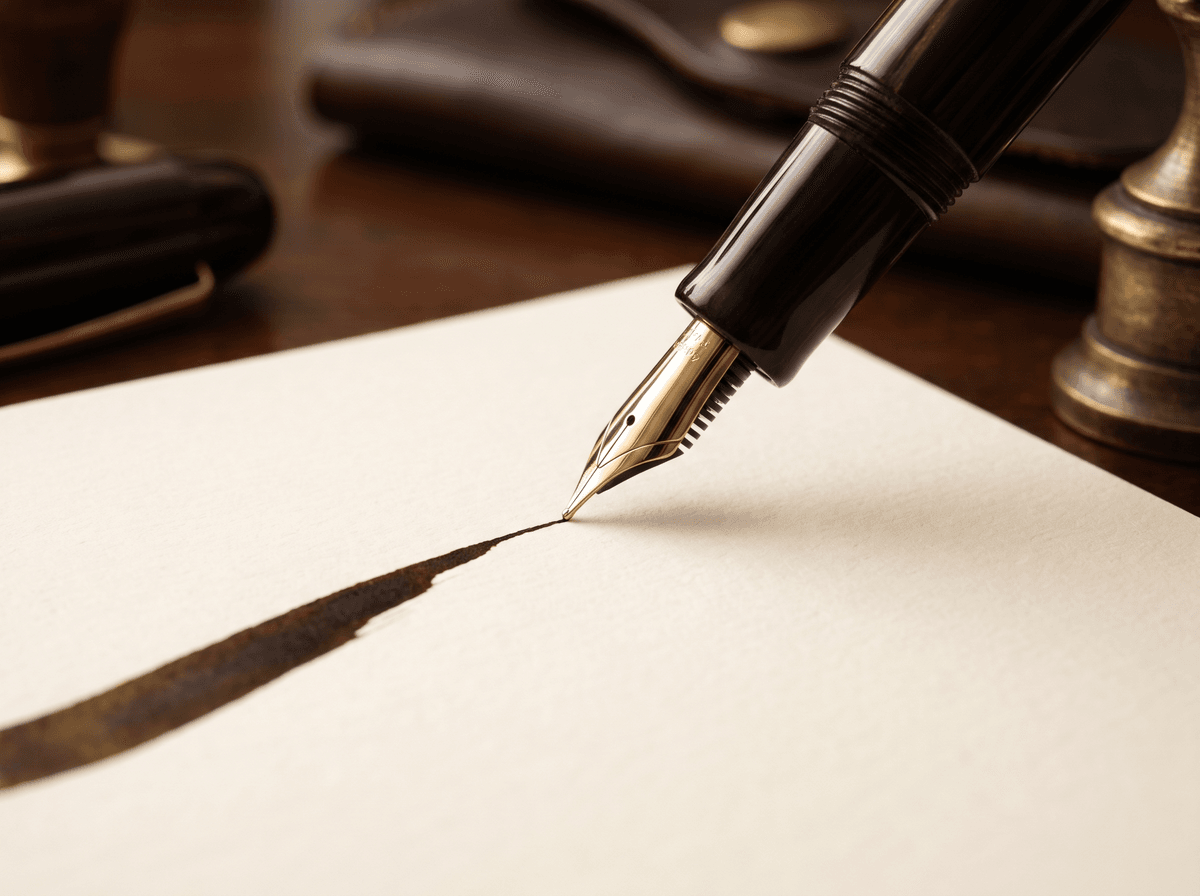
At a small size, the pen matters far more than at a large one. A thick line that looks elegant in a big signature runs together when small, and the loops fill in.
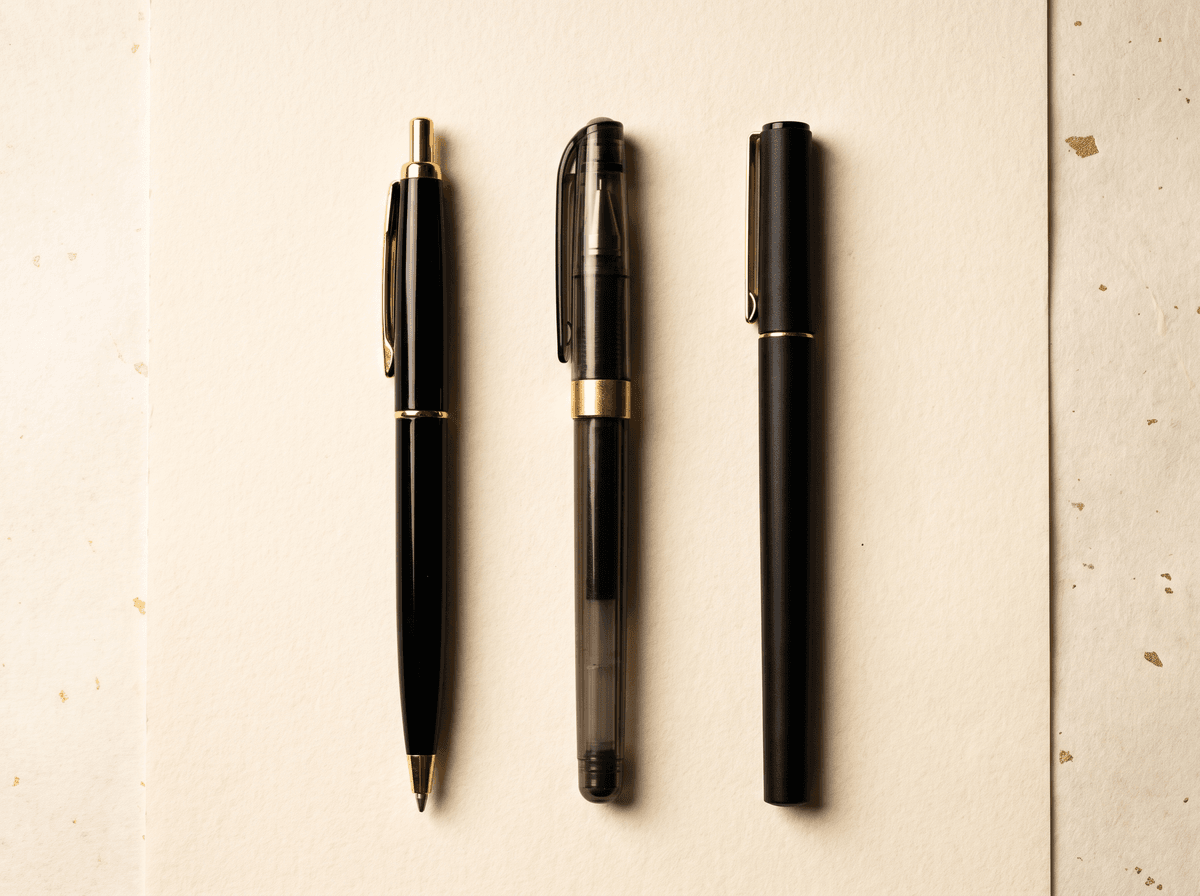
- A fine tip. A fineliner or a fine ballpoint. At small sizes, these keep the details cleanest.
- Fine rather than broad. A broad-nib fountain pen is lovely, but in a small box the letters can merge.
- Dark ink. Black or dark blue. If the paper is scanned or photocopied later, these stay the most legible.
- A different pen for smooth, glossy surfaces. On a card's signature strip or glossy paper, a ballpoint sometimes skips and gel ink can smudge. A pen suited to that surface helps, and let it dry.
For more on tools in general, see pens, ink and paper.
The back of a card: a narrow strip, a smooth surface
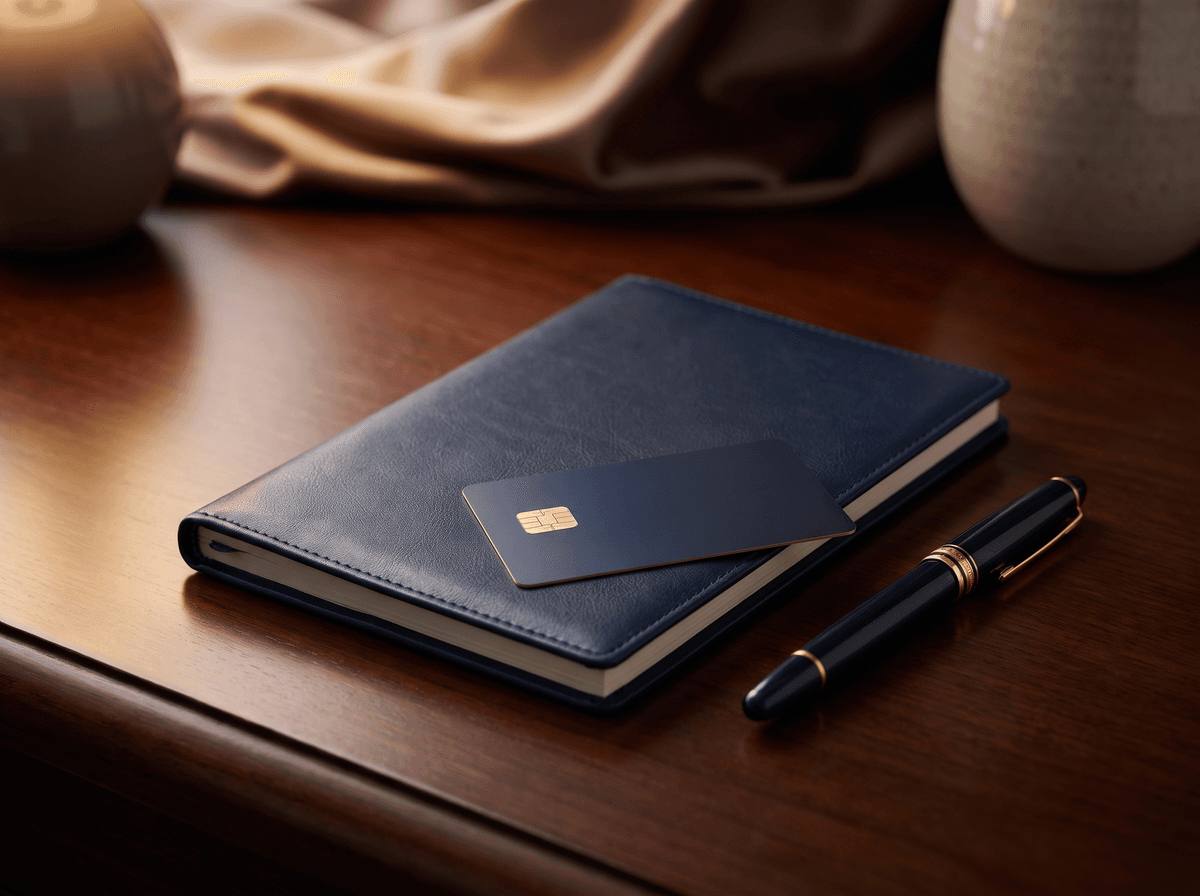
If your bank card has a signature strip, it's one of the narrowest spaces you'll ever sign in. It's narrow, often smooth or slightly glossy, and once you get it wrong, you can't rub it out.
- 1Ask whether it's needed. Whether your card needs signing, and what's expected of the signature, is something your bank can tell you. If you're unsure, ask them.
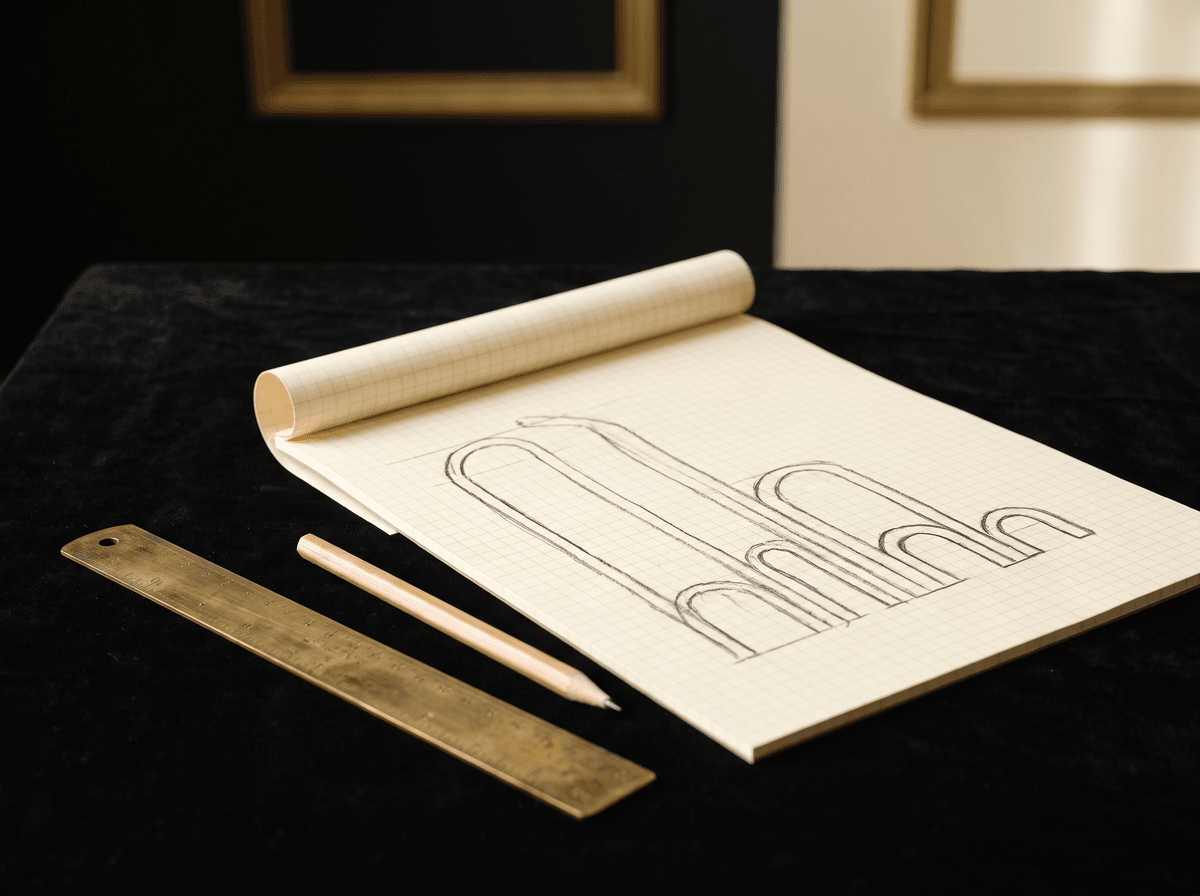
- 2Try it on paper first. Draw a strip of the same size on a sheet and sign in it a few times. That way your hand already knows how much room it has.
- 3Choose a suitable pen. One that writes evenly on the card's surface and doesn't smudge. If you're unsure, test it with a small dot at the edge of the strip.
- 4Write calmly. Put the card on a flat, hard surface, hold it down with your other hand, and sign in one movement.
- 5Let it dry. Don't put it in your wallet or touch it for a few minutes.
Forms, tables and sheets
With forms, it's not just the space that matters but also who will process the paper later, and how. A few simple habits help keep your signature where it belongs and out of trouble.
- Read the text around the box. If the form asks you to keep your signature inside the box, do so. Some papers are processed by machine, and the edge of the field matters.
- Don't write over printed text. Your signature shouldn't cover your name, the date or a checkbox.
- Date and name separately. If the form has separate fields for the date and your printed name, put them there rather than crowding them next to the signature.
- In a table, one row, one signature. On an attendance sheet, stay in your own row. If space is tight, shorten the finish rather than writing into the next row.
- If it's really tight, ask. If the box is simply too small for a full signature, ask whether a scaled-down or short form is acceptable.
Ben Nash signs an attendance sheet at his sports club every week, where the signature space is a narrow cell. For years he tried to cram in his full, sweeping signature, which kept running into the next row. In the end he spent a few days practising the scaled-down version in a small frame, with a shorter finish. Now it stays in the cell, and his capital is just as recognisable as on his contracts.
Cheques: a short line, your usual signature
In many places cheques are rarely used today; elsewhere they're still part of everyday life. Where they do come up, the signature has to fit on a short line, and it's typically expected to resemble the signature your bank knows.
- Your usual form, smaller. On a cheque, use the same signature your bank knows. This isn't the place to experiment with a new or shortened form.
- Stay on the line. The signature should sit on the signature line and not run into the other fields.
- Dark, permanent ink. A pen whose line doesn't smudge and shows clearly.
- Only sign completed cheques. Don't sign blank or half-filled cheques in advance.
Exactly what your bank expects on cheques varies by bank and country. If you have questions, your bank can tell you.
Practice: the frame exercise
You can practise the scaled-down version just like your usual signature. The simplest method takes a sheet of paper, a few drawn frames and a few minutes a day. The sizes are only starting points: adjust them to where you sign most often.
- 1Draw frames. On a sheet, draw a row of ever-smaller rectangles: for example 8, 6, 4 and 2.5 centimetres wide, with the height shrinking in proportion.
- 2Start with the largest. Write your usual signature in it. That's your reference.
- 3Work your way down. Write the same signature in each smaller frame, with the same start and slant. If something doesn't fit, shorten the finish.
- 4Compare. Put them side by side and look at them at arm's length. Do they look like the same signature?
- 5Repeat for a few days. After a few days, your hand will start adapting to the smaller space on its own.
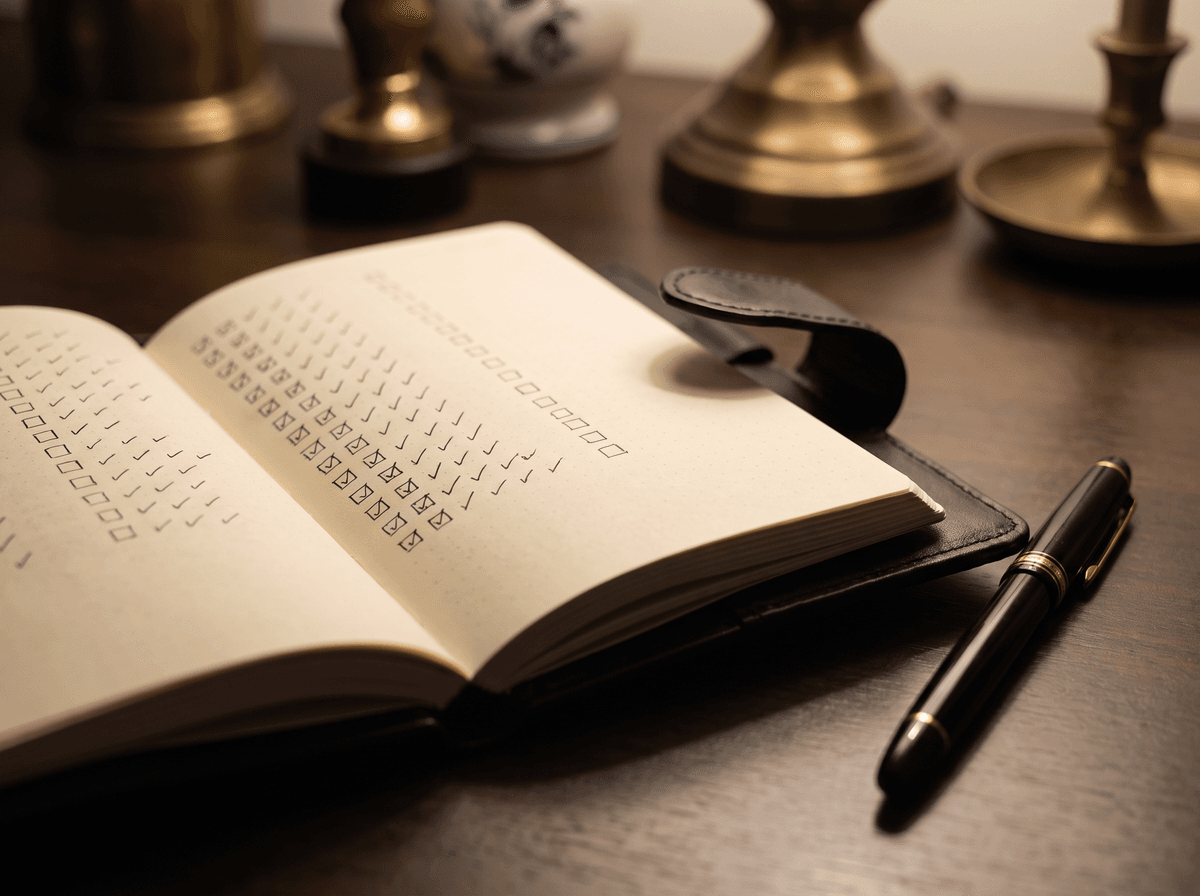
If you design a new signature with Calligra, you can learn it stroke by stroke on the practice pad, and once it's secure, build the scaled-down version on top with the frame exercise. For more on practising in general, see the practice article.
Common mistakes and how to fix them
The mistakes people make in small spaces look very alike, and they mostly come from the same thing: the hand hasn't had time to get used to the smaller size.
- A flattened signature. Only the height shrank. Fix: shrink the width too, and if it doesn't fit, shorten the finish.
- A runaway finish. The end of the signature spills into the next field. Fix: practise a shorter, decisive exit stroke.
- Loops that close up. At small sizes, loops turn into ink blots. Fix: use a finer pen and keep the loops a little more open.
- Upright writing. The slant gets lost when small. Fix: pay particular attention to slant in the frame exercise.
- A completely different mark. In a tight spot, a hurried scribble ends up on the paper. Fix: decide in advance whether you'll write a scaled-down full signature or a practised short form, and practise that.
The one sentence worth taking away
In a small space, don't draw a new mark; write a proportionally scaled-down copy of your usual signature: the same capital, the same slant, a shorter finish, a fine pen, and a few days of the frame exercise.
Questions
What if my signature simply doesn't fit in the box?
First shorten the finish and drop the decorative elements, but keep the capital, the slant and the first sweep. If it still doesn't fit, ask whether a shorter form is acceptable. Don't write over the printed text or into the next field.
Is it OK to go outside the signature box?
That depends on the paper. On many everyday documents it's no problem if the finish runs out a little, but some forms are processed by machine and specifically ask you to keep the signature inside the box. If there's an instruction like that near the box, follow it.
Do I have to sign the back of my bank card?
Your bank can tell you, as it can vary by card and by bank. If your card has a signature strip and you want to sign it, use a pen that doesn't smudge on that surface, and let it dry.
Can I use a short form on a card or a cheque?
On these, the safe choice is usually a scaled-down version of the signature your bank knows. Whether a short form is acceptable is something your bank can tell you. This isn't the place to experiment with a new form.
What pen should I use for small spaces?
A fine-tipped fineliner or a fine ballpoint, with black or dark blue ink. Broad-tipped pens make letters run together at small sizes. On glossy surfaces such as cards, you need a pen that doesn't smudge.
How long until the scaled-down version comes naturally?
It varies from person to person. Most people find it noticeably easier after a few days of short daily frame practice. If your usual signature is already secure, scaling it down goes faster than learning a new signature.
Does the same small signature work on paper and on screens?
The shape can be the same, but on a screen the surface and the lag are different too. A slightly simpler, more fluid version usually works better there. We cover this in detail in signing on screens.
Try it with your own name

Read these too
Knowledge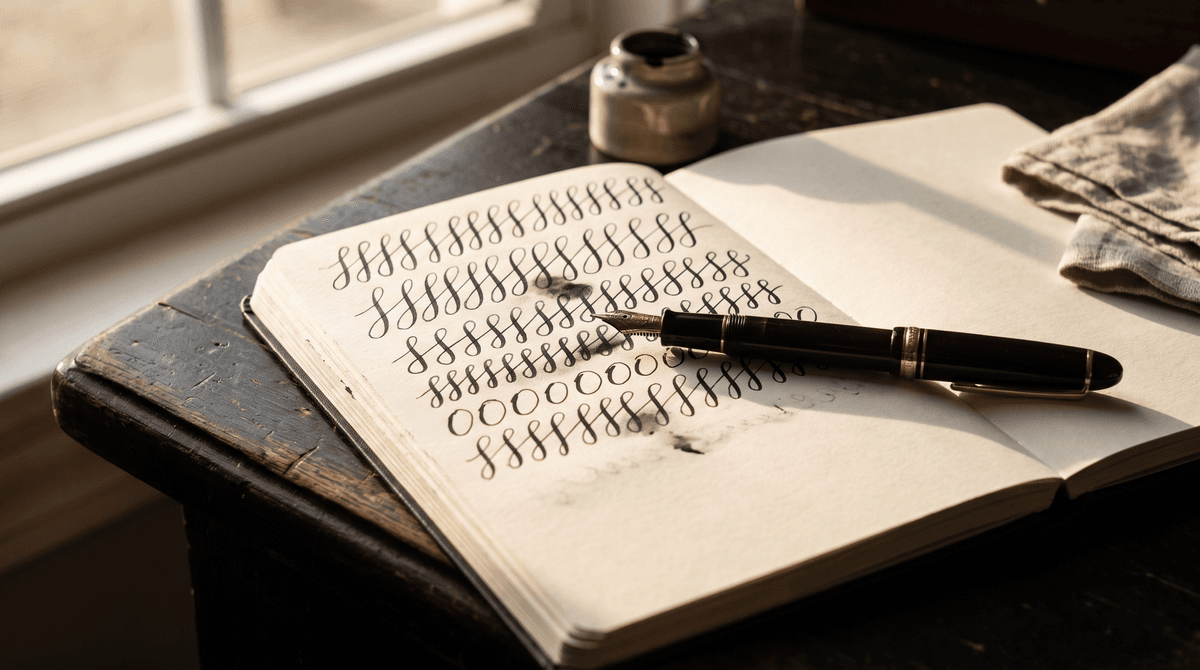 Practice
How to learn your new signature, step by step
Warm up, learn the stroke order, trace, then build speed: a 7-day and a 21-day plan for making a new signature truly yours.
 Practice
Signing left-handed: grip, slant and paper
Writing with your left hand isn't a disadvantage; it just calls for a different technique. From grip and paper angle to slant and smudge-free pens, here's everything you need for a calm, good-looking signature.
 Practice
Signature practice sheet: how to make one and use it well
No download needed: a sheet of A4, a ruler and a pencil will do. Guide lines, real-life box sizes, a sheet laid out row by row and a seven-day routine that makes the sheet do the work for you.