


Knowledge › Practical
Practical
Changing your signature: when, where and how
You can adopt a new signature at any time, but how you roll it out matters. Here's where your signature is on file, what to ask, and how to get through the awkward first weeks.
Your signature isn't a fixed fact about you; it's a habit. You invented it once, maybe as a teenager in a dull class, and your hand has repeated it ever since. It's fine to reach a point where that shape no longer feels like you. People switch for many reasons: a new job, marriage and a new name, the first serious paperwork of adult life, or simply never having liked the old one. Changing a signature is easy; the effort lies in knowing where the old one is on file and introducing the new one consistently. This guide goes in practical order: decide on the new form, map where your signature is recorded, then roll it out step by step. One thing up front: this isn't legal advice. Procedures differ by institution and country, so wherever something official depends on it, ask the institution concerned.
Why people change their signature
There's rarely just one reason. Usually a life event gives the push and brings up a feeling that's been there a while: “I should have done this ages ago.” Knowing which situation you're in tells you how urgent the change is and how many places you'll need to tell.
- A new job or role. Become a manager, start signing client contracts or approving invoices, and far more people see your signature. Peter Nagy switched when, as a new team lead, he was signing dozens of documents a week and tired of his old hurried loop.
- Marriage or a name change. When your name changes, the letters in your old signature often don't match any more. It's the most natural moment for a new form.
- Coming of age. The first bank account, lease or employment contract is when many people notice that a signature invented at fourteen doesn't fit adult life.
- You never liked it. A perfectly valid reason. If you can't write it the same way twice, or just find it ugly, you deserve one you enjoy writing.
- Your hand has changed. After an injury, joint trouble or simply the years, a simpler, more fluid signature is not just nicer but easier.
Your signature is a habit, not a verdict: if it no longer feels like you, you're free to replace it.
Before you start: settle on the final form
The classic mistake is registering a new signature at the bank and realising two months later that you don't like it, or can't write it consistently. So the order is: form first, then practice, and only then the paperwork. Once you've lodged a sample in several places, going round again is a nuisance.
A good new signature flows in one movement, comes out the same every day, and suits you. For what makes a form strong, see What makes a signature look professional?. If your name should stay readable, the guide to legibility helps too.
- Ten in a row look roughly the same
- You can write it at speed
- You still like it after a week
- It fits small boxes and large ones
- It works with a ballpoint
- It's a little different every time
- You can only manage it slowly
- Elaborate flourishes, many pen lifts
- It only looks good large
- You're still tinkering with the initial
In Calligra you can see how your current signature scores on flow, uniqueness, confidence and proportion, and pick from more than 30 styles shown with your name. It's a useful starting point, but the final decision stays in your hands, quite literally.
Where your signature is already on file
Before telling anyone, list the places that hold a sample of your signature or routinely compare it against an earlier one. That isn't everywhere you've ever signed. Nobody cares about a café card receipt; a specimen signature at your bank is a different matter.
- Your bank. Many banks record a specimen signature when you open an account and check branch paperwork against it. If you have several banks, consider each one.
- ID documents. Your ID card, passport or driving licence often carries your signature, captured when it was issued.
- Your employer. If you sign for the company, HR or finance may keep a sample, and regular partners will know the old form.
- Notaries and registers. If you've lodged a specimen signature in an official register, there may be something to do there too.
- Ongoing contracts. Lease, loan, insurance, utilities. Signed documents usually need nothing, but know where you have a live relationship.
- Everything else. Post office authorisations, your child's school forms, an investment account, a safe-deposit box. Easy to forget, yet they may compare signatures too.

The list takes about an hour. Go through your folders, bank letters and password manager, which is a good reminder of where you still have contracts. The aim isn't perfection, just not missing the important places.
ID documents, government offices and notaries
Most people's first question is whether they need a new ID card straight away. In many places the signature on a document stays the old one until renewal, but this varies by country and document type. A name change is different, since the name itself changes and new documents usually follow. Only the issuing office can tell you the exact rules.
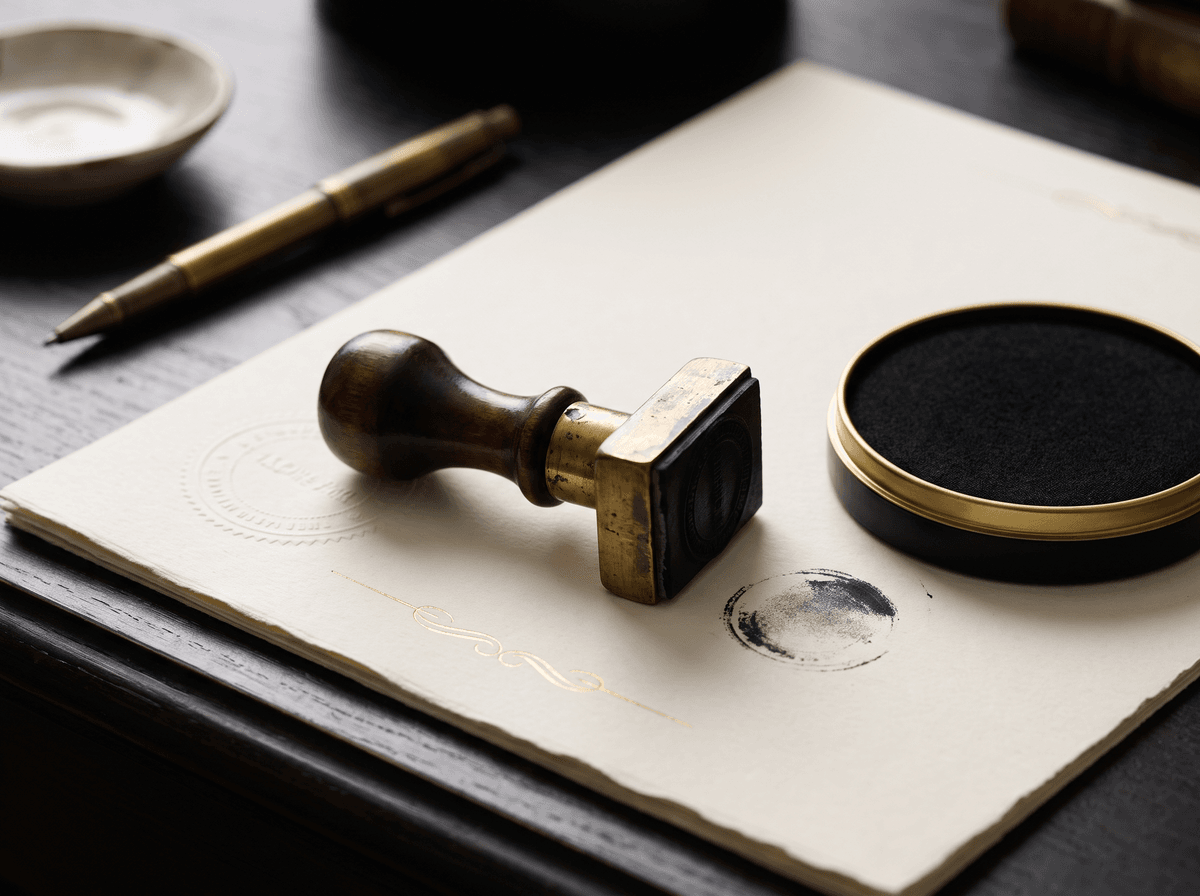
A notarised signature usually relates to one document on one day. If you've lodged a specimen in a register, for company matters for instance, ask whether you need to submit a new one. Don't assume the change is picked up automatically, and don't assume you must act either. Ask.
- Ask the issuing office. “I've changed my signature. Do I need to do anything now, or can it wait until renewal?”
- Ask a notary. “Is a specimen of my signature held anywhere? If so, how do I update it?”
- Bring. Valid photo ID and, after a name change, the document that shows it. Check the exact list beforehand.
The general steps
Every institution has its own procedures, but the outline is nearly always the same. Follow this order, and wherever an institution asks for something different, do what they say.
- 1Finalise the form. Practise for two or three weeks and move on only when you no longer want to change it.
- 2List the places. Note where a sample is held. Financial and frequently used places go first.
- 3Ask before you go. Check what's needed, whether you need an appointment, and which documents to bring.
- 4Lodge the new sample. Where required, give the new signature in the way the institution accepts. Take your time.
- 5Get confirmation. Ask for written confirmation, or at least note when, with whom and how you made the change.
- 6Use it everywhere. From then on, use only the new signature where it's registered, and introduce it gradually elsewhere.

No need to do it all in a week. Many people spread it over two or three months alongside normal errands: the bank on the next branch visit, the new form on the next contract. That works fine, as long as the important places know.
A checklist for the switch
Copy this into your notes and tick things off. Cross out whatever doesn't apply to you.
- Form settled. Ten signatures in a row match, and you still like it after a week.
- Banks. You've asked each bank whether a new specimen is needed and provided it if so.
- ID documents. You know whether they need action now or can wait until renewal.
- Work. HR or finance know, if they hold a sample, and so do regular partners.
- Notaries and registers. You've checked whether a specimen is lodged anywhere.
- Ongoing contracts. The next amendment gets the new signature.
- Everything else. Post office, school, investment account, safe-deposit box: considered.
- A log. You've noted when, where and with whom you reported the change.
After a name change: marriage, double-barrelled names, accents
If your name is changing, the official process, not you, decides when your documents change. You'll be giving a signature for the new documents anyway, so this is the perfect moment to write the final, well-practised form. If you know a name change is coming, start practising early.

Anna Smith, for instance, became Anna Smith-Taylor. Her old signature was a bold S and a long wave. For the new one she chose two strong capitals, S and T, joined by a short stroke that echoes the hyphen.
- Double-barrelled names. You needn't write both names in full. Emphasise both initials and follow with a short, fluid run; a small horizontal stroke can stand for the hyphen.
- Long names. Simplify. A well-chosen initial and a rhythmic wave say more than fourteen carefully drawn letters.
- Very short names. With a name like Al Ng or Jo Li, the signature needs weight: a stronger initial or a decisive closing stroke.
- Accents. Marks like the Hungarian ő and ű can break your flow. Many people reduce them to one slanted tick or drop them. Either is fine; just be consistent.
- Keeping your name. Nothing to do. If you change your signature anyway, it's the same decision as at any other time.
The transition: when your hand still writes the old one
In the first weeks it will happen: you're in a hurry, sign for a parcel, and your hand writes the old form on autopilot. That's just motor memory. You've repeated the old signature for years and the new one for days. Your hand needs time to switch, and repetition shortens it.
- 1Five minutes a day. Write the new signature ten to twenty times, slowly, then faster. Short, regular practice beats one long weekly session. More in the article on practice.
- 2Practise in real conditions. Small boxes, standing up, at a counter, with a ballpoint.
- 3Slow down before official papers. Take a breath and start deliberately with the new initial. The first movement decides which version comes out.
- 4Don't panic if the old one slips in. On an everyday form, nothing has happened. On an important document, ask whether to sign again.
In Calligra you can learn your chosen signature letter by letter, then check its consistency in the scored practice mode, which shows whether the new form is getting steadier.
Consistency: one signature, everywhere
A signature exists to be recognised. Once the new one is in, use it everywhere, and avoid an “official” and a “casual” version you swap between. Two forms confuse your hand, and if anyone compares them, they can raise questions.

- Same initial every time
- Similar size and slant on paper and screen
- Registered specimen matches daily use
- Initials only where specifically asked
- New at the bank, old at the post office
- Different flourishes every week
- A different form in small boxes
- Two versions chosen by mood
Screens deserve attention: couriers, tills, tablets. The surface is slippery and your signature often comes out distorted. That's fine, but practise for it. More in signing on a screen.
If you initial pages or internal documents, align that too. Make it the opening of your new signature, the initial and first stroke, so the two reinforce each other.
What not to do
A few mistakes come up again and again. Most are avoided with patience and a few questions.
- Don't register a half-finished form. You'll soon be back, with two different specimens in circulation meanwhile.
- Don't switch mid-transaction. Buying a home or signing a multi-stage contract? Wait until it's done, or check first that a new signature won't cause problems.
- Don't re-sign old documents. They generally don't need it. If unsure, ask the other party rather than redoing things yourself.
- Don't copy someone else's signature. Take inspiration, but make it yours.
- Don't guess the rules. Ask the institution, not a forum.
- Don't go too elaborate. What looks lovely in a notebook falls apart standing at a post office counter with a ballpoint.
- Don't give up early. Go back after a fortnight and you'll only have to do it all again.
Form first, then practice, and only then the paperwork.
Your first official signature with the new form
There's something ceremonial about first writing your new signature on a real document: at a bank counter, on a new employment contract, on the first paper after your wedding. Prepare a little so nerves don't take over.

- 1Warm up. Write it a few times on scrap paper beforehand.
- 2Check the space. If the box is tight, adjust the size, not the form.
- 3Take a breath. A few seconds don't matter; a confident line does.
- 4Write it in one go. Start with the initial and let the movement run through.
If someone asks why it differs from your ID, explain that you've recently changed it and show the document if needed. It's an everyday situation.
The one sentence worth taking away
You can change your signature whenever you like; it just takes a sensible order. Settle and practise the new form, list where your signature is on file, and ask each place what they need. Be patient with your hand during the transition, then use the new one consistently everywhere. Where something official depends on it, the institution has the final word.
Questions
Do contracts I signed with my old signature stay valid?
Generally the signature at the time of signing is what counts, so contracts signed with your old one usually don't need re-signing. This isn't legal advice: if something important hangs on a contract, ask the other party or a professional.
Do I need a new ID card straight away?
In many places the signature on a document can stay until renewal, but this varies by country and document type, and a name change is usually different. Ask the issuing office for a definite answer.
How long until the new signature comes naturally?
It varies. With a few minutes of daily practice many people stop thinking about it within weeks, but the old form slipping out now and then for months is normal too. The simpler the new signature, the faster it settles.
What if I used my old signature on an important document by mistake?
Don't panic. Ask the other party whether it's fine or whether they'd like a fresh copy. They're the ones who can say.
Do I need to tell everyone?
No. Only places that hold a sample or routinely compare your signature: your bank, ID documents, your employer, a register. Not because of a delivery slip or a birthday card.
Can I have an official and a casual signature?
Nobody stops you, but one consistent form is better. Two versions confuse your hand and can raise questions officially. If you need a short version, make it the opening of the new signature.
Do I have to change my signature when I marry?
No. But if your name changes, the old letters often no longer fit, and you'll sign new documents anyway, so many people switch then. If you keep your name, you can keep your signature.
Try it with your own name


Read these too
Knowledge Practical
Signing on screens: tablets, phones, terminals
At the door with a courier, at the bank, at a café counter: more and more often we sign on glass with a finger or stylus. Here's how to keep your signature recognisable and good-looking there too.
 Practical
Signing PDFs and e-documents: what to watch for
Print, sign and scan? Paste in an image? Or are they asking for an e-signature? Here are your options, how to make a clean signature image, and how to keep your digital signature safe.
 Practical
Initials, monograms, short signatures: when is the short form enough?
In the corner of a page, on internal paperwork, in a cramped box, a quick short mark comes in handy. Here's where it's usually accepted, where your full signature is more likely expected, and how to keep the short form unmistakably yours.