How to make a signature
How to make a signature: the complete method in seven steps, with tests and a practice plan
You make a signature by deciding how much of your name to include, designing one distinctive capital, a consistent rhythm and a simple finish, testing it five ways and practising it for a week. Calligra is the shortcut: it designs one for your name and teaches it to you stroke by stroke.
Coming up with a signature isn't about talent; it's about a few good decisions. You don't need beautiful handwriting: a signature isn't a prettier version of your handwriting, it's a practised movement that comes out the same even when you're fast. This guide gives you the complete method in short form: seven steps, five tests and a one-week practice plan. If you want every detail, with lots of examples and ten style ideas, the long version is in this article.
The method in brief
If you read only one part of this page, make it this. The order matters: content first, then form, then testing and practice.
- 1Collect samples. Write your name twenty times: as usual, slowly, fast and large. Circle what comes naturally.
- 2Decide how much of your name to include. Full name, initial and surname, or just initials.
- 3Design one distinctive capital. It's the face of the signature. One strong element, not three.
- 4Set the rhythm. A consistent slant, even small letters, a straight or slightly rising baseline.
- 5Choose a finish. A tapering exit, an underline, a return stroke or a dot.
- 6Test it five ways. Fast, small, twenty times in a row, standing up and on a screen.
- 7Practise it for a week. Ten minutes a day, from slow to fast, until it happens without thinking.
1. Collect samples from your own hand
Don't start from someone else's sample; start from what your hand does on its own. Write your name five times as usual, five times slowly in your best writing, five times very fast and five times large. Then circle details rather than whole signatures: a capital, a join, an ending. That's your raw material.
Whatever survived in the fast versions is your hand's real movement, so build on it. If a letter always trips you up, note it down; you'll simplify it later.
2. Decide how much of your name to include
This is the biggest decision, because it sets the length, the pace and the legibility. Take “James Whitfield” as an example.
- Full name: James Whitfield. The most legible, and the safest for a first signature. It can be cramped in small boxes.
- Initial and surname: J. Whitfield. Tidy, formal and shorter, and a very common choice in English-speaking countries.
- First name and surname initial: James W. More personal, if you go by your first name day to day.
- Readable start, shortened end: “Whit” and a wave. The most common adult form: the start shows who you are, the end gives the pace.
- Initials only: J. W. or a monogram. Fast and modern, ideal for small spaces, but less legible.
If you're unsure, start with the full name and shorten only if the tests show it's too long. How the letters of your name affect this decision is covered in our guide to a signature for your name.
3. Design one distinctive capital
Everyone looks at the first capital first, so that's where the character goes. The rule: one strong element, not three. A tall loop, a long stem, a big curve or a sharp peak, but just one.
- Size: make the capital one and a half to three times the height of the small letters. Any bigger and it becomes an autograph.
- Connection: let the capital's stroke lead into the next letter, so you don't have to lift the pen.
- Simplicity: if you can't write the capital in one movement, simplify it.
Capital shapes, ideas and solutions for tricky letters are in our article on capitals.
4. Set the rhythm: slant, size, baseline
A signature looks deliberate because it's consistent. Decoration doesn't make it professional; what does is every letter leaning the same way, the small letters being the same height and the line running straight.
- Slant: pick one, slightly to the right or upright, and keep it all the way. A right slant reads as faster and more energetic.
- Small-letter height: keep them even. One letter sticking out is more distracting than a plain form.
- Baseline: straight or gently rising. A line that sinks looks tired.
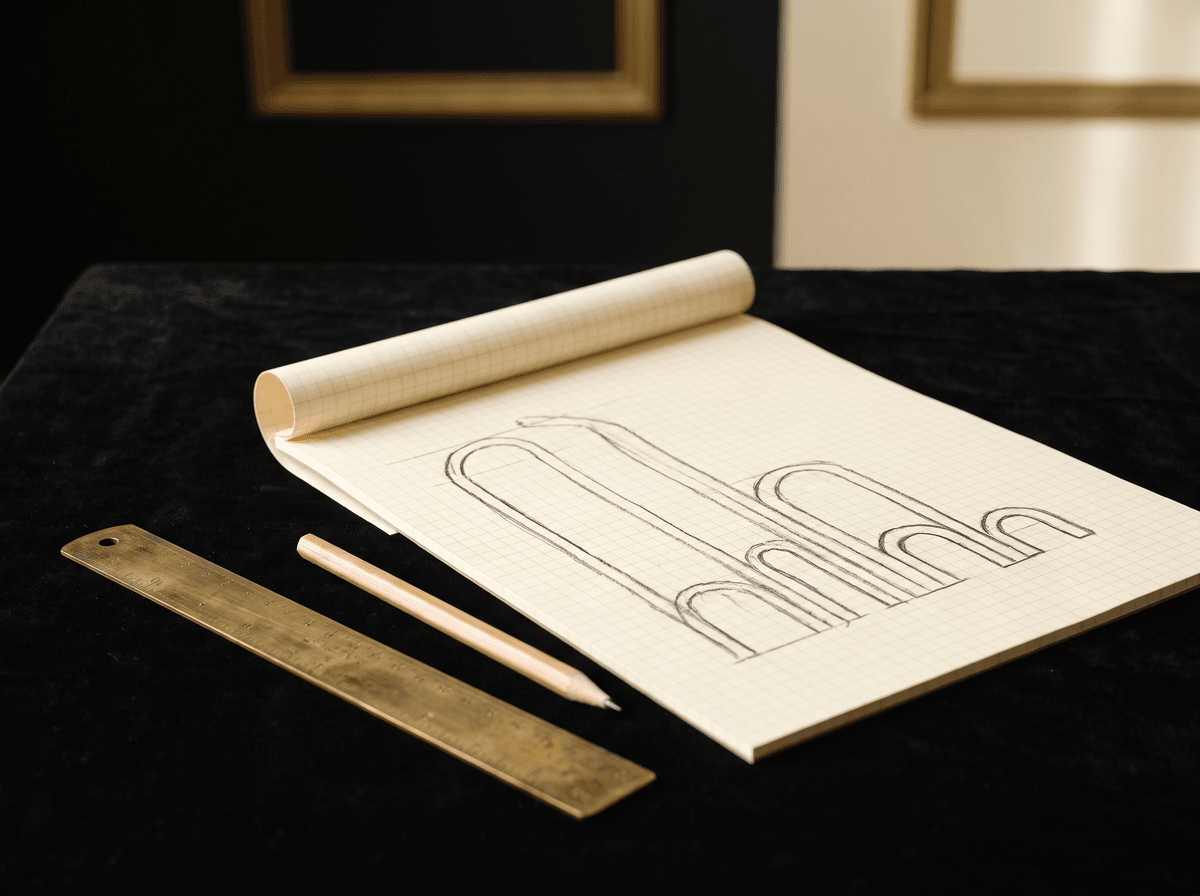
5. Choose a finish
The finish closes the line. The simplest is often the most elegant: the pen doesn't stop at the end of the name but lifts and thins out. If you want more, a straight underline or a stroke returning under the name is enough. Avoid a finish that's longer than the name itself.
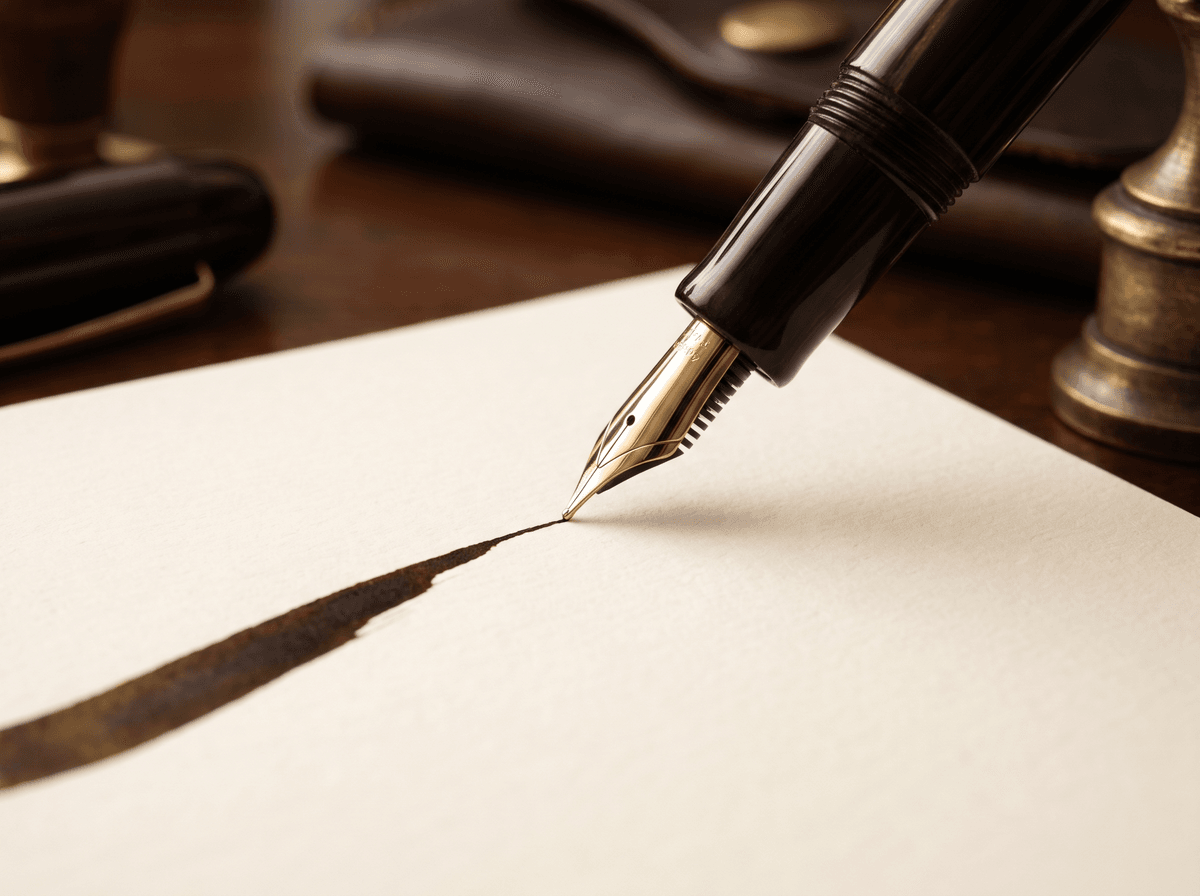
Types of finish and what each suits: endings and underlines. For style ideas, see signature ideas.
6. The five tests: how to know it works
A signature isn't decided on an empty page; it's decided in real life. Before you settle, put it through these five tests. If it fails three, simplify.
- 1The speed test. Write it in three seconds. If it falls apart, it's too complicated.
- 2The small-box test. Write it in a 4 × 1 cm box. If it doesn't fit, keep a shorter version as well.
- 3The twenty test. Write it twenty times in a row. The last five should look like the first.
- 4The standing and screen test. Sign standing up on a sheet held against a wall, and with your finger on a phone screen.
- 5The distance test. Hold it at arm's length or show it to someone. Does it look deliberate, or like a scribble?

7. A practice plan: one week, ten minutes a day
A new signature usually settles into your hand after about a week of regular practice. What matters isn't the quantity but the order: accurate first, then fast.
- 1Days 1–2: slow and large. Follow the stroke order, over a faint guide if you like. Only the form matters.
- 2Days 3–4: normal size, normal pace. Write it thirty times and notice where the pen hesitates.
- 3Day 5: fast. Three seconds each, ten times in a row.
- 4Day 6: real life. In a small box, standing up, on a screen, with a different pen.
- 5Day 7: use it. Sign your everyday things with it. From now on, using it is the practice.
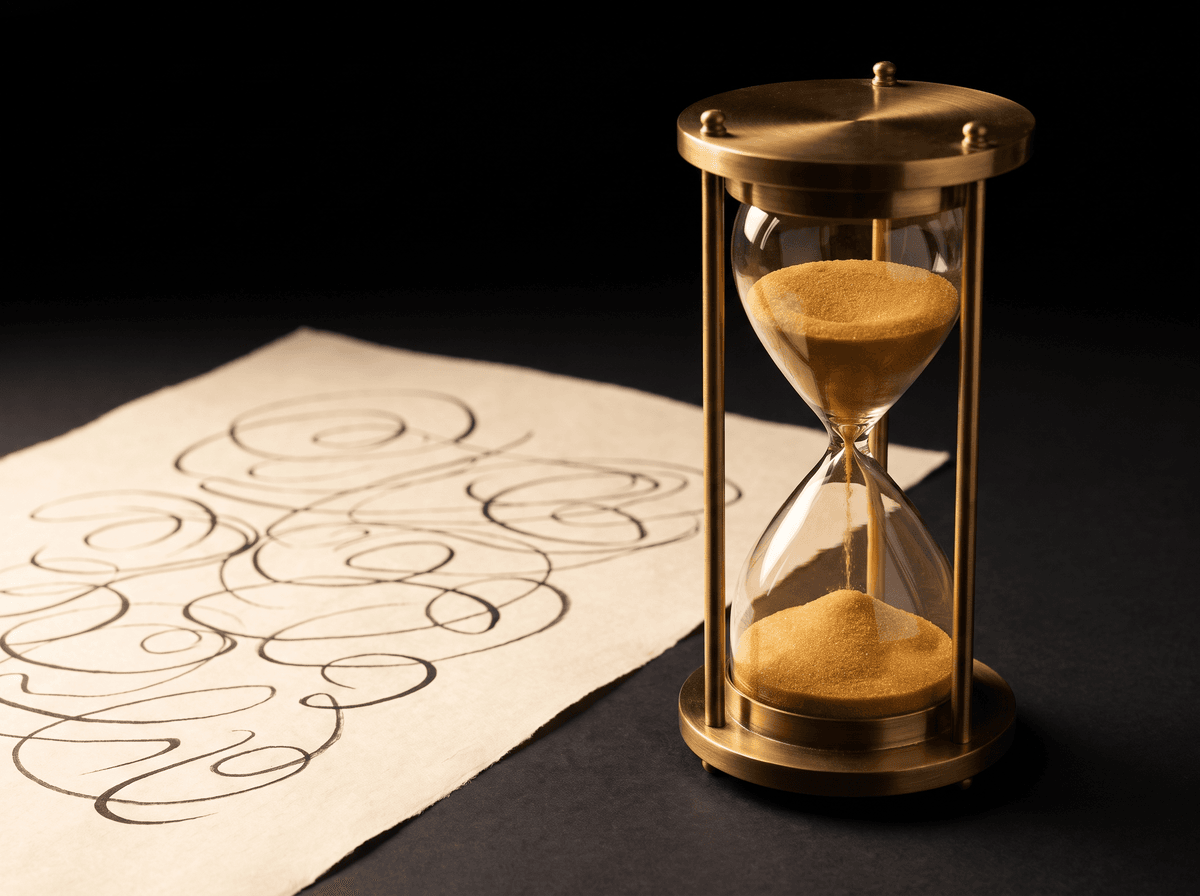
There's a printable practice sheet here, and more practice tricks in this article.
Common mistakes to avoid
- Too much decoration. Three loops, two underlines and a star: slow, and never the same twice.
- Copying a finished sample. It was made for another name, and your letters join differently. Borrow an element, not the whole thing.
- Shortening too soon. For a first official signature, a more legible form is safer. You can shorten later.
- Only practising slowly and neatly. In real life a signature is written fast, so practise it fast too.
- Changing it all the time. If you write a different one every week, none of them sticks. Decide and stay with it.
The shortcut: design it with Calligra
If you don't want to design from scratch, Calligra follows the same method and does the hard part for you. First you write your current signature with your finger and we score it on five criteria: legibility, uniqueness, elegance, balance and speed, with the reasons. Then you pick from more than 30 celeb styles, and the app draws it for your name in real, human handwriting.
The lessons are step 7, ready-made: we break the signature into eight steps at most, show the stroke order in an animation you can slow down, and the practice pad scores every try. Try it with your name. How this differs from a font-based generator is explained on the page about signature generators.
The one sentence worth taking away
You make a signature by working from samples of your own hand: decide how much of your name to include, give it one distinctive capital, a consistent rhythm and a simple finish, test it five ways and practise ten minutes a day for a week; a good signature is the one that comes out the same when you're fast and the box is small.
Questions
How do I come up with a signature?
Write your name twenty times in different ways, pick the details that come naturally, decide how much of your name to include, and design one distinctive capital and a simple finish. Test it fast and in a small box, then practise ten minutes a day for a week.
How long does it take to learn a new signature?
With ten minutes of practice a day it usually settles in about a week, and after a few weeks of use you write it without thinking. If it still falls apart after two weeks, the form is probably too complicated.
Do I need nice handwriting for a good signature?
No. A signature isn't a prettier version of your handwriting; it's a practised movement. A simple, consistent form that comes out the same at speed beats any beautiful lettering.
Do I have to sign my full name?
Not necessarily. Many people sign an initial and their surname, or let the end of the name shorten into a wave. For a first signature the full name is the safest choice. What an institution accepts can vary, so for important documents ask them.
What pen should I practise with?
The one you'll sign with most, usually a ballpoint. A fine fineliner or fountain pen can help while learning because the line is easier to see, but do your tests with your everyday pen as well.
At what age should you make your own signature?
When you first need to use one regularly, such as for your first ID or bank card. Choose a simple, legible form, because it will last for years and you can refine it later.
Can an app help me make a signature?
Yes, if it designs for your name and teaches you to write it. Calligra scores your current signature on five criteria, draws your name in more than 30 celeb styles and teaches it in eight steps or fewer, with animation.
Try it with your own name
Guides
Knowledge