Tietopankki › Basics
Basics
Does your signature have to be the same every time? Why it changes, and when that matters
Nobody signs exactly the same way twice, and that's completely fine. We look at why your signature changes from one time to the next, how much variation is normal, when it can cause trouble at a bank or an office, and how to make it more consistent with a few minutes of practice.
Write your name ten times, one under the other, and look at them. In one the capital is taller, in another the ending is shorter, a third leans a little more. Many people worry at this point: “Mine is never the same, is that a problem?” It isn't. Nobody signs exactly the same way twice, and a living hand always leaves a little variation in a signature. The question isn't whether there's a difference, but how big it is and what changes. In this article we look at why every signature you write is different, how much variation counts as natural, when it can become a problem at a bank or an office, and how to make yours more consistent while keeping it yours. Official rules vary from place to place; this article isn't legal advice, so always ask the institution itself what it expects.
In short: it doesn't have to be perfectly identical
A signature is a practised movement, not a stamp. You write it fresh every time, with a different pen, on a different surface, at a different pace, and so every copy comes out slightly different. This is called natural variation, and everyone's signature has it.
What matters is that it's recognisable. If the first letter, the length, the slant and the overall look are roughly the same, your signature counts as consistent, even if you can see the differences when you put two side by side. A bank clerk or an official looks at exactly this: whether two signatures come from the same hand's movement, not whether they match to the millimetre.
Interestingly, a match that's too perfect can even be suspicious. According to handwriting experts, two signatures that overlap almost exactly point more towards tracing or copying, because a living hand rarely writes that identically. Our article on how experts detect a forged signature covers this in more detail.
A good signature isn't one that's always exactly the same, but one that's always recognisably yours.
Why is your signature different every time? The most common reasons
If your signature changes noticeably from one time to the next, there's almost always an everyday reason. It's worth thinking about which one fits you.
- The form hasn't settled yet. If you never decided exactly how you sign your name, your hand puts it together a little differently each time. Then you don't have one signature, you have several similar versions.
- The pace is different. In a hurry it gets shorter, flatter and leans more; written slowly it gets shakier and stiffer. It's most consistent at your own usual pace.
- The surface is different. On paper, standing at the edge of a counter, on a signature pad or with a finger on a phone, the movement is completely different. Our article on signing on a screen explains why.
- The pen is different. A slippery gel pen, a catching ballpoint and a thick felt tip draw different lines, and your hand guides each of them differently.
- The space is different. In a tight box you squeeze it, on an empty page you stretch it out. Our article on signing in a small space helps with this.
- Tiredness, nerves, posture. At the end of a long day, before an important contract or with the paper at an awkward angle, your hand moves differently too.
- Too much decoration. Big loops, flourishes and long endings are the hardest to repeat the same way every time. The more of them there are, the bigger the spread.
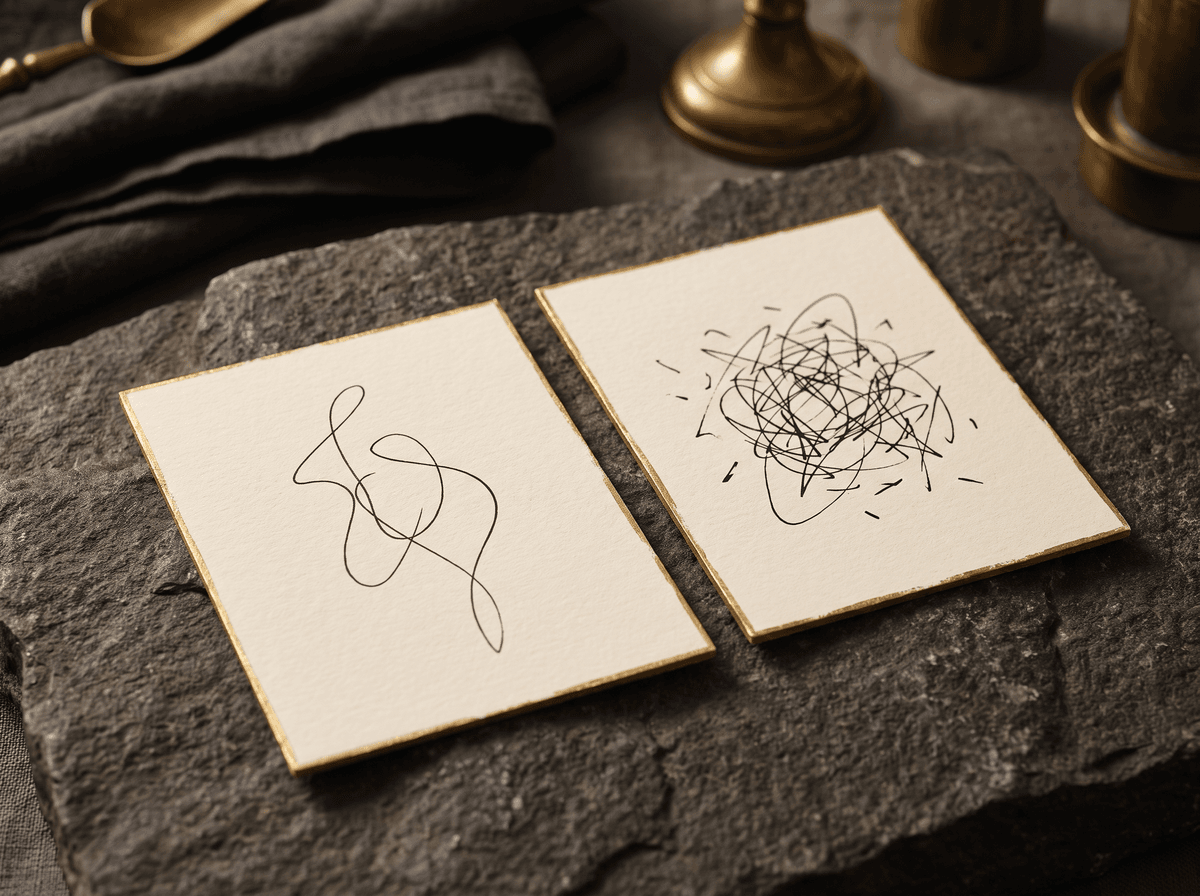
How much variation is natural, and how much is too much?
There's no limit you can measure in centimetres, but you can clearly separate what can safely vary from what's worth keeping constant.
- The exact height of the letters, by a millimetre or two.
- The length and curve of the ending.
- The thickness of the line, depending on the pen.
- The exact shape of a small letter in the middle of your name.
- Where the line breaks.
- The shape of the first letter.
- The rough length of the signature.
- The direction of the slant.
- Whether it's readable or a single line.
- Which name you write: the full one, the short one or just your initials.
A simple test: put two signatures side by side. If a stranger would say at first glance that the same person wrote them, you're fine. If they'd say two different people did, for example because one is a readable full name and the other a short wavy line, the difference is too big for official use.
When does it matter if your signature is different?
In everyday life, almost never. When you sign for a parcel, a birthday card or a school note, nobody compares your signature with anything. There are situations, though, where it's measured against an earlier specimen.
- At the bank. Your bank compares your signature with the specimen you gave when you opened the account. If today's looks very different, it may be rejected. Our article on bank signatures covers this in detail.
- On your ID documents. The signature on your ID card and passport is a kind of specimen too. Our article on signing your ID card and passport tells you what to check before you sign.
- On contracts and official papers. If a signature is ever disputed, it's compared with your earlier signatures. A consistent official signature helps a lot then.
- On documents with many pages. If you have to sign every page of a contract, it looks odd when the form is different on each one. Here too, consistency is the goal.
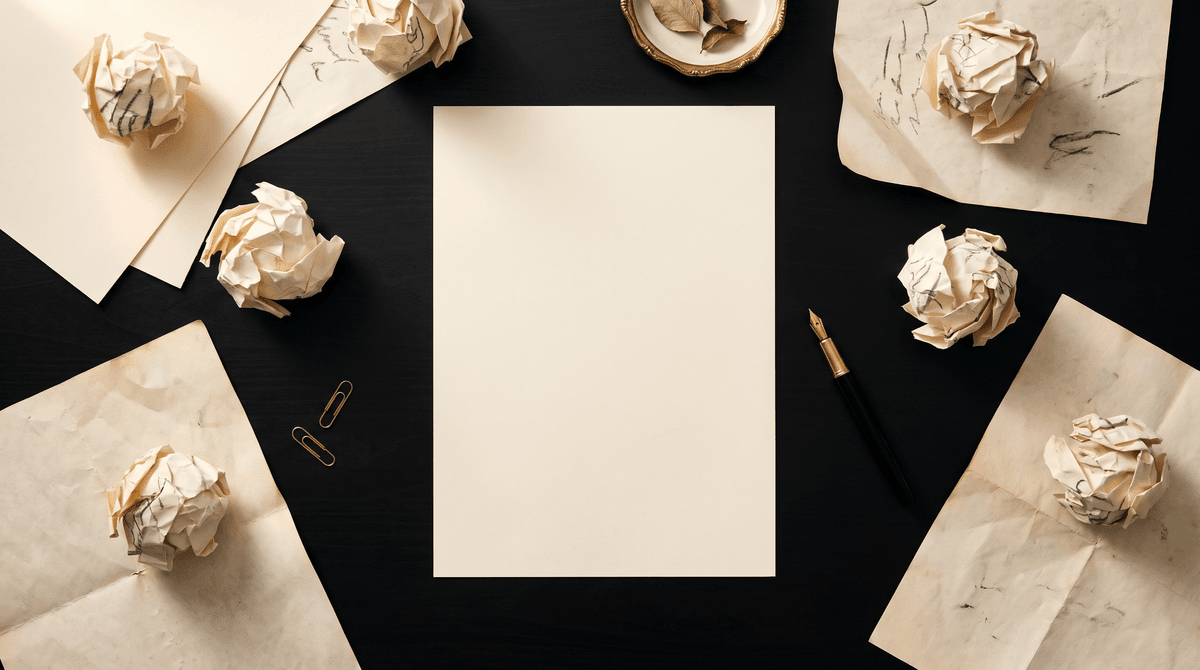
You can have two signatures, and that's not the same as variation
People often mix the two up. Variation is when you write the same signature, just a little differently each time. Having more than one signature is when you deliberately use two forms: for example a full, readable version for official use and a short one for everyday life.
The second is completely fine as long as you're consistent: you always use the official one in official places, and it always looks roughly the same. Trouble starts when the two get mixed up and you use one at the bank one time and the other the next. Our article on having more than one signature explains how to sort this out.
The ten-signature test: how consistent is yours?
It takes five minutes, and afterwards you'll know exactly where you stand.
- 1Take a plain sheet and your usual pen. Not a special pen, the one you normally sign with.
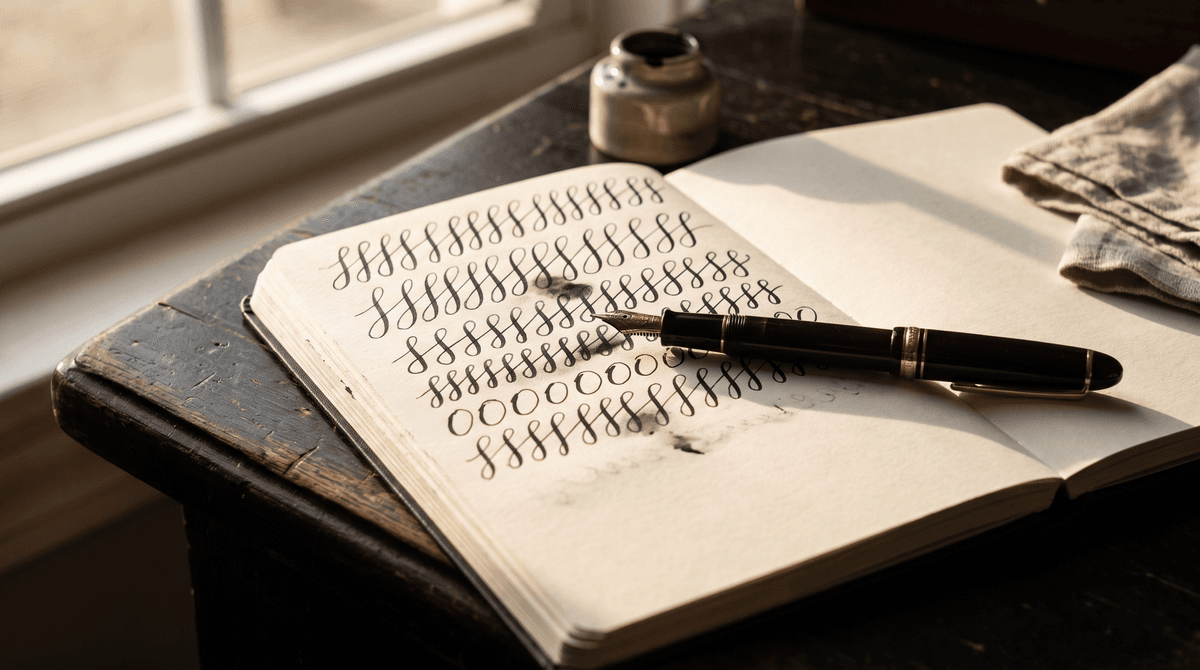
- 2Sign ten times, one under the other, at your usual pace. Don't concentrate too hard and don't draw. Write as if you were standing at a counter.
- 3Look at the first letters. Do they have the same shape? If the capital is different in every row, that's where the spread starts.
- 4Look at the length and the slant. Are they roughly the same length, leaning the same way? A ruler checks this quickly.
- 5Find what changes the most. Usually it's a loop, an ending or a tricky join between letters. That's what you'll work on.
If at least eight out of ten look the same at first glance, your signature is consistent and won't cause trouble in official places either. If all ten are different, the form probably hasn't settled yet, and it's worth deciding once, deliberately, exactly how it should look.
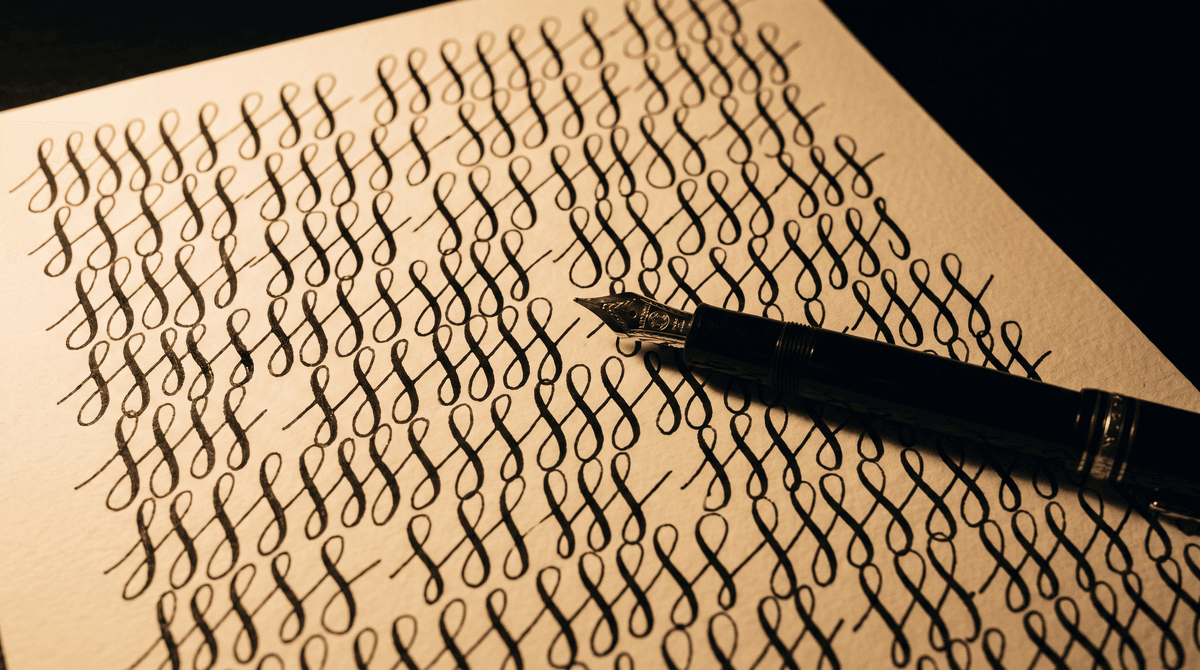
How to make your signature more consistent
You don't need to design a new one. Most of the time it's enough to fix a few things in your current signature and simplify the hardest parts.
- Fix the first letter. That's what the eye notices fastest. Choose one form and always write that one. If your capital is different every time right now, our article on the first letter helps you choose.
- Simplify what spreads. If a loop or an ending came out differently every time in the test, shorten it or drop it. A simpler but consistent form is worth more than a decorative one that's never the same.
- Decide how much of your name it shows. Full name, shortened first name or an initial before your surname: choose one for official use and stick to it.
- Practise at your own pace. Drawing slowly teaches you the form, but only at your usual speed do you find out whether it really works. Practise at both speeds.
- Use a similar pen. If you can, use a similar pen for important signatures. Our article on pens and ink helps you choose.
- Loosen your grip. A tense hand draws a shakier, messier line. With a loose grip the movement gets more fluid and more consistent.

A few minutes a day is enough. If you sign ten times every day for a week or two, the movement sticks and your hand will write it the same way by itself. You'll find more methods in our article on practice and on our printable practice sheet.
If you'd rather change your signature on purpose
Sometimes the test makes you realise you don't really like your current signature and would rather use a new one. That's fine, it's just worth doing properly, so that you don't end up with two forms used at random.
- 1First, practise the new one. Don't use it anywhere official until it comes out the same ten times out of ten.
- 2Then update your specimens. Wherever your old signature is on file, for example at your bank, give them the new one.
- 3From then on, use only the new one. Don't mix the two in official places.
Our article on changing your signature explains how to switch, step by step.
Practise until it's consistent
If your current signature is different every time, Calligra can help you bring order to it. It scores the signature you write on the screen on five criteria: legibility, uniqueness, elegance, balance and speed, and explains every score. If you choose a new signature from more than 70 styles, the practice screen shows you after every attempt how close it is to the design.
That way you don't just feel it, you can see when you've reached the point where it comes out the same ten times out of ten, and you only take it to the bank or an office once it's truly yours.
Se yksi lause, joka kannattaa muistaa
Your signature doesn't have to be exactly the same every time; small differences are natural. The first letter, the length, the slant and the overall look should match, though, especially at the bank and on official papers. If yours is different every time, fix the first letter, simplify what spreads, and practise at your own pace.
Kysymyksiä
Do I have to sign exactly the same way every time?
No. Nobody signs exactly the same way twice, and small differences are natural. The first letter, the length, the slant and the overall look should roughly match, though, so that your signature stays recognisable.
Why is my signature different every time?
Usually because the form hasn't settled yet, or because you write at a different pace, with a different pen, on a different surface or in a different-sized space. Lots of loops and flourishes also increase the spread.
Is it a problem if my signature doesn't match the specimen at my bank?
If it's very different, the bank may reject it. In that case it's worth giving them a new specimen with your current signature. Always ask your own bank about the exact process.
Is it suspicious if two of my signatures are exactly the same?
According to handwriting experts, signatures that match almost to the millimetre point more towards copying or tracing, because a living hand rarely writes that identically. So small natural differences aren't a problem; they're part of real handwriting.
How can I make my signature more consistent?
Fix the first letter, simplify the parts that come out differently every time, decide how much of your name it shows, and practise a few minutes a day at your own pace.
Can I have two different signatures?
Yes, many people use an official one and a shorter one for everyday life. What matters is that you always use the same one in official places and don't mix the two.
Does your signature have to be the same every time?
No, not exactly. Every signature you write comes out slightly different, and that's natural. What should stay the same is the first letter, the rough length, the slant and the overall shape, so that a bank or an office still recognises it as yours.
My signature is different every time – is that a problem?
Usually not, as long as the differences are small and it's still recognisably the same signature. It only becomes a problem when the forms are so different that a stranger would think two people wrote them, for example a readable full name one time and a short line the next. Then fix the first letter and simplify the parts that change the most.
Kokeile omalla nimelläsi
Lue myös nämä
Tietopankki Perusteet
Kuinka luettava allekirjoituksesi pitäisi olla?
Jokaisen kirjaimen ei tarvitse olla luettavissa, mutta pelkkä kaaos ei ole ratkaisu sekään. Näin löydät tasapainon luettavuuden ja persoonallisuuden välillä.
HarjoitteluNäin opettelet uuden allekirjoituksesi vaihe vaiheelta
Lämmittele, opettele vetojärjestys, jäljennä ja kasvata sitten vauhtia: 7 päivän ja 21 päivän suunnitelma, joilla uudesta allekirjoituksesta tulee todella omasi.
 Käytännön vinkit
Allekirjoituksen vaihtaminen: milloin, missä ja miten
Voit ottaa uuden allekirjoituksen käyttöön milloin tahansa, mutta sillä on väliä, miten sen otat käyttöön. Tässä kerrotaan, missä allekirjoituksesi on tallessa, mitä kannattaa kysyä ja miten selviät ensimmäisistä kömpelöistä viikoista.