Guías › Practice
Practice
How long should a signature take to write? What slows it down, and how to speed it up
A practised signature usually takes a second or two, yet plenty of people stand at a counter as if they were making a drawing. We look at why a settled signature is so quick, what slows one down, how to shorten yours, and how the same timing feels at a counter or on a screen pad.
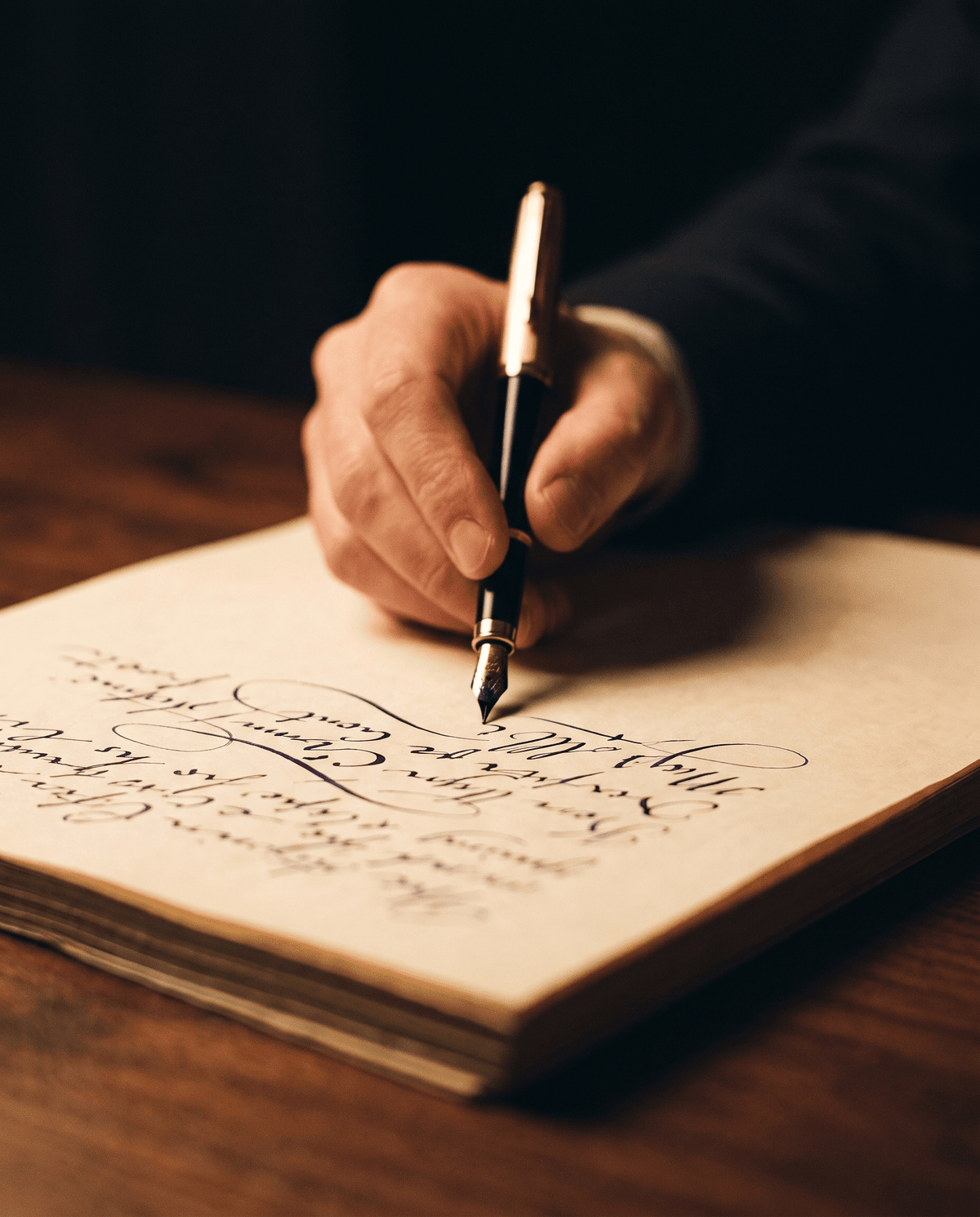
Next time you're in a queue, watch how other people sign. Some barely look: one sweep and they're done. Others stop at every letter, lift the pen, go back for a loop and finish with a dot. A practised signature usually takes a second or two, because you don't write it letter by letter but as one familiar movement. That isn't a rule, and it isn't a race: nobody is timing you. But if yours takes much longer and that bothers you, it's worth looking at what slows it down. In this article we look at why a settled signature is so quick, what makes one slow, how to shorten yours while keeping it yours, and what to expect at a counter or on a screen pad.
In short: usually a second or two
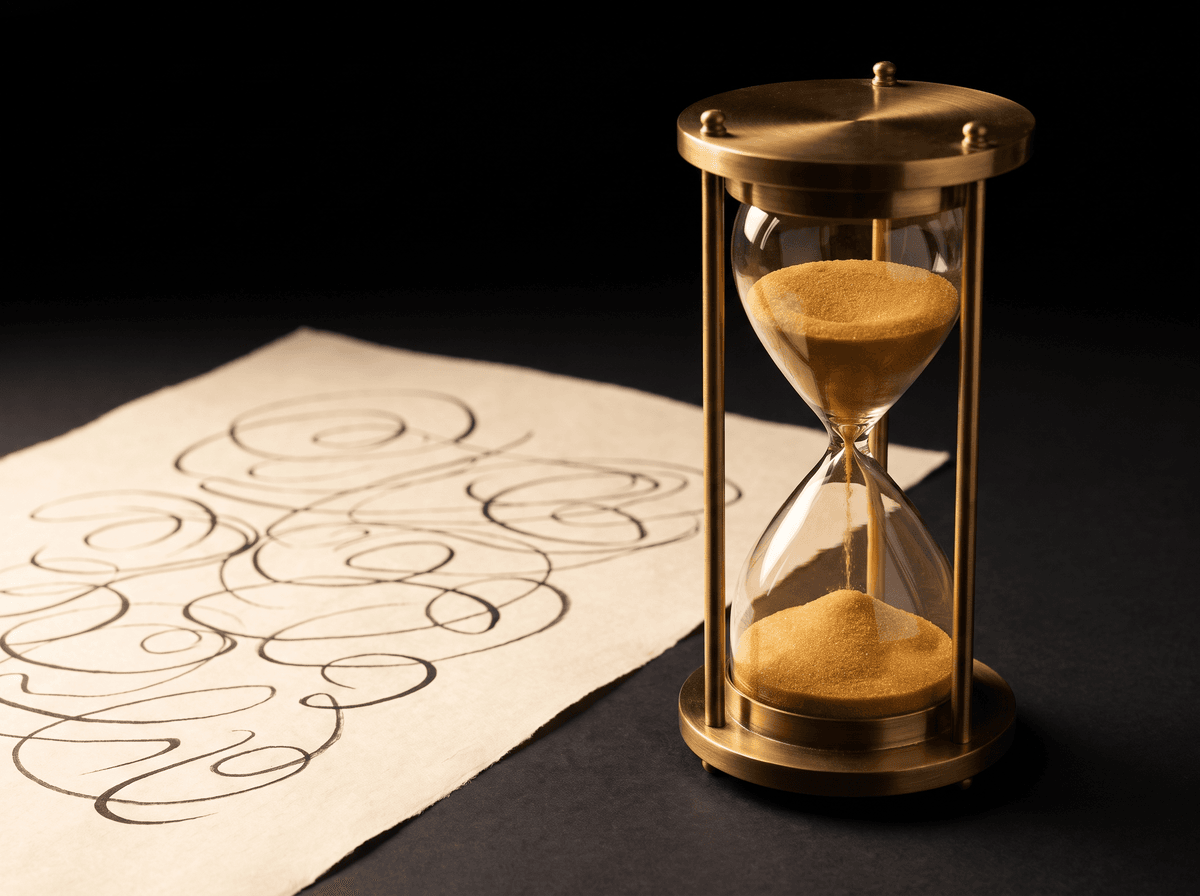
As a rule of thumb, a practised signature takes a second or two. A short, simple form can be done in a blink; a longer, more decorated name may take a few seconds. Both are completely fine.
What really matters isn't the exact time but whether your signature flows. If you write it in one go without stopping, it will be quick and more consistent too. If you have to think about how it continues every time, that's not down to the length of your name but to the form not having settled yet.
You don't draw a good signature, you write it: your hand knows it before you think about it.
Why is a practised signature so quick?
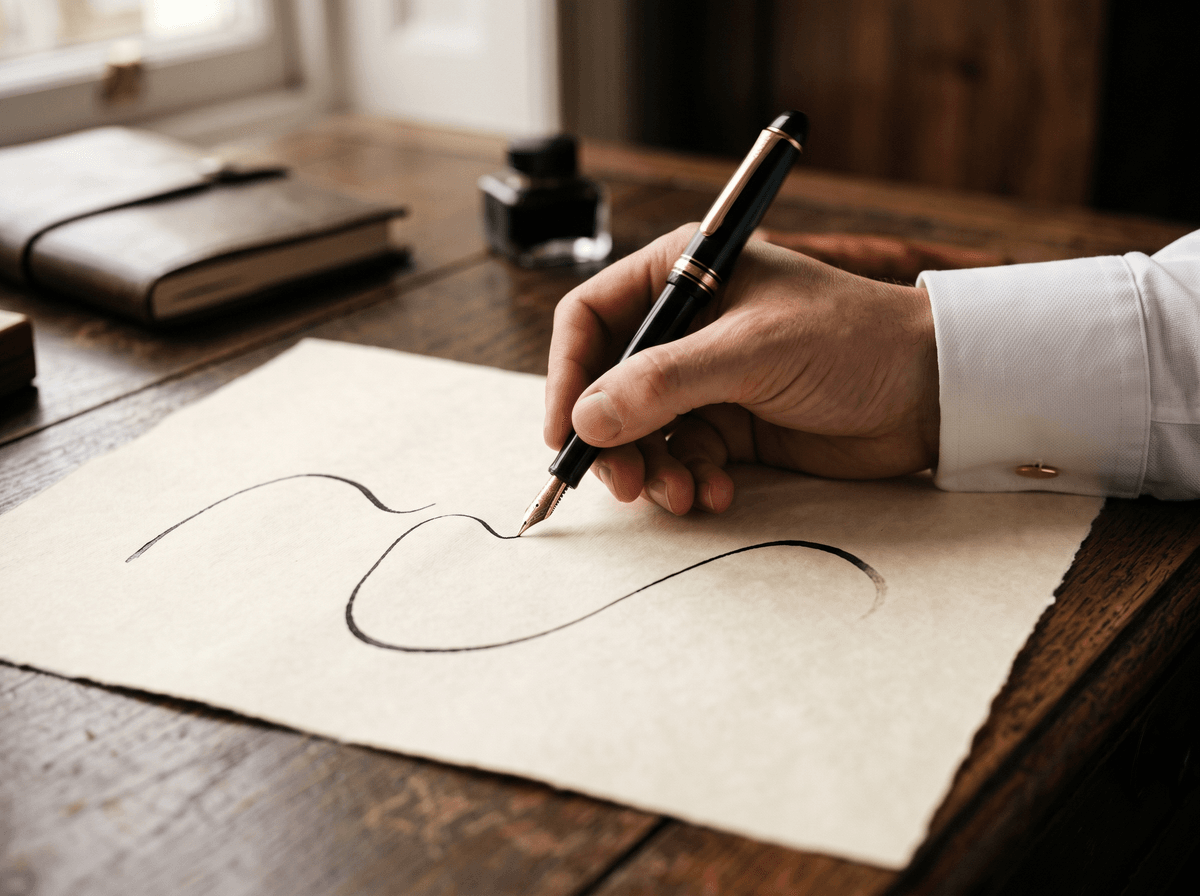
When you write a word, you go letter by letter. A signature works differently: after many repetitions your hand learns the whole thing as a single movement, like a practised dance step or tying your shoelaces. You don't have to think through the letters; it simply runs.
- One movement, not many letters. In a practised signature the letters merge, and the hand writes one curve rather than separate marks.
- Few stops. The fewer times you lift the pen, the fewer moments your hand spends looking for where to carry on.
- A familiar pace. A settled signature has its own rhythm. Written at that pace it's both quicker and more consistent.
That's why a new signature is slow at first. That's not a problem; it just means your hand is still learning. With a few weeks of regular practice most forms speed up. Our article on practising your signature has more on this.
What makes a signature slow?
If yours takes much longer, it's almost always one of these.
- Lots of pen lifts. Every time you lift the pen there's a small pause: a separate capital, a crossbar, the dot on an i, a separate underline. A few are nothing, but stopping at every letter adds up.
- Loops and flourishes. Big decorative loops are beautiful but slower, and they need attention. If you always have to draw a loop carefully, it holds you back.
- A long name. Two first names, a double surname, a long name with every letter written out: there's simply more to write. Our article on signatures for long names can help.
- Accents and dots. Every accent, dot and diacritic is another pen lift. In a long name with accents, that makes a real difference.
- Drawing instead of writing. If you're afraid of getting it wrong, you draw it slowly and carefully. That doesn't make it nicer, only shakier and slower.
- The form hasn't settled. If you write it a little differently each time, your hand can't run on routine and has to work it out again every time.
Long signatures: when is it too long?
Plenty of people search for the longest signature, and some signatures really are long, ornate, even spread over several lines. With your own signature, though, the question isn't length but whether it's comfortable in everyday life.
- It's done comfortably in a few seconds.
- It fits an ordinary signature box.
- It comes out much the same ten times out of ten.
- You don't have to think while writing it.
- It always runs out of the box.
- It's awkward to write in a queue.
- In a hurry it looks completely different.
- You have to stop several times along the way.
If yours belongs in the right-hand column, you don't have to give it up entirely. It's enough to use a shorter version for everyday life and official places and keep the long one for special occasions. Our article on short signatures helps you decide when the short form is enough.
How to make your signature shorter and quicker
You don't need to design a new one. Usually it's enough to simplify a few things in the one you have.
- 1Shorten your first name. Use an initial or the first few letters instead of the whole first name. That's the biggest time saver.
- 2Join what's separate. If you write the capital on its own, try carrying it on in one line into the rest of the name.
- 3Save the dots for the end. Add the dots on your i's and any accents all at once at the end, or simplify them into one short stroke.
- 4Simplify the loops. Instead of a big loop drawn with care, a smaller, flowing curve can look just as elegant.
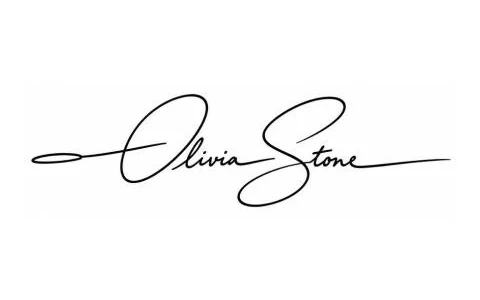
- 5Choose a simple ending. A short trailing stroke is quicker than a separate underline or a flourish. Our article on easy signatures has ideas.
- 6Practise at your own pace. Write it a few times a day at your normal speed. Within a few weeks your hand will write it on routine.

At a counter and on a screen: how the time feels
The same signature can feel quite different depending on where you write it.
- At a counter. With a queue behind you, even a signature of a few seconds can feel long. A practised, one-movement form helps a lot, because you don't have to think about it.
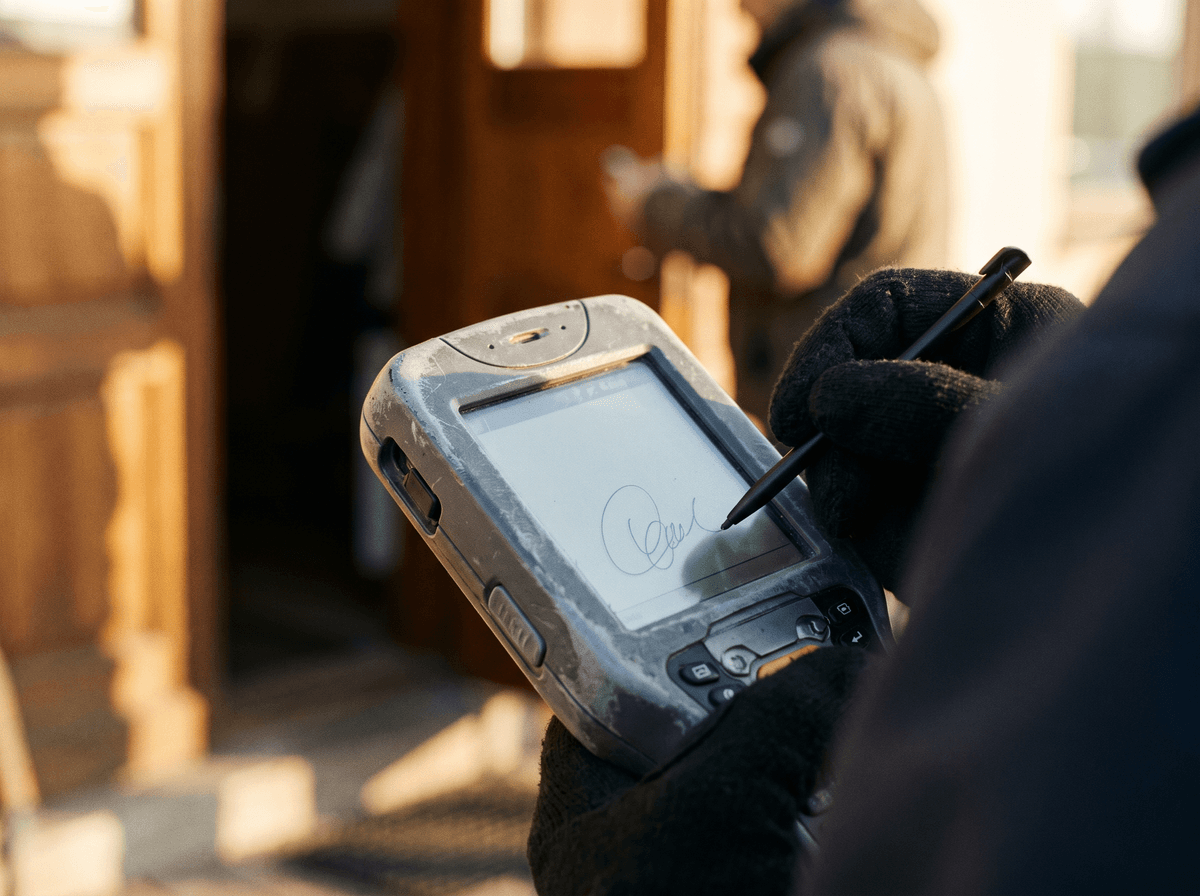
- On a screen signature pad. On couriers' handheld devices and the pads in shops and banks, the surface is slippery and small and sometimes lags behind your movement. Many people slow down here, but your usual pace generally gives a better result.
- With a finger on a phone. A finger draws a thicker, less precise line than a pen. A shorter, simpler version is quicker and looks better here too.
Why signing on a screen feels different, and how to keep it tidy there too, is covered in our article on signing on a screen.
If you're looking for a signature you can write in one sweep, Calligra lets you pick from more than 70 styles, each shown with your own name; the AI draws your signature in it, and then teaches you to write it, stroke by stroke.
La frase que vale la pena recordar
As a rule of thumb, a practised signature takes a second or two, because it's one fluid movement. If yours takes much longer, shorten your first name, join the separate parts, simplify the loops and the ending, and practise at your own pace.
Preguntas
How long should a signature take to write?
As a rule of thumb, a practised signature takes a second or two. A longer, more decorated name may take a few seconds, and that's fine too.
Why is my signature so slow?
Usually because of many pen lifts, big loops, a long name, lots of accents, or drawing it carefully instead of writing it. A form that hasn't settled yet also slows you down.
Is it a problem if my signature is long?
Not if you can write it comfortably, it fits the boxes and comes out much the same each time. If it's awkward in a queue or always runs out of its space, use a shorter version for everyday life.
How can I make my signature quicker?
Shorten your first name, join the separate parts, add dots and accents at the end, simplify the loops, and practise at your usual pace.
How long does it take for a new signature to speed up?
It varies from person to person, but with a few minutes of practice a day most forms become routine within a few weeks. It's natural for it to be slow at first.
Should I sign more slowly on a screen pad?
It's usually not worth slowing right down, because a slow movement comes out shakier. Your usual pace and a shorter, simpler form generally give a better result.
Pruébalo con tu propio nombre
Lee también
Guías Fundamentos
¿Hasta qué punto debe ser legible tu firma?
No hace falta que se lea cada letra, pero el caos absoluto tampoco es la respuesta. Así encuentras el equilibrio entre legibilidad y personalidad.
 Práctica
Cómo aprender tu nueva firma, paso a paso
Calentamiento, orden de los trazos, calco y, al final, velocidad: un plan de 7 días y otro de 21 para que tu nueva firma sea de verdad tuya.
 Consejos prácticos
Cambiar de firma: cuándo, dónde y cómo
Puedes adoptar una firma nueva cuando quieras, pero importa cómo la introduces. Aquí tienes dónde consta tu firma, qué preguntar y cómo pasar las primeras semanas, que son las más raras.